Sunday, April 08, 2018

Case o' The Week: $ to Spend, if BLM - Gilmore, Section 538, and Medical Marijuana on Fed Property


 A productive medical marijuana grow needs modern irrigation systems, detailed fertilizer schedules, and very good maps of the boundaries of federal lands.
United States v. Gilmore, 2018 WL 1631680 (9th Cir. Apr. 5, 2018), decision available here.

Players: Decision by visiting District Judge Adelman, joined by Judges Paez and Ikuta. Hard fought appeal by ED Cal AFPDs Sean Riordan and Ann C. McClintock.

Facts: In 2012, agents discovered 118 marijuana plants on a California grow. Id. at *1. 
  (Editor note: 118 plants? That’s a federal case?) 
  The marijuana garden was on federal land. Id. 
  The government indicted three defendants with conspiracy to manufacture marijuana and manufacture of marijuana. Id. Two defendants earned a mistrial when the jury could not arrive at a unanimous verdict. Id. 
  The Ninth then decided United States v. McIntosh, 833 F.3d1163, 1177 (9th Cir. 2016). Id. The Ninth “held that defendants may seek to enjoin the expenditure of [federal] funds on federal drug trafficking prosecutions of individuals who engaged in conduct authorized by state medical marijuana laws and who fully complied with such laws.” Id. at *1. 
  The defendants in Gilmore moved to enjoin the prosecution pursuant to § 538 (the “Consolidated and Further Continuing Appropriations Act, 2015, Pub. L. No. 113-235, § 538, 128 Stat. 2130, 2217 (2014)). The district court denied their motion. Id.

Issue(s): “In this case, the district court refused to issue an injunction because the subject marijuana grow operation occurred on federal land under the control of the Bureau of Land Management (“BLM”).” Id. at *1.

Held: We affirm. The restrictions imposed by § 538 do not apply to marijuana cultivation on federal land.” Id. at *1. 
  “Section 538 does not limit the government’s ability to enforce federal drug laws on federal land. Rather, as we noted in McIntosh, the provision applies narrowly, to those specific rules of state law that authorize the use, distribution, possession or cultivation of medical marijuana. . . Nothing in California law purports to authorize the cultivation of marijuana on federal land. Even if state law tolerated marijuana cultivation on public land, federal law forbids such use . . . .  And enforcing that prohibition does not ‘prevent’ California from otherwise implementing its medical marijuana regime.” Id. at *2 (citation omitted).

Of Note: Is the 118-plant prosecution in Gilmore a sad legacy of former, less-tolerant era of federal priorities? 
  Maybe. 
  Maybe not. 
  In Maine, the U.S. Attorney appointed by President Trump explained that he would be focusing on traffickers of “hard drugs” such as opiates, cocaine, and crack – not on marijuana cases. See “Marijuana users not a priority for Maine U.S. Attorney,” available here
  We may be less progressive than Maine, here on the Left Coast. In Oregon, the Trump-appointed U.S. Attorney has described “significant concerns about the state's current regulatory framework and the resources allocated to policing marijuana in Oregon.” See U.S. Attorney: A call for transparency and action on marijuana, available here .
  And in the ED Cal, Trump-appointed U.S. Attorney McGregor “Greg” W. Scott “used to be a hardcore, anti-cannabis drug warrior,” one defense attorney has opined. See “Here’s Where US Attorneys Stand on Cannabis Enforcement, available here
   Acting US Attorney Alex Tse in the ND Cal has been carefully mum– but candidates for his gig have been famously vocal in their opposition to medical marijuana. See “Russoniello outlines top priorities,” available here.; see also article here

How to Use: Unfortunately, in Gilmore Judge Adelman also rejects a mens rea defense: “it is irrelevant whether they knew the garden was on federal land.” Id. at *2. 
  Beware of Gilmore if a grow case involves federal land – those BLM parcel maps are now particularly important evidence, in those rugged NorCal mountain ranges.
                                               
For Further Reading: The prohibition against the expenditure of funds for the federal prosecution of medical marijuana remains the law of the land (for another six months!). See Rohrabacher-Blumenauer Amendment is Renewed Through September 2018, available here.


Image of “Federal Land in California” by Phillip Reese and Nathaniel Levine, from http://www.sacbee.com/news/state/california/article53922925.html


Steven Kalar, Federal Public Defender, N.D. Cal. Website at www.ndcalfpd.org

.

Labels: ,

Sunday, December 06, 2009

Case o' The Week: Eleven is Better, Macinas-Flores

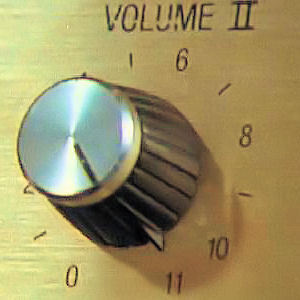
Like Nigel Tufnel, the Arizona Federal Public Defender likes Eleven. Rule Eleven of the Federal Rules of Criminal Procedure, to be precise -- the Rule that brought that office two big victories in the Ninth this week. See United States v. Macinas-Flores, 2009 WL 4282018 (9th Cir. Dec. 2, 2009), decision available here; see also United States v. Roblero-Solis, 2009 WL 4282022 (9th Cir. Dec. 2, 2009), decision available here.

(Ed Note - this memorandum discusses Macnas-Flores, and salutes the Roblero-Solis opinion in the "for further reading" section).

Players: Big win for D. Az. AFPD Dan Kaplan.

Facts: Folks in the US tipped-off ICE that their undocumented-alien relatives were being held hostage in a Phoenix stash house by alien smugglers. Id. at *1. The relatives were told to pay the smugglers, or the aliens would be beaten and raped. Id. ICE and the Phoenix police searched the stash house and found aliens, Macinas-Flores (and a co-defendant) and a loaded shotgun. Id.

On the eve of trial Macinas-Flores tried to plead to a deal to the gun alone (a § 924(c) charge), with a locked range of 25-45 years. Id. When the district court launched into the plea inquiry, Macinas-Flores answered, “I’m not really guilty.” Id. at *2. The trial judge stopped the plea proceeding, rejected the plea, called in the jury, and – after conviction – sentenced the defendant to life.

Issue(s): “Defendant argues that the district court erred in its handling of his guilty plea. He contends that the plea met all the requirements of Fed. R. Crim. P. 11(b), and that therefore the court had no discretion to reject it . . . . Alternatively, defendant argues that even if the court had discretion to reject his plea, it did not adequately explain its reasons for doing so and thus failed to actually exercise discretion.” Id.

Held: “Because the district court abruptly cut off the plea colloquy, we cannot conclude the plea satisfied all of Rule 11(b)’s requirements. As discussed below, however, we agree with defendant’s alternative argument and therefore the district court’s rejection of defendant’s guilty plea and remand for a new plea hearing.” Id.

Of Note: Macinas-Flores denied guilt, and the district court erred by rejecting the plea? The key to this counter-intuitive holding is Alford or nolo contendere pleas, “a plea of guilty in which a defendant maintains his innocence.” Id. at *3. A district court doesn’t have to accept an Alford plea, but it does have to engage in the Rule 11 inquiry and analysis that permits an appellate court to review the proceeding. That didn’t happen here, which bought the defendant a reversal and a chance to reclaim that fantastic 25-45 year deal

How to Use: Wisconsin District Judge Lynn S. Adelman (right) visits the Ninth and authors this opinion. (Recall his admirable and famous decision in the post-Booker Ranum opinion (blog on Ranum available here)). He's a seasoned and thoughtful jurist and a welcome visitor - hope he returns to the West again soon.

In Macinas-Flores, Judge Adelman brushes back the government’s whine of plain error in an analysis that is worth a close read. Id. at *8. Turns out a defendant does not “object” to a court’s ruling (like refusal to take a plea): instead, the party takes an “exception to the ruling.” Id. at *8. Under Fed. Rule of Criminal P. 51(a), exceptions to rulings of the court are unnecessary. Hence, one needn’t complain about a court’s erroneous ruling to avoid plain error review. Id. This is an adoption of a Seventh Circuit rule and is new to the Ninth – worth exploring the outer parameters of this distinction if you’re trying to dodge plain error review.

For Further Reading: One victory was not enough for Arizona last week – “the intrepid federal public defender” in Tuscon (a direct quote) chalked up another Rule 11 win as well. United States v. Roblero-Solis, et al., 2009 WL 4282022 (9th Cir. Dec. 2, 2009). Hard to imagine, but in enlightened Tuscon federal magistrates conducted the Rule 11 colloquy with fifty to a hundred defendants at a time. Id. at *2-*3. The government’s “Operation Streamline” churned undocumented aliens through the court en masse and cranked out dozens of simultaneous misdemeanor § 1325 convictions. Id. at *2.

Judge Noonan is thankfully unpersuaded by the remarkable efficiency of this judicial cattle call – he writes that the procedure violates Rule 11's demand that defendants be addressed “personally.” Id. at *8.

And the standard of review for the procedure in this case? Plain error! A bit of a head-scratcher, considering the Macinas-Flores rejection of Rule 11 plain error was delivered the same day . . . .


Image of Spinal Tap's Amps from http://citifield.files.wordpress.com/2009/07/spinaltap-11.jpg . Image of the Honorable Lynn Adelman from http://www.legis.wi.gov/senate/sen28/news/Photos/2009/images/Inauguration_adelman.jpg


Steven G. Kalar, Senior Litigator N.D. Cal. FPD.

Labels: , , ,