Sunday, September 18, 2016

Case o' The Week: It Pays to Discover - Soto-Zuniga and Government Discovery Obligations


Q: What victory could be sweeter than a Ninth Circuit reversal on a discovery motion?
 A: A Ninth reversal on two discovery motions!
  United States v. Soto-Zuniga, 2016 WL 4932319 (9th Cir. Sept. 18, 2016), decision available here.

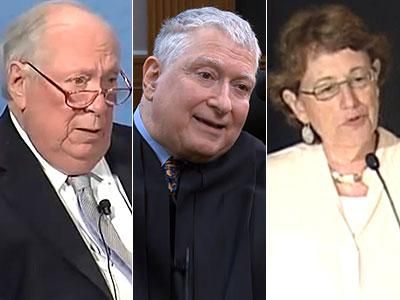
Players: Decision by Judge Gould, joined by Judges Kozinski and W. Fletcher.


Big win for AFD Paul Barr, Federal Defenders of San Diego, Inc.
Hon. Judge Ronald Gould

Facts: Soto-Zuniga was charged with possession with intent to distribute meth, after a border car search. Slip Op. at 4. [Ed. Note: Westlaw pin cites (annoyingly) missing].
   Soto-Zuniga moved to suppress, alleging the search was unconstitutional and requesting discovery of the checkpoint’s arrest and search statistics. Id. He argued that the checkpoint was being used as a pretext to search for controlled substances, not to control immigration. Id. at 8. 
  The discovery and suppression motions were denied: he was convicted. Id. at 1.

Issue(s): “We first address Soto-Zuniga's argument that the district court abused its discretion in denying his motion for discovery of the San Clemente checkpoint search and arrest statistics. He contends that this evidence is necessary to determine whether the checkpoint itself is constitutional.” Id. at 12.

Held: “We agree that the district court abused its discretion in denying discovery that could have revealed an unconstitutional seizure and led to the suppression of the evidence that illicit drugs were found in Soto-Zuniga's car.” Id. 
  “If the checkpoint’s primary purpose is to detect evidence of drug trafficking, then the initial seizure of Soto-Zuniga’s car and person offended the Fourth Amendment and the drug evidence recovered from his car must be excluded as fruit of the poisonous tree . . . . It is on this issue that the requested discovery is pertinent.” Id. at 14. 
  “Because the primary purpose of the San Clemente checkpoint was placed squarely at issue by Soto-Zuniga's motion to suppress, defense counsel should have been allowed reasonable discovery relating to this primary purpose. After that discovery, and with all material evidence on the table, the district court would have been in a superior position to assess and decide the motion to suppress.” Id. at 18. “We conclude that the district court abused its discretion by denying this discovery.” Id.

Of Note: The key holding of Soto-Zuniga is that the Supreme Court’s selective prosecution decision, Armstrong, does not preclude Federal Rule of Criminal Procedure Rule 16(a)(1)(E) discovery related to the constitutionality of a search or seizure. Id. at 16. As Judge Gould explains, “In our view, the holding of Armstrong applies to the narrow issue of discovery in selective-prosecution cases.” Id. This holding rebuffs the government’s attempt to cabin suppression discovery into Armstrong’s narrow confines: a very important win. Id. at 17.

How to Use: Overshadowed by the big checkpoint discovery issue is an equally valuable discussion on discovery of information related to the defense theory. Soto-Zuniga’s trial theory was that teenagers who had been given a lift left the meth in the car. Id. at 19. The defense had unsuccessfully moved for discovery of the government’s investigation of the teens and a smuggler associated with them. Id. at 19.

  In a thoughtful discussion, Judge Gould emphasizes that the defense is entitled to information “material to preparing the defense.” This is not limited to information that is admissible, it is information that have “helped to prepare a defense.” Id. at 20. The Ninth reverses the denial of the discovery motion. Id. at 21.

  While Judge Gould hears the government’s beef that the investigative docs were of “sensitive nature,” the Ninth stands firm: the defense “interest in government materials that are pertinent to his defense takes precedence.” Id. at 21. Soto-Zuniga’s discussion the defense right to discovery merits a close read and heavy citation in our motions to compel discovery.
                                               
Hon. District Judge Lucy Koh
For Further Reading: Remember ND Cal District Judge Koh’s terrific and historic cell-tracking decision? See blog entry here.  
  Apparently, so does Senator Coryn, R-Texas. See article here.  
   Judge Koh’s Ninth confirmation vote cleared the Senate Judiciary Committee last Thursday (but is not yet scheduled for a Senate vote).  
  NorCal is knocking wood on her behalf.


Steven Kalar, Federal Public Defender N.D. Cal. Website at www.ndcalfpd.org

.

Labels: , , , , ,

Sunday, February 26, 2012

Case o' The Week: 9th OK with Cali's Cheeky Swab - Haskell and Pre-Conviction DNA


"[W]e must base decisions not on dramatic Hollywood fantasies . . . but on concretely particularized facts developed in the cauldron of the adversary process and reduced to an accessible record." Haskell v. Harris, 2012 WL 589469, *12 (9th Cir. Feb. 23, 2012) (internal quotations and citation omitted).

Fair point by Haskell's author, Judge Milan Smith. Here's the concretely particularized facts:

 ● Political protestor arrested in California;
 ● Forced by cops to give DNA pre-conviction, or be charged with another crime;
 ● Protestor never actually charged with crime for which arrested --  and certainly never convicted of the crime;
 ● DNA nonetheless remains in national database and is used to investigate other crimes;
 ● Will cost the protestor a fortune to try to remove DNA from database, with no right to appointed counsel for task.

     (Maybe reality is more "dramatic" than a "Hollywood fantasy?")

Haskell v. Harris, 2012 WL 589469, *12 (9th Cir. Feb. 23, 2012),  decision available here.


Players: Decision by Judge Milan Smith, persuasive dissent by Judge W. Fletcher.

Facts: A 2004 Amendment to California’s DNA Act allows officers to collect a cheek-swab sample of anyone arrested for a felony offense. Id. at *1. (To emphasize - this sample is taken pre-conviction -- indeed, it is taken before charges are even brought). That DNA is stored in a database and is used to investigate other crimes. Id. at *2. It is a misdemeanor to refuse to give the sample. Id. at *2.

The Haskell civil plaintiffs were charged with felonies and were forced to give DNA samples. They were never convicted of the felonies for which they were arrested. Id. at *2. Three of the plaintiffs were political protestors who were never charged with any crime, or who had their charge dismissed. Id. at *16 -*17 (Fletcher W., J.,  dissenting).

Hon. Milan Smith
Plaintiffs brought a § 1983 class action alleging a violation of the Fourth Amendment and seeking a preliminary injunction. Id. at *2. The district court found no Fourth Amendment violation. Id. at *3.

Issue(s): “The constitutionality of California’s requirement that all felony arrestees provide DNA samples is a question of first impression for us.” Id. at *5.

“[We ask] whether California’s mandatory DNA collection requirement . . .  as applied to felony arrestees who have not been convicted, violates the Fourth Amendment.” Id. at *3.

“The question before us is whether California’s DNA collection requirement . . . is an unreasonable search. In line with the Constitution’s plain text, the touchstone of our analysis under the Fourth Amendment is always the reasonableness in all the circumstances of the particular governmental invasion of a citizen’s personal security. . . We apply the ‘totality of the circumstances’ balancing test to determine whether a warrantless search is reasonable. Under the totality of the circumstances test, whether a search is reasonable is determined by assessing, on the one hand, the degree to which it intrudes upon an individual’s privacy, and on the other, the degree to which it is needed for the promotion of legitimate governmental interests.” Id. at *4.

Held: “We assess the constitutionality of the 2004 Amendment by considering the ‘totality of the circumstances,’ balancing the arrestees’ privacy interests against the Government’s need for the DNA samples. Law enforcement officials collect a DNA sample from a buccal swab of the arrestee’s mouth, a de minimis intrusion that occurs only after a law enforcement officer determines there is probable cause to believe that the individual committed a felony. Law enforcement officers analyze only enough DNA information to identify the individual, making DNA collection substantially similar to fingerprinting, which law enforcement officials have used for decades to identify arrestees, without serious constitutional objection. Moreover, state and federal statutes impose significant criminal and civil penalties on persons who misuse DNA information. On the other side of the balance, DNA analysis is an extraordinarily effective tool for law enforcement officials to identify arrestees, solve past crimes, and exonerate innocent suspects. After weighing these factors, we conclude that the Government’s compelling interests far outweigh arrestees’ privacy concerns. Thus, we hold that the 2004 Amendment does not violate the Fourth Amendment, and we affirm.” Id. at *1 (internal quotations and citations omitted).   

Of Note: In a compelling dissent Judge Fletcher tackles and rebuts each of Judge Smith’s arguments. Id. at *16 (Fletcher, W., J., dissenting). For Judge Fletcher (and for us), the Ninth’s 2009 Friedman case controls: he wonders how Haskell is possible without taking Friedman en banc. Id. at *20.

Hon.  William Fletcher
Judge Fletcher also makes a persuasive distinction between pre-conviction DNA taken for identification (constitutional), versus pre-conviction DNA taken for investigation (verboten). Id. at *22. California pre-conviction DNA, the dissent emphasizes, is plainly used for investigation. Id. at *24.

A case that cries out for en banc review.
                   
How to Use: “Special needs?” D.O.A. Id. at *4. Judge Smith summarily rejects the Fourth Amendment’s “special needs” doctrine in a brief paragraph, and the dissent doesn’t complain – Samson’s “totality” is ascendent. Worth a read re: special needs.
                     
For Further Reading: How spooky is DNA? In one case, a DNA sample from an incarcerated son lead to a “familial” match, and then to the father’s arrest for old offenses. See article here.

   But don’t worry: pre-conviction DNA isn’t used for familial searching (well, at least it is not used - quite - yet). See Haskell, id. at *19 (Fletcher, W., J., dissenting).


Image of "Gattaca" from http://s90.photobucket.com/albums/k241/rhythmonly/Criterion/?action=view&current=Gattaca.png&sort=ascending
Imange of the Honorable Milan Smith from http://www.willamette.edu/wucl/images/Milan_Smith.jpg
Image of the Honorable William Fletcher from http://www.ajcsanfrancisco.org/site/apps/nl/content2.asp?c=irKPIUPFIsE&b=856751&ct=1129507


 Steven Kalar, Senior Litigator N.D. Cal. FPD. Website at www.ndcalfpd.org


.


.


Labels: , , , ,