Monday, March 16, 2020

Coronavirus of the Week: COVID-19


  COVID-19 has kicked the Case o' The Week off of the soapbox.


  First, stop reading this memo and read this now: Tomas Pueyo, Coronavirus: Why You Must Act Now - Politicians, Community Leaders and Business Leaders: What Should You Do and When?, available here
  When you're done, forward that article link to those you know and love.
   Mr. Pueyo, unfortunately, is spot-on. The Office of the Federal Public Defender, Northern District of California, is therefore in a hard shut-down, as of this morning and until further notice. There are over 80 employees of the NorCal FPD: fewer than six will be in its three offices today. By Thursday, I hope to reduce that number to three for the entire district. 
  Every possible FPD employee has been sent home, full stop. 
  We are telecommuting until May.
   Federal courts across the country are similarly suspending operations. See collection of General Orders here. CJA Liaison Representative Mary McNamara and I have recommended that the Northern District of California suspend all possible court operations until May 1. We anticipate guidance from the District Court on its COVID-19 response this week.
   Yesterday evening the ND Cal FPD filed fifty motions to continue its cases until after May 1. Where necessary, we agreed to exclusion of Speedy Trial Act time (our client’s consent for a STA exclusion is not legally required, FYI). Today we are filing many, many, more continuance motions. All defense counsel should be doing the same, for every case where the client is not immediately and negatively impacted (for example, time-served sentencings).
   Although all of our clients are vulnerable, incarcerated clients are uniquely so. Prisons and jails are reeling from this pandemic. All BOP (federal) prisons and pretrial facilities have been shut down for visiting. See hereCalifornia Prisons have now stopped visits. See here. A Public Defender in Santa Clara County has tested positive: her in-custody clients are being quarantined. See hereExperts correctly worry that the jails and prisons are radically exacerbating the dangers of infection and exposure. See here
  Here in NorCal, cramming incarcerated federal inmates into small vans to schlep them all the way to federal court from Santa Rita jail, and then concentrating them in small staging cells and Marshal lock-ups in the federal courthouses, is the antithesis of social distancing. It is social concentration, and it creates conditions that will quickly accelerate the virus’ transmission. The Court understands this danger: efforts to address are well underway.
  We defense attorneys are extraordinarily dangerous to our clients. We are COVID-19 transmission vectors: we expose our incarcerated clients to the virus, that we scrape up from our dangerous urban environments. Do you care about your client? For god’s sake, do not shake their hand. I have prohibited all jail contact visits by all employees of the ND Cal FPD. I have also asked the District Court to rig microphones to permit social distancing at the podium, for the (hopefully rare) cases that are still appearing in court.     We cannot help our clients if we are sick. As the flight attendants advise, put on your own oxygen mask first, then turn to help others. Once cases are continued past May 1, once your telecommuting system is set up, then focus on fighting to protect our clients from this pandemic. For inspiration, start with the compelling piece by Oregon Federal Public Defender Lisa Hay, available here.  
   FPD Ms. Hay is right. We need to -

  • Move for the immediate release of particularly vulnerable clients from pretrial custody, and for release of all pretrial clients who pose no danger to the community. 
  • Delay self-surrender dates into dangerous BOP facilities, until the risk of infection has been reduced and we have flattened the treatment curve. 
  • Advocate for the BOP to advance release dates into community correction facilities (and when halfway houses start rejecting new folks soon, to electronic monitoring). And  . . .
  • Ask our United States Attorneys to exercise their charging discretion in this time of national crisis. We ask them to avoid charging anything but the most-violent, reactive crimes until we can all flatten the treatment curve for this pandemic. 


CJA Liaison Attorney Mary McNamara and I have promised our Court that the NorCal defense bar will not exploit this crisis for strategic gain -- our clients’ health and safety is just too important for our typical legal shenanigans. We invite our USAO opponents to similarly lower their shields and meet us halfway: bringing new defendants into federal court during this time of crisis endangers our clients, and everyone in the court system.

If this week isn’t stressful, radically disruptive, and damned inconvenient, you ain’t doing it right. Be a hero to your clients: keep them away from you, out of those transport vans, away from holding cells, and far, far away from open courtrooms.

Be safe, hug your kids (and then wash your hands!)


Steven Kalar, Federal Public Defender N.D. Cal. Website at www.ndcalfpd.org


. 


Labels: ,

Sunday, July 28, 2019

Case o' The Week: Ain't So Great to Wait for State - Myers and Speedy Trial Delays


  The Federal Government of the United States has a compelling interest in the speedy resolution of its criminal cases.
  (Unless our client is also in state proceedings -- then really, what's the rush?) 
United States v. Myers, 2019 WL 3281380 (9th Cir. July 22, 2019), decision available here.

The Hon. Judge Sandra Ikuta
Players: Decision by Judge Ikuta, joined by Judge Christen and visiting Judge Jennifer Choe-Groves.
  Big win for AFPD Colin Prince, Federal Defenders of Eastern Washington & Idaho.

Facts: Myers scuffled with cops. A pistol in his pocket went off, and a deputy sheriff shot Myers in the stomach. Id. at *1. He was charged in Washington with assault and unlawful possession of a gun.
  A few days later, the Feds indicted him on a Sec. 922(g)(1) [felon in possession] charge for the same offense. Id. at *2.
   After twelve continuances and four different attorneys, Myers finally plead guilty to the assault charge, stateside, two years after being charged. Id. Early in that state process he tried to get to federal court: the USAO told the district court it intended to wait until the state charges were resolved. Id.
  When he finally got to federal court, he renewed an earlier Speedy Trial motion. It was denied after an evidentiary hearing. Myers plead to the federal gun charge but preserved his right to appeal his constitutional speedy trial claims. Id.

Issue(s): “In this case, the government’s sole reason for the pretrial delay (the second factor in the Barker balancing test) is that state and federal charges were pending concurrently, and the government delayed commencing proceedings in order to allow the state to pursue their charges. We have not yet considered how the Barker balancing test applies to delays caused by concurrent state and federal prosecutions. There is a circuit split on this issue.” Id. at *4.

Held: “We agree with the Tenth and Seventh Circuits. [T]he Supreme Court has directed us to consider the reasons for a delay in context. . . . Moreover, the Court has declined to adopt a clear rule for any category of delay. . . . If the government had a “bad faith or dilatory purpose” in bringing an interlocutory appeal, the delay caused by the appeal would weigh against the government. . . . But if the government’s position in the interlocutory appeal was strong and supported by reasonable evidence, the delay would not weigh against the government. . . . Similarly, rather than hold that delays caused by the government’s negligence always weigh against the government, the Court directed courts to consider the nature and circumstances of the negligence. . . .
  In light of this guidance, we hold that where a delay arises due to concurrent state and federal proceedings, a court must consider the nature and circumstances of the delay in order to determine whether (and how much) it weighs against the government. For instance, when the state’s charges factually overlap with the federal charges, such that trying the defendant concurrently would present administrative hurdles and safety concerns, a delay may be justified and not weigh against the government. . . . On the other hand, when state charges are unrelated to the federal charges, and the government adduces no evidence that concurrent proceedings would present administrative difficulties or safety concerns, a court may weigh the delay against the government. In sum, there is no bright-line rule for this category of delay.” Id. at *5.

Of Note: The Sixth had held that waiting for another sovereign to finish prosecution was “without question a valid reason for delay.” Id. at *4. In Myers, Judge Ikuta rejects that per se rule. 
  Note, however, that Mr. Myers is not quite out of the woods: the case is remanded for a new Barker analysis on the reasons for the delay.

How to Use: New surges in federal filings are mostly glorified state cases: local cops + federal grand juries = more indictments. When your client has been fighting a county case for months (or years), bear Myers in mind and consider a Speedy Trial claim.
  For state-clients who get wind of a federal indictment, an Interstate Agreement on Detainers claim is a nice addition to the record, when federal Barker balancing begins. See id. at *2.
                                               
For Further Reading: As noted above, Myers was shot in the stomach by Spokane Deputy Sheriffs during this arrest.
  
Mr. Christopher R. Myers
For a troubling video of the shooting, see  article here 


Image of the Honorable Judge Sandra Ikuta from https://twitter.com/ladailyjournal/status/1047144201945796609


Steven Kalar, Federal Public Defender N.D. Cal. Website at www.ndcalfpd.org


.

Labels: ,

Sunday, December 21, 2014

Case o' The Week: Speedy Trial? (or Wait Awhile) - Gavilanes-Ocaranza, the Sixth Amendment, and Supervised Release


Hon. Judge Susan P. Graber

The Sixth Amendment and Supervised Release: never the twain shall meet.  
  United States v. Gavilanes-Ocaranza, 772 F.3d 624 (9th Cir. Nov. 25, 2014), decision available here.

Players: Decision by Judge Graber, joined by Judge Hawkins and District Judge Sedwick

Facts: Gavilanes-Ocaranza pled guilty to attempted illegal reentry and received a three-year supervised release term after his term of imprisonment. Id. at *626. He was removed, reentered, detected, and convicted of reentry again; he received a 46-month custody term from another court. Id. at 626. Gavilanes-Ocaranza was then brought back before the original district court to face allegations that he had violated his original supervised release conditions. Id. at 627. He admitted the allegations, was revoked, and received a twelve-month custodial term for the S/R violation, consecutive to his 46 month sentence for the second illegal reentry. Id. None of the issues in the appeal were raised in the district court (hence plain error review review).

Issue(s): “We have held that the supervised release system under 18 U.S.C. § 3583, including revocation of that release and imposition of additional prison time as a result of a violation of a term of the release, does not violate a defendant’s right to trial by jury. Huerta-Pimental, 445 F.3d at 1224. Defendant contends that Alleyne v. United States … 133 S.Ct. 2151 (2013), effectively overruled Huerta-Pimental.” Id. at 628.

Held: “We disagree . . . we hold that, after Allyene, Huerta-Pimental remains good law. We reaffirm that the revocation of supervised release and the imposition of additional prison time pursuant to 18 U.S.C. § 3583 do not violate a defendant’s right to trial by jury.” Id at 628-29.

Of Note: Supervised release defense is hammered, in this brief opinion. In addition to shooting down the Apprendi pitch, the Court also takes on a Sixth Amendment Speedy Trial challenge. In this case, Gavilanes-Ocaranza was actually promptly brought before the original district court for the revocation proceedings. Id. at 628. He creatively argued, however, that the revocation was an extension of the original criminal prosecution years before – and thus the revocation hearing violated his right to a speedy trial. Id. 

  The Ninth wipes out this narrow argument in a broad holding: “To the extent that our precedent is ambiguous on that point, we eliminate that ambiguity by holding now that there is no Sixth Amendment right to a speedy ‘trial’ in supervised release revocation proceedings and that a revocation proceeding is neither its own criminal prosecution nor an extension of the original criminal prosecution that led to the imposition of supervised release.” Id.   

How to Use: Gavilanes-Ocaranza is about the Sixth Amendment and its (non-application) to supervised release. While the decision’s Speedy Trial holding isn’t terribly surprising, the general problem of delayed revocation proceedings remains real. AUSAs and Probation Officers make no effort to bring clients over from state custody to face federal S/R charges – they know that the delay will hamstring the district court imposing a supervised release term, and will increase the odds of consecutive violation sentences. 

  As Gavilanes-Ocaranza explains, there’s no Sixth Amendment right to a speedy trial on violation charges, but Judge Graber acknowledges that there is a Fifth Amendment due process right to a “reasonably prompt hearing.” Id. at 628 (citing United States v. Santana, 526 F.3d 1257, 1259 (9th Cir. 2008)). When trying to get your client back before a DJ for violation proceedings, think Fifth, not Sixth, as the hook.
                                               
For Further Reading: We’re used to the shoddy evidence procedures with local cops, but the Feds have their act together, right? 

  Not so much. 

An internal inquiry has revealed that the FBI has mishandled and lost evidence, with errors discovered “in nearly half of the pieces of evidence it reviewed.” See F.B.I. Evidence is Often Mishandled, an Internal Inquiry Finds, NYT available here.


Image of the Honorable Judge Susan P. Graber from http://pioneercourthouse.org/gallery-judges-portraits.html


Steven Kalar, Federal Public Defender, N.D. Cal. Website at www.ndcalfpd.org


Labels: , , , , , ,

Sunday, January 23, 2011

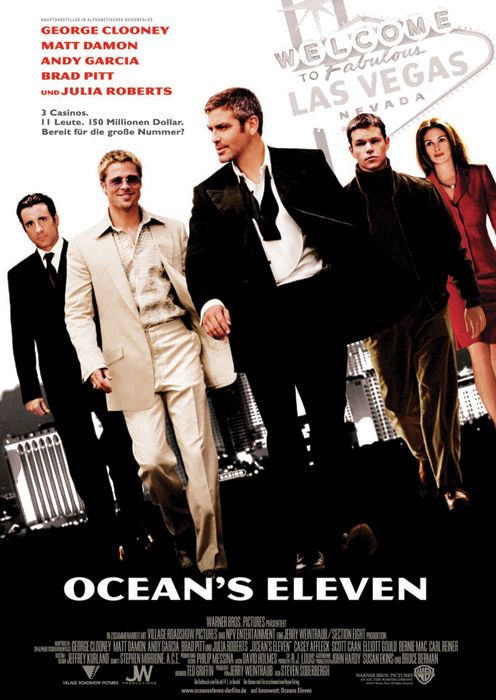
Case o' The Week: Not Quite Clooney - Liu and Speedy Trial Act

Dashing men and a beautiful woman hatch a clever conspiracy to successfully steal millions from a Las Vegas casino? The Ninth considers a case with facts just like Ocean's Eleven -- -- except for the "successfully" part. United States v. Liu, 2011 WL 182228 (9th Cir. Jan 21, 2011), decision available here.

Players: Hard-fought appeal by D. Nev. AFPDs Dan Maloney and Michael Powell.

Facts: Liu was involved in an international conspiracy involving “supernotes”: counterfeit so good that it works in casino slot and cash-counting machines. Id. at *1. Liu was first indicted for this offense in L.A. Id. He was released and then continued to conspire to pass the notes in Vegas while on pretrial release. Id. He was ultimately indicted in Nevada on charges from the original California indictment, allegations from a previous Nevada indictment, and allegations of new post-release conduct. Id. at *2. Liu’s wife, Min Li Liu, was also added to the superseding Nevada indictment, and the California indictment was dropped. Id. at *1, *2. Liu filed a motion to dismiss the conspiracy charge of the Nevada indictment, “arguing that it was ‘merely an extension’ of the California indictment and that the failure to timely prosecute him on the California indictment violated his rights under the [Speedy Trial Act, or STA].” Id. at *2. The district court found the STA time limits for the California indictment did not apply to the Nevada indictment because the Nevada indictment ‘charged a new and distinct offense from the one charged in the California indictment.’” Id.

Issue(s): “We assume, without deciding, that the two indictments charged Liu with the same overarching conspiracy although the [second superseding indictment] supplemented new facts . . . . Assuming the Liu was charged with the same conspiracy in the two indictments, we must now determine whether the time that lapsed between Liu’s first appearance in court in California and his trial in Nevada violated the STA.” Id. at *3.

Held: “If we apply our holding in [United States v. King, 483 F.3d 969, 972 (9th Cir. 2007)], Liu’s STA clock under the California indictment reset upon the addition of his wife, Min Li, to the [second superseding indictment in Nevada]. There is no evidence in the record before us to suggest that the delay between the filing of the California indictment and the addition of Min Li through the filing of the [second superseding indictment] was unreasonable.” Id. at *4. “Because the delay in the filing of the [second superseding indictment] that named another defendant was reasonable, and because there is no evidence of bad faith on the part of the government, Liu’s [Speedy Trial Act] clock restarted [when the second superseding indictment was filed.] Id. at *4.

Of Note: The general rule is that the addition of a new co-defendant restarts the Speedy Trial Act clock. See id. at *3 (discussing King). There are two caveats to that rule, however: the delay must be “reasonable” and the addition of the codefendant requires the “absence of bad faith on the part of the government.” Id.

Judge Tallman assures us that there is no showing of bad faith from the government’s addition of the wife to the Nevada indictment (and she was admittedly arrested with Liu as he tried to pass counterfeit through a casino machine). Id. at *1. Nonetheless, it is interesting to note that Liu’s wife was fully acquitted in his trial through her successful Rule 29 motion. Id. at *2. The result is that his Liu’s wife was exonerated of the conspiracy, yet her presence in the superseding indictment bought the government a Speedy Trial exclusion as to Liu. Probably not bad-faith charging based on these facts, but the exclusion of time based on the (exonerated) wife’s charges still doesn’t seem fair.

How to Use: Another issue was Liu’s request for a specific unanimity instruction as to the specific overt act committed in furtherance of the conspiracy. Id. at *5. Judge Tallman questions whether the district court “must instruct a jury that it must make a unanimous finding of which over act was committed in furtherance of the conspiracy.” Id. at *5 & n.7. Thankfully, the panel didn’t resolve that issue – so we should still seek a specific offense instruction (or “Echeverry” instruction) for conspiracy overt acts (except for § 841 drug conspiracies, which do not require proof of an overt act. United States v. Cazares, 121 F.3d 1241, 1246 (9th Cir. 1997).

For Further Reading: How good were the supernotes in the case? An undercover agent was supposed to pay Liu in this counterfeit, but used real bills instead– and Liu couldn’t tell the difference. Id. at *1 n.1. For an interesting description of these bogus bills, see “What Are Supernotes?” available here.


"Ocean's Eleven" poster from http://www.impawards.com/2001/posters/oceans_eleven_ver5.jpg Image of one-hundred dollar bills from Slate article on Supernotes, available here.


Steven Kalar, Senior Litigator N.D. Cal. FPD. Website at www.ndcalfpd.org

.

Labels: , , , ,

Sunday, December 26, 2010

Case o' The Week: Auld Lang Syne -- Times Gone By, Speedy Trial Time and Alvarez-Perez

Auld Lang Syne - Times Gone By, and insufficient Speedy Trial Act exclusions. A great start to a New Year for Mr. Alvarez-Perez -- that is, until the Ninth decides to meddle with the prejudice inquiry before the case even made it back to the district court. United States v. Alvarez-Perez, 2010 WL 5175011 (9th Cir. Dec. 22, 20101), decision available here.

Players: Hard-fought case by AFD Bridget L. Kennedy of Federal Defenders of San Diego. Decision by Alaska D.J. Singleton.

Facts: Charged with illegal reentry, Alvarez-Perez agreed to proceed by Information and pursue a fast-track deal – and then he changed his mind. Id. at *1. He was indicted. Id. He noticed his intent to plead guilty – and then he changed his mind. Id. He again said he wanted to plead guilty – and then changed his mind. Id. Without defense objection, the district court set a trial date within the Speedy Trial Act (“STA”) period, if the clock started ticking on the date he was arraigned on the Indictment. Id. at *2.

Issue(s): “Francisco Alvarez-Perez (“Alvarez”) appeals his conviction of being a deported alien found in the United States in violation of 8 U.S.C. § 1326. Alvarez contends that his prosecution violated the Speedy Trial Act (“STA”) because the permitted 70-day period was exceeded.” Id. at *1.

Held: “In this case, Alvarez made his first appearance on the 8 U.S.C. § 1326 complaint on May 15, 2007, and the information was filed on June 12, 2007. Under the plain language of the STA, June 12, 2007, is the trigger date.” Id. at *2. “Nor do we see any reason to assign any significance to the fact that the earlier information and the subsequent indictment were assigned different case numbers. To credit the government's argument would be to elevate form over substance and violate the clear intent of Congress. Were we to uphold the government's theory, the government in every case could extend the STA's time limits by indicting, dismissing, and reindicting under new case numbers. Thus, June 12, 2007, the date the information was filed, is the trigger date for the STA.Id (emphasis added). “Accordingly, the filing of the indictment on the same charge did not start a new clock for the purposes of the STA.” Id.

Of Note: The good news is that Judge Singleton brushes back the government’s attacks on this Speedy Trial error. First, Alvarez-Perez did not waive his challenge, even though he brought it at the eleventh hour, just before trial, in an oral motion. Id. at *5. Moreover, this wasn’t “invited error” – even though it was the defendant’s own tortuous path to trial that created the confusion about the dates. Id. at *6-*7.

The bad news? The Court sees this as one of those rare cases where prejudice can be determined on appeal, and finds that there was no prejudice here. Id. at *7. So while Alvarez-Perez won the battle, he lost the war: the case is remanded with instructions to dismiss the indictment without prejudice (in other words, another trial likely awaits). Id. at *7-*8.

How to Use: Judge Singleton seems to create a new rule for the Circuit: while exclusion for plea negotiations is not appropriate, a district court can exclude time “where the defendant notifies the court that negotiations have resulted in an agreement and, as a result, the court sets a change of plea hearing.” Id. at *3. In what is frankly a bit of legal fiction, the exclusion in this situation is “held to be excluded either under § 3161(h)(1)(G) because it is ‘delay resulting from consideration by the court of a proposed plea agreement’ or under 18 U.S.C. § 3161(h)(1)(D) as a ‘pretrial motion.’” Id. at *3.

Legal fiction or no, this is a handy new rule for defense counsel representing an “indecisive” client before a Speedy-Trial crazed district judge keen on setting a trial date. If the defense informs the court of a change of plea and sets a date for the plea, that time can be excluded – even absent an actual agreement.

For Further Reading: On the same day Alvarez-Perez was decided, the Senate confirmed a new Chair of the United States Sentencing Commission. On December 22, federal District Judge Patti Saris of Massachusetts was confirmed as the new Chair of the Commission. See article here. A Harvard Law grad, Judge Saris has a background in civil rights and was first appointed to the bench by President Clinton. Id. Here’s hoping that six years after Booker, Chair Saris gets real reform underway at the home of the “advisory” guidelines.


Image of animated clock from http://www.photoshopcamp.com/Make-a-Animated-Clock--Photoshop-animation-effect-tutorial--82.html

Steven Kalar, Senior Litigator N.D. Cal. FPD. Website at www.ndcalfpd.org


.
.

Labels: ,

Saturday, May 31, 2008

Case o' The Week: Better Late Than Never, OK in Santana

The Ninth zinged us. In a rare show of efficiency, we had the following Santana memo finished last Thursday. The Court, of course, then issued the important Giberson decision on Friday (blogged above). It pays to procrastinate.

Here is the bonus Case o' The Week memo on Santana and a prisoner's long wait (left) to be picked up for a supervised release violation. United States v. Santana, __ F.3d __, 2008 WL 2178132 (9th Cir. May 27, 2008), decision available here.


Players: Hard-fought case by San Diego AFPD Zandra L. Lopez.

Facts: While on supervised release, Santana picked up a state case for which he got three days jail time. It was 121 days between his last day of state custody, and when the feds finally got around to getting him to his initial appearance. (Time spent in custody on the federal warrant, of course.). Santana moved for dismissal based on this delay: the district court denied the motion.

Issue(s): “Santana argues that his right to prompt disposition of the government’s petition to revoke his supervised release was violated by the government’s unjustified delays in executing the warrant for his arrest and in bringing him before a judge for his initial appearance.”

Held: “[Given the “short” length of delay,] the Court holds that the very recent Mendoza presumed prejudice rule is not appropriate.” “The Mendoza analysis being inappropriate, we apply our ordinary test in supervised release revocation cases and search for actual prejudice. . . . At oral argument, Santana’s counsel admitted that he received full credit against his sentence for the time he spent in pre-revocation incarceration. Santana has not identified any other prejudice, aside from the anxiety of awaiting his revocation proceedings. In this case, even though the delay appears attributable to the government’s neglect, in light of the lack of actual prejudice, we conclude that the four-month delay did not violate Santana’s due process rights or his rights under Rule 32.1.”

Of Note: The Court in Santana recaps the Speedy Trial Clause analysis, but cautions about how far that analogy goes in the Due Process analysis for supervised release proceedings:
Barker v. Wingo, 407 U.S. 514, 530 (1972), held that analysis under the Speedy Trial clause requires balancing the factors of length of delay, reason for the delay, the defendant’s timely protest of delay, and prejudice to the defendant. . . . Barker identified three types of actual prejudice: oppressive pre-trial incarceration, unnecessary anxiety of the accused, and impairment of the accused’s ability to mount a defense. 407 U.S. at 532. The longer the delay, the less the showing of prejudice required, until an extremely lengthy delay attributable to government negligence creates a ‘strong presumption that [the defendant] suffered prejudice,’ which the government has the burden to rebut. Mendoza, 2008 WL 1970339, at *5. We hasten to say that a reasonable time for proceeding to a full-scale criminal trial is not the same as a reasonable time for revocation proceedings, and therefore Speedy Trial Clause authority should not be applied in revocation proceedings as if it were directly controlling.

How to Use: Probation and AUSAs have been known to deliberately stall getting supervised release defendants back before the district court, as a way to guarantee custodial time regardless of the outcome of the Form 12 sentencing hearing. (What judge would ever undercut a custodial sentence that has already been served in transit?) Santana encourages this shoddy practice.

We should start building a prejudice record with Apprendi “sentencing memos” explaining the need for a below-guideline sentence while the client is waiting to be transported. Maybe this could be styled as a “Due Process Demand for Speedy Prosecution?” Maybe served on the U.S. Marshal as well? These motions would put everyone on notice, converting the feds’ “negligent” delay to “deliberate” delay. (Remember Barker’s “reason for delay” factor above . . . .)

For Further Reading: The best defense analysis of supervised release is a pair of very thoughtful articles written by AFPD Douglas Morris in The Champion, available here.


Steven Kalar, Senior Litigator N.D. Cal. FPD. Website at www.ndcalfpd.org

.

Labels: ,