Sunday, May 10, 2020

Case o' The Week: Carpenter Demur - Yang and Rental Car Standing


  Car that’s late moots plate debate.
United States v. Jay Yang, 2020 WL 2110973 (9th Cir. May 4, 2020), decision available here.


Players: Decision by visiting S. Dakota District Judge Piersol, joined by Judge Lee.
 Concurrence by Judge Bea.
 Hard-fought appeal by D. Nev. AFPD Cristen Thayer, along with an impressive array of amicus counsel from EFF and the ACLU.  

Facts: Yang was seen driving a rented GMC Yukon, and stealing mail. Id. at *1. Postal Inspectors queried a huge license-plate database, called “LEARN.” Id. at *2. The database took shots of the Yukon’s plates after the deadline had passed to return it. Id. The rental car company tried tracking the Yukon when it was overdue, but the GPS unit had been deactivated in the car. Id. at *3. The “LEARN” license data lead the Inspector to a condo unit where the Yukon was discovered: a search warrant followed. Id. A search of the residence revealed stolen mail, “fishing devices” to dig mail out of collection boxes, and a gun. Id. After being charged in federal court, Yang moved to suppress. The district court denied the suppression motion, and Yang took a conditional appeal. Id. at *5.     

Issue(s): “Yang argues that the ALPR technology used by Inspector Steele without a warrant to track and locate Yang at his residence violated his Fourth Amendment right to privacy on the whole of his movements under Carpenter v. United States, ––– U.S. ––––, 138 S.Ct. 2206, 201 L.Ed.2d 507 (2018)—a decision issued by the Supreme Court after Yang’s motion to suppress was denied.” Id. at *2.

Held: “We have jurisdiction under 28 U.S.C. § 1291 and affirm the district court’s decision denying Yang’s motion to suppress. We do not address the potential Fourth Amendment privacy interests that may be implicated by the warrantless use of this ALPR technology because we conclude that Yang does not have a reasonable expectation of privacy in the historical location data of the Yukon under the facts of this case.Id.

Of Note: Yang is an odd, long opinion. It goes into great depth on the “LEARN” license plate database, describing how the system collects plate hits, the millions of entries that the database maintains, how the database is accessed by law enforcement, and how many hits an average plate generates a year. Id. at *3-*4. The Court then dodges the Carpenter Fourth Amendment issue entirely, effectively holding that Yang had no standing because the Yukon was overdue to the rental company. Id. at *9.
  Judge Bea (correctly) complains in his concurrence that the standing analysis is incorrect for this Carpenter-tracking type claim (particularly for a car that was only 13 hours overdue). Id. at *9 (Bea, J., concurring).
  The majority opinion may be the result of shifting votes, with the long LEARN discussion a legacy of an earlier Carpenter-based decision. Whatever the reason, Yang is ultimately not a decision on the legality of license plate readers: it is a standing decision, focused on rental cars that are kept beyond their return date (and a pretty fact-bound holding, at that).

How to Use: In his concurrence, Judge Bea would have found standing, then held that license-plate harvesting does not implicate Fourth Amendment / Carpenter concerns. Id. In Judge Bea’s view, the (comparatively) few license-plate captures does reveal personal movements to the same degree as the cell phones in Carpenter. Id. at *11. The voracious “LEARN” database of “Vigilant Solutions” cries out for another vigorous Fourth attack – if that happens in your case, reach out to the Yang amici while in the district court, and consider the Bea concurrence when thinking about how to extend Carpenter to license plate databases.
                                               
For Further Reading: Last week we flagged the six hundred Terminal Island inmates that were COVID-19 positive, and warned to “brace for skyrocketing numbers” from Lompoc as tests were administered.
   We didn’t brace hard enough.


   Nearly 850 inmates and staff have tested positive for COVID-19 in Lompoc: 68% of the prison’s population. See CBS Article here; see also LA Times Article here.    


Image of “LEARN” license plate “intelligence platform” from https://www.minerelectronics.com/vigilant-solutions/learn.htm


Steven Kalar, Federal Public Defender N.D. Cal. Website at www.ndcalfpd.org


.


Labels: , , , ,

Sunday, November 10, 2019

Case o' The Week: Freeloaders Forfeit Fourth - Norris, the internet, and curtilage


  Internet moochers get no Fourth love.


United States v. Norris, 2019 WL 5688802 (9th Cir. Nov. 4, 2019), decision available here.

Players: Decision by Judge Rawlinson, joined by Judges Schroeder and O’Scannlain. Hard-fought appeal by former ED Cal AFPD John Balazs.  

Facts: The FBI investigated the distribution of child porn through a file sharing network. Id. at *1. The agent couldn’t determine the physical address for the porn’s source: “boysforboys1.” Id. A search of an apartment linked to this address revealed no evidence of child porn. Id.
  Using “Moocherhunter” software, the agents traced the suspected signal that – without permission -- logged onto the apartment’s router. The signal strength of the child-porn addresses suggested they originated in a different nearby apartment. Id. at *2. The agents got a search warrant for this second apartment and found child porn. Norris was charged. Id. at *3.
  Norris moved to suppress, “alleging that use of the Moocherhunter software amounted to a warrantless search in violation of the Fourth Amendment.” Id. The court relied on Jardines, and concluded that because there was no encroachment on Norris’s curtilage there was not a Fourth Amendment violation. Id. The court “concluded that Norris lacked a subjective, reasonable expectation of privacy, because he connected to a third-party’s router without authorization and assumed the risk that his signal would reveal the MAC address to authorities.” Id.
  Norris was convicted after trial and appealed.

Issue(s): “[ ] Norris seeks to have us apply the protections of the Fourth Amendment to the use of a wireless tracking program to identify the address of his wireless device.” Id. at *1.

Held: “[W]e conclude that no Fourth Amendment search occurred in the course of identifying Norris’s wireless device . . . .” Id. 
  “Although physically located in his home, Norris’s wireless signal reached outside his residence to connect to the wireless router in Apartment 242. The FBI captured Norris’s wireless signal strength outside Norris’s residence to determine the source of the signal. The FBI’s actions may be likened to locating the source of loud music by standing and listening in the common area of an apartment complex. Although the music is produced within the apartment, the sound carries outside the apartment. Just as no physical intrusion ‘on constitutionally protected areas’ would be required to determine the source of the loud music, no physical intrusion into Norris’s residence was required to determine the strength of the wireless signal emanating from the devices in his apartment . . . . We conclude that no subjective expectation of privacy exists under these circumstances, where information is openly available to third parties.Id. at *4.

Of Note: What about Kyllo? Recall that in that case SCOTUS rejected the cops’ use of thermal-imaging technology to hunt for heat consistent with weed-grow lights. Id. at *5. Isn’t that analogous to the sniffing of Norris’s internet signal here? 
  Not according to the Ninth. 
  “We agree with the district court that Kyllo does not dictate the conclusion that a Fourth Amendment search occurred in this case.” Id. “Unlike in Kyllo, where the defendant confined his illegal activities to the interior of his home and relied on the privacy protections of the home to shield these activities from public observation, Norris’s activities reached beyond the confines of his home, thereby negating any expectation of privacy.” Id.
   Judge Rawlinson is equally unpersuaded that Norris had a reasonable expectation of privacy in the signal: “it strains credulity to suggest that society would be prepared to recognize an expectation of privacy as reasonable when an individual gains access to the internet through the unauthorized use of a third-party’s password-protected router located outside his residence.” Id. at *6.

How to Use: What if, like the Big Bang Theory’s “Penny,” Norris was an authorized internet moocher? The Norris opinion doesn’t get that far, id. at *5, so there may be a sliver of “reasonable expectation” remaining in that fact pattern.
                                               
For Further Reading: Norris is another round Fourth Amendment peg in a square technology hole. A better approach is “digital curtilage.” 
  For an interesting piece discussing that idea, see Professor Andrew Ferguson, The Internet of Things and the Fourth Amendment of Effects, available here.


Image of Penny from “Big Bang Theory” from https://www.pinterest.com/pin/464996730251364996/

Steven Kalar, Federal Public Defender N.D. Cal. Website available at www.ndcalfpd.org

.

Labels: , , , , ,

Sunday, October 28, 2018

Case o' The Week: Herring gone bad - Henderson and Unlawful NIT Child Porn Searches


Thousands of illegal Federal hacking searches, across the United States.
  All salvaged with a Herring aid.


United States v. Henderson, 2018 WL 5260851 (9th Cir. Oct. 23, 2018), decision available here.

Players: Decision by Judge O’Scannlain, joined by Judge Bea and DJ. Hard fought appeal (with e.b. petition on way) by ND Cal AFPD Hanni Fakhoury.

Facts: The FBI seized and operated a child porn server called “Playpen.” Id. at *1-*2. The Feds obtained a Network Investigative Technique (“NIT”) warrant from an ED Va. magistrate judge. Id. That warrant allowed the search of a computer, wherever located, if it was logged into Playpen. Id.
  ND Cal resident Henderson accessed child porn on Playpen. Id. After he was charged with child porn offenses, Henderson moved to suppress evidence seized pursuant to the “NIT” warrant. Id. at *3.
  The motion was denied, Henderson was convicted, and appealed.

Issue(s): “Henderson argues that the motion to suppress should have been granted because the NIT warrant was issued in violation of [Fed. R. Crim. Pro.] 41(b), which authorizes magistrate judges to issue warrants subject to certain requirements. To prevail . . . Henderson must show both that the NIT warrant did violate Rule 41(b) and that suppression is the appropriate remedy for such violation.” Id. at *4.
   “[W]e must decide whether evidence that was obtained pursuant to a warrant that authorized a search of computers located outside the issuing magistrate judge’s district must be suppressed.” Id. at *1. 
  “If the (Herring “good faith”) exception may apply in cases where an officer relied on a valid warrant which had been revoked or a warrant which never existed, may the exception apply where the officer relied on a warrant subsequently recognized as void due to the issuing judge’s jurisdictional violation?” Id. at *8.

Held: “[T]he NIT mechanism is not a ‘tracking device’ within the meaning of . . . Rule . . . 41(b)(4). . . . [T]he NIT warrant violated Rule 41(b) by authorizing a search outside of the issuing magistrate judge’s territorial authority.” Id. at *4. “[ ] Rule 41(b) is not merely a technical venue rule, but rather is essential to the magistrate judge’s authority to act in this case.” Id. at *5. “Without any other source of law that purports to authorize the action of the magistrate judge here, the magistrate judge . . . exceeded the scope of her authority and her jurisdiction . . . .” Id. “[A] warrant purportedly authorizing a search beyond the jurisdiction of the issuing magistrate judge is void under the Fourth Amendment. We . . . conclude that the Rule 41 violation was a fundamental, constitutional error.” Id. at *7.
  “Application of the good faith exception is permitted where a warrant is void because of a magistrate judge’s jurisdictional violation, so long as the executing officers had an objectively reasonable belief that the warrant was valid. We are unconvinced by Henderson’s argument otherwise, and we are satisfied that the good faith exception may apply to warrants that are void ab initio.” Id. at *8. “[T]he NIT warrant falls squarely within the Leon good faith exception: the executing officers exercised objectively reasonable reliance on the NIT warrant, and the marginal or nonexistent benefits produced by suppressing evidence ... cannot justify the substantial costs of exclusion.” Id. at *9.  

Of Note: The old Rule 41(b) -- in place when this search took place -- clearly didn’t authorize this warrant. In fact, it so clearly didn't authorize this warrant that in 2016 Congress had to change the rule to permit these searches. 
  Many child porn defendants throughout the country are now serving many decades of custody, based on convictions arising from these patently unlawful ED Va. NIT searches. The Feds’ alarming (and unlawful) NIT hack illustrates the injustices that arise when “good faith” draws the teeth of suppression remedies. 
  Something to Fourth Amendment fans to mull, with new Supreme Court majorities in play. See Orin Kerr article here

How to Use: Fourth gurus beware: Judge O’Scannlain pens what appears to be a rule of first impression in the Ninth. Leon / Herring “good faith” can salvage a warrant, even it is invalid ab initio. Id. at *8.
                                               
For Further Reading: Henderson refuses to suppress the evidence seized from unlawful domestic hacking by the FBI.
   For a troubling account of this unprecedented investigation, see a great EFF series of posts, here


Steven Kalar, Federal Public Defender N.D. Cal. Website at www.ndcalfpd.org

.

Labels: , , , , , , ,

Saturday, July 09, 2016

Case o' The Week: Share? Beware. - Nosal and Shared Passwords as CFFA violations


Share passwords?
You really shouldn’t. Your IT staff will yell at you.
(That, and you’ll go to federal prison).
United States v. Nosal, 2016 WL 3608752 (9th Cir. July 5, 2016), decision available here.

 
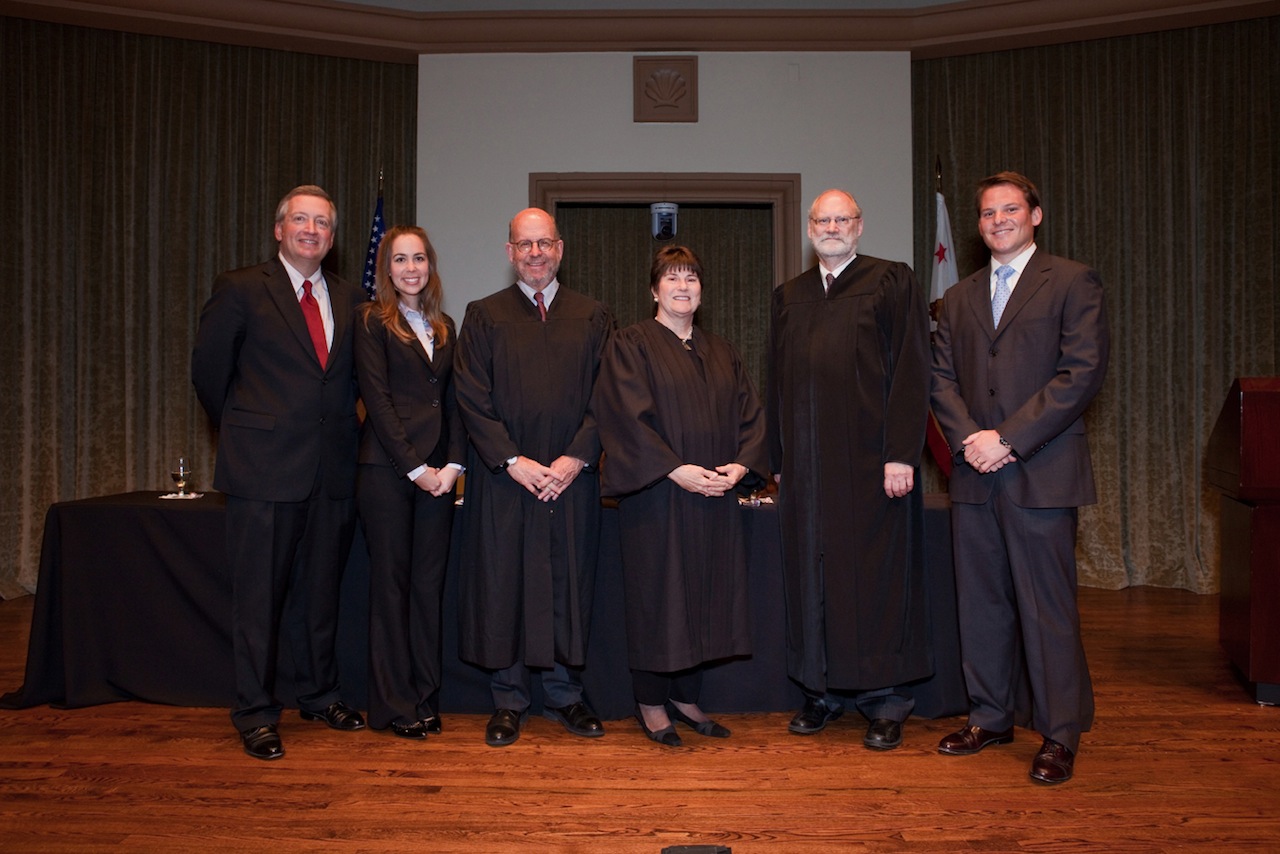
The Honorable Judge Margaret McKeown, and the Honorable Chief Judge Sidney Thomas

Players: Decision by Judge McKeown, joined by Chief Judge Thomas (above). Dissent by Judge Reinhardt. Hard fought-appeal by SF counsel Dennis Riordan, Donald Horgan and Ted Sampsell-Jones.

Facts: Nosal left Korn/Ferry, a headhunting company, to start his own firm. Id. at *2. Korn / Ferry had a confidentiality agreement that prohibited password sharing. Id. at *4. Nosal’s accomplices circumvented their revoked accessed credentials, and consensually used an assistant’s password to access Korn / Ferry’s database for information to take to Nosal’s new enterprise. Id. at *2. Nosal was convicted after trial. Id. at *10.

Issue(s): “This is the second time we consider the scope of the Computer Fraud and Abuse Act (“CFAA”), 18 U.S.C. § 1030, with respect to David Nosal. The CFAA imposes criminal penalties on whoever ‘knowingly and with intent to defraud, accesses a protected computer without authorization, or exceeds authorized access, and by means of such conduct furthers the intended fraud and obtains anything of value . . . .’ Id. § 1030(a)(4) (emphasis added). Only the first prong of the section is before us in this appeal: knowingly and with intent to defraud accessing a computer ‘without authorization.’” Id. at *1. 

“The question we consider is whether the jury properly convicted Nosal of conspiracy to violate the ‘without authorization’ provision of the CFAA for unauthorized access to, and downloads from, his former employer's database called Searcher. Put simply, we are asked to decide whether the ‘without authorization’ prohibition of the CFAA extends to a former employee whose computer access credentials have been rescinded but who, disregarding the revocation, accesses the computer by other means.” Id. at *2 (footnote omitted). "

Held: “[W] e conclude that ‘without authorization’ is an unambiguous, non-technical term that, given its plain and ordinary meaning, means accessing a protected computer without permission. This definition has a simple corollary: once authorization to access a computer has been affirmatively revoked, the user cannot sidestep the statute by going through the back door and accessing the computer through a third party. Unequivocal revocation of computer access closes both the front door and the back door.” Id. at *1. 

“We . . . . hold that Nosal, a former employee whose computer access credentials were revoked by Korn/Ferry acted ‘without authorization’ in violation of the CFAA when he or his former employee co-conspirators used the login credentials of a current employee to gain access to computer data owned by the former employer and to circumvent the revocation of access.” Id. at *9.

Of Note: Dissenting Judge Reinhardt explains that this holding extends the CFAA to most of us who share passwords. Id. at *19 (Reinhardt, J., dissenting). It is a compelling opinion, that wonders how this extension of the CFAA statute to consensual password sharing can be reconciled with the very real policy concerns of Nosal I. 
  En banc, encore?

How to Use: A (thin) silver lining in this case is reversal and remand on the restitution award, for attorney fees. Id. at *18. Korn / Ferry hired “premier” attorneys, and the opinion insinuates that this private firm did a fair chunk of the USAO’s work. Id. 
  Judge McKeown warns that private attorneys “are not a substitute for the work of the prosecutor, nor do they serve the role of a shadow prosecutor.” Id. An interesting admonishment, for those of us who have endured Silicon’s Valley’s pricest private counsel sitting chummily at the USAO’s table.
                                               
For Further Reading: Professor Kerr has an interesting, albeit somewhat self-promoting, analysis of Nosal II in a Washington Post piece here. 

A very thought-provoking op-ed comes from Harvard Law Professor Noah Feldman, available here


Steven Kalar, Federal Public Defender N.D. Cal. Website at www.ndcalfpd.org


.
.

Labels: , , , , ,

Sunday, March 13, 2016

Case o' The Week: Ninth Ain't Buying Gov's Cell Sell -- Lara, Cell Phones, "Containers" and Probationary Searches


  Ask not for whom the cell tolls; it tolls for thee.
United States v. Lara, 2015 WL 828100 (9th Cir. Mar. 3, 2016), decision available here.


Players: Decision by Judge W. Fletcher, joined by Judges Paez and Berzon. Admirable win for Deputy FPD Alexandra Yates, CD Cal FPD.

Facts: Lara plead guilty to a California drug crime. 
  A condition of probation required him to submit to a search “without our without a warrant, probable cause, or reasonable suspicion.” Id. In his probation agreement, Lara also initialed a section where he agreed to “waive and give up” his Fourth Amendment right to be free from unreasonable searches and seizures. Id.
   Soon after Lara’s probationary term began Probation Officers showed up unannounced at his home, seized and searched his cell phone, and discovered pics of a gun and texts relating to its sale. Id. at *2. GPS coordinates in the gun-photo led to Lara’s mother’s house and discovery of the gun. Id. 
 Lara was charged federally with being a felon in possession. His motion to suppress was denied (before the Supreme Court had decided, in Riley, 134 S. Ct. 2473 (2014), that the police may not, without a warrant, examine the digital information stored on a cell phone seized incident to arrest). Id. at *3. 
  Lara pled guilty, “but preserved his right to challenge the denial of his motion.” Id. at *3.

Issue(s): “Lara contends that his Fourth Amendment right to be free from unreasonable searches and seizures was violated when probation officers conducted two warrantless, suspicionless searches of his cell phone. He contends that the exclusionary rule requires the suppression of images, text messages, and GPS data found on his cell phone, as well as a gun and ammunition, as fruits of the illegal searches.” Id. at *1.

Held: “We agree.” Id. 
 The government contends that there are three independent reasons to affirm the district court’s denial of Lara’s motion to suppress. First, the government contends that Lara consented to the initial cell phone data search by accepting the terms of his probation agreement, thereby waiving his Fourth Amendment protection against unreasonable searches and seizures. Second, the government contends that, even if Lara did not waive his Fourth Amendment rights, the warrantless search was lawful because it was reasonable. Third, the government contends that even if the cell phone search was unlawful, the evidence it yielded should not be suppressed because a good faith exception to the exclusionary rule applies. We are not persuaded by any of these contentions.Id. at *3.

Of Note: Does it gall you, to be handed a plea agreement where your client is asked to consent to unreasonable searches? (Or, put differently, where the agreement purports to waive the Fourth Amendment’s requirement that a search be reasonable?) It galls the Ninth, too. See id. at *3. It matters not what waivers the USAO and Probation concoct, “any search made pursuant to the condition included in the terms of probation must necessarily meet the Fourth Amendment’s standard of reasonableness.” Id. 
  The rub, then, is what is “reasonable?” One answer could be that a suspicionless search of non-violent probationers is never reasonable – a potential bright-line hinted at in King, 736 F.3d 806 (9th Cir. 2013). Id. at *4. Judge Fletcher declines to go that far here, and instead conducts an individualized reasonableness assessment (that breaks Lara’s way).

How to Use: The search condition in Lara’s plea agreement covered “person and property, residence, premises, container and vehicle.” Id. at *5. It did not say “cell phone and information therein.” Id. Relying on Riley, the Ninth holds that a cell phone is not a container subject to this search clause. The information within the phone was therefore not fair game for a suspicionless search. Id. 
  Use Lara’s careful reading of the search clause when faced with probationary searches: the precise language of search clauses may be less broad than Probation assumes.
                                               
For Further Reading: Does Judge Fletcher's welcome and thoroughly modern understanding of cell phone privacy, id. at *5, foreshadow the outcome of the iPhone encryption battle when it finally hits the Ninth? Not exactly – though fair to speculate that Lara was well received at 1 Infinite Loop
  For one of the best descriptions of the actual technology at issue in the encryption battle, hit the EFF’s great post: A Technical Perspective on the Apple iPhone Case, available here.


Image of iPhone and gun from http://regmedia.co.uk/2013/06/28/side.jpg

Steven Kalar, Federal Public Defender, N.D. Cal. Website at www.ndcalfpd.org

.

Labels: , , , , ,