Case o' The Week: I.A.C., live post-plea: Mahrt and Post-Plea IAC Habeas claims
Many
times, a Ninth decision should force prosecutors to gulp hard and think deeply
about their own practice.
(And from time to time,
a Ninth decision should force us to do the same).
Mahrt v. Beard, 2017 WL 782447
(9th Cir. Mar. 1, 2017), decision available here.
 |
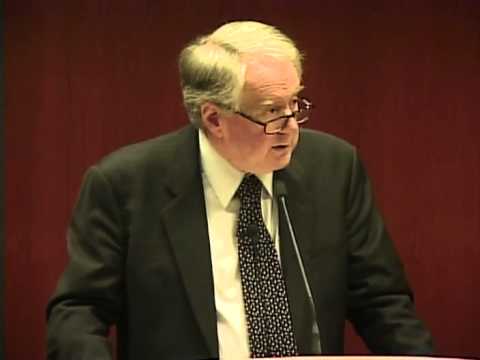
| The Honorable Judge William Fletcher |
Players:
Decision by Judge W. Fletcher, joined by Judges Christen and Friedland.
Facts: Neighbors to a Petaluma residence reported a male
and female were “arguing over a gun.” Id.
at *1. When officers responded they were met by Mahrt at the gate. Id. He was detained and questioned. Id.
Mahrt , and the owner of the
property, told the officers that the female involved – Mahrt’s ex-girlfriend –
had left the property. Id. Nonetheless,
officers conducted a “protective sweep” of Mahrt’s room in the garage. Id. The cops justified the search “due
to the report of the possible domestic incident and the mention of a deadly
weapon” and “because Mahrt may have been attempting to conceal a victim inside.”
Id.
No one was found inside the
apartment, but ammo cans, ammo, and an apparent AR-15 were discovered. Id. at *2. Cops then learned Mahrt was a
felon, obtained consent, searched again, and found guns. Id.
Mahrt was charged stateside. His two county PDs did not move to
suppress the firearms or ammo. Id. After
Mahrt’s motion for new counsel was denied, he plead open and received a
six-year sentence. Id. at *3.
A Wende appeal was denied in state court,
Mahrt – with the assistance of counsel – filed a state habeas petition
(denied), and ultimately a § 2254(d) habeas in federal court. Id. ND Cal Magistrate Judge Nandor Vadas
granted the federal petition, finding a Sixth Amendment IAC violation.
The
State of California appealed to the Ninth. Id.
Issue(s): Were the state habeas courts unreasonable in denying
the writ?
Held: “It would have been reasonable for the state courts to
conclude that a motion to suppress, if brought, would have likely been denied .
. . Specifically, the state courts could have reasonably have concluded that
the search as justified under the ‘emergency aid’ exception to the warrant
requirement.” Id. at *6.
Of Note: Can a habeas petitioner raise an IAC claim against defense
counsel for failure to bring a suppression motion, when the petitioner pleaded
guilty? That issue is the real heart of Mahrt – and the answer is, “yes.” Id. at *4.
Judge Fletcher rejects the State’s “narrow”
interpretation of Tollett on the
availability of habeas IAC claims after pleas. Id. As he explains, “If the deputies unconstitutionally searched
Mahrt’s home, counsel’s failure to move to suppress the fruits of that search
prevented Mahrt from making the informed choice to which he was entitled. We
therefore conclude that Mahrt’s ineffective assistance of counsel claim is
allowed under Tollett.” Id. at *5.
This is great stuff for habeas folks,
opening opportunities in a criminal justice system where the vast majority of criminal
cases resolve in guilty pleas.
It is also an interesting (and sobering)
reminder for trial counsel.
The subtext of Mahrt is that the Ninth (fairly) expects explicit discussions with our clients on the pros and
cons of pretrial motions (discussions that are even better if done in writing).
See id. at *2 (recounting discussions about the motion between defense counsel and Mr. Mahrt). Those discussions must happen before a guilty plea is entered -- and if a decent Fourth motion is abandoned for no good reason, that can be the basis of a later IAC claim.
Is the right thing by the client, and an essential step if a pleading defendant
is going to make “the informed choice to which he [is] entitled.” Id. at *5.
How to Use:
Mahrt’s will be misinterpreted by
prosecutors, who will cite the final, AEDPA-compelled Fourth Amendment outcome.
Point instead to the decision's threshold holding: “We conclude that trial counsel should have moved to suppress the firearms and ammunition. There
was at least a chance that such a motion would have succeeded.” Id. at *5 (emphasis added). Judge Fletcher carefully goes through the
conflicting evidence, the availability of witnesses, and the cop’s (incorrect)
original search theory. Id.
The state-deference, AEDPA-driven outcome means
little for Fourth law: this was a bad search and a righteous suppression
motion.
For Further
Reading: Three Ninth Circuit jurists have squared-off
against the President – in People’s Court.

(Spoiler alert: the Ninth does just fine).
For SNL’s coverage of the hearing between POTUS and Judges
Canby, Friedland, and Clifton, see clip here.
Image of the Honorable Judge
William Fletcher from https://i.ytimg.com/vi/rjHRxqbL1cU/hqdefault.jpg
Clip from Saturday Night Live
from http://www.nbc.com/saturday-night-live/video/trump-peoples-court/3468894?snl=1
Steven Kalar, Federal Public Defender,
N.D. Cal. Website at www.ndcalfpd.org
.
.
Labels: Emergency exception, Fourth Amendment, Habeas, W. Fletcher
posted by Steve Kalar at 3/05/2017 10:25:00 AM
0 comments