Sunday, December 20, 2020

Case o' The Week: Jury Finding Not So Binding - Hardiman and Pimentel-Lopez challenges

 Per curiam coal, in the defense stocking . . .


  United States v. Hardiman, 2020 WL 7350248 (9th Cir. Dec. 15, 2020), decision available here.

 Players: Per curiam opinion with Judges Paez and Owens, and Sr. D.J England, Jr. Hard-fought appeal by ND Cal CJA stalwart James Thomson, along with Ethan Stone.

 Facts: At trial, a jury found Hardiman responsible for distributing at least 28 grams, but less than 280 grams, of crack. Id. at *1. At sentencing the district court rejected the jury’s finding, held Hardiman responsible for more than 280 grams, and imposed a guideline sentence. Id. 

 After Hardiman’s direct appeals were final, the Ninth decided United States v. Pimentel-Lopez, 859 F.3d 1134 (9th Cir. 2016). In Pimentel-Lopez, the Ninth held “that a district court is not entitled to make a drug quantity finding in excess of that found by the jury in its special verdict.” 2020 WL 7350248, *1 (internal quotations and citation omitted); see generally blog here

  After Pimentel-Lopez, the district court denied Hardiman’s § 2255 and § 3582(c)(2) motions.” Id.

 Issue(s): Issue One: “Hardiman argues that the district court erred by denying his § 2255 motion because, under Pimentel-Lopez, the court violated his Sixth Amendment rights when it found for sentencing purposes that he was responsible for distributing a higher amount of drugs than the jury specifically found.” Id.

 Issue Two: “Hardiman also argues that the district court erred by denying his § 3582(c)(2) motion in light of Pimentel-Lopez. Hardiman filed a § 3582(c)(2) motion to reduce his sentence based on Amendment 782 to the Guidelines. . . . The district court determined that Amendment 782 retroactively reduced Hardiman's base offense level and that he was eligible to be resentenced pursuant to a new Guidelines range, but that the 18 U.S.C. § 3553(a) factors and the circumstances of his case did not warrant a sentencing reduction.” Id. at *3.

 Held:  Issue One: “[W]e hold that Pimentel-Lopez does not apply retroactively to cases on collateral review under Teague v. Lane . . . .” Id. at *1. “Pimentel-Lopez announced a ‘new’ rule of criminal procedure which is not retroactive under Teague. Accordingly, Pimentel-Lopez is inapplicable to Hardiman's § 2255 motion, and the district court did not err by denying the motion.” Id. at *3.

  Issue Two: “Hardiman’s arguments about Pimentel-Lopez “were not affected by” Amendment 782 and therefore are outside the scope of the proceeding authorized by § 3582(c)(2) . . . Moreover, even under Pimentel-Lopez, a district court has the discretion in its assessment of the § 3553(a) factors to consider a drug quantity higher than the amount specifically found by the jury. . . .” Id. at *3 (footnote, quotations and citation omitted).

 Of Note: Should the § 3582(c)(2) decision be reviewed for abuse of discretion, plain error, or de novo? The Ninth dodges this standard of review – note that the standard of review issue remains open. Id. at *3 & n.4.

 How to Use: The Ninth doesn’t mention that Mr. Hardiman is serving 188 months – despite the fact that the jury found lower drug amounts than the sentencing court. There’s no habeas help, and no drug resentencing love. Do any options remain? Mull whether there is there any Compassionate Release action, litigation that permits revisiting unjust sentences imposed under laws that have since changed? (Note that Compassionate Release is a different subsection of § 3582).                                            

For Further Reading: The science is clear: inmates should be near the front of the line for the COVID vaccine. For a compelling podcast explaining why, see NPR piece here


  California is one of the few states that has prisoners in the list for vaccine in the next three months. See LA Times article here. 

  The CDC votes today on the next round of the vaccine schedule – here’s hoping our poor incarcerated clients don’t get washed out by the massive lobbying effort now underway. See CNN article here.  


Image of coal in stocking from https://middlesexconsulting.com/will-your-head-of-services-get-an-ipad-pro-or-a-lump-of-coal/

Image of COVID vaccine from https://www.insurancejournal.com/news/national/2020/10/30/588822.htm


Steven Kalar, Federal Public Defender N.D. Cal. Website at www.ndcalfpd.org


.

Labels: , , ,

Sunday, March 08, 2020

Case o' The Week: An Element-ary Outcome - Allen and Actual Innocence Exception to Habeas bars


News flash: if an element is missing, the defendant is “actually innocent.”
 
The Hon. Judge William Fletcher
  (Oh, that crazy Ninth).
Allen v. Ives, 2020 WL 878523 (9th Cir. Feb. 24, 2020), decision available here.

Players: Thoughtful decision by Judge W. Fletcher, joined by Judge Christen. Dissent by Judge Callahan. 
  Admirable win for D. Oregon AFPD Elizabeth Daily.  

Facts: In the 90’s Allen pleaded guilty to gun and drug charges. He was sentenced to 322 months (!?!) as a Career Offender under the mandatory guidelines. Id. at *2. In 2017, he filed a § 2241 claim. Id. He argued that Mathis and Decamps were retroactive, and that his marijuana sales predicate no longer counted. Id. He thus argued that he was “innocent of being a Career Offender.” Id.
  The court rejected the petition for lack of jurisdiction, finding that career offender errors were “purely legal” and had “nothing to do with factual innocence.” Id.

Issue(s): “[  ] Allen appeals the district court’s dismissal of his 28 U.S.C. § 2241 habeas corpus petition for lack of jurisdiction. Allen contends that he is ‘actually innocent’ of his sentence as a career offender; that the remedy provided by 28 U.S.C. § 2255 is ‘inadequate or ineffective’ to test his claim of actual innocence; and that the district court may therefore entertain his § 2241 petition.” Id. at *1. “The government conceded at oral argument that if a petitioner is actually innocent of a predicate crime for career offender status in the sense that he did not commit the state law crime of which he was convicted, Bousley applies. In that event, the petitioner would have a claim of actual innocence cognizable under § 2241 . . . . The question before us, then, is not whether a petitioner who did not commit a predicate crime of which he was convicted may challenge his career offender status under § 2241. The government has conceded that he may do so. Rather, it is the closely related question whether a petitioner who committed a crime that is not a predicate crime may challenge his career offender status under § 2241.” Id. at *4.

Held:We conclude that Allen’s claim of actual innocence is cognizable under § 2241. We therefore reverse the district court’s dismissal for lack of jurisdiction and remand.” Id. at *1. “In Marrero, we left open the question whether a petitioner may ever be actually innocent of a noncapital sentence for the purpose of qualifying for the escape hatch. . . . We now reach that question and hold that Allen has made a claim of actual innocence that permits jurisdiction over his § 2241 petition. If Allen prevails on the merits of his claim that his . . . marijuana conviction was not a predicate conviction for career offender status under the Guidelines, the factual predicate for his mandatory sentencing enhancement did not exist. That is, he is actually innocent of the enhancement. In that case, it is beyond dispute that he is not, and was not, a career offender.” Id. at *4.

Of Note: Nice win, but not a surprising result. This decision of first impression in the Ninth hews closely to the lead of the – drum roll please – that zany Fourth Circuit! Id. at *5. 
  As Judge Fletcher correctly explains, it is hard to imagine a different outcome for a mandatory Guideline case, after SCOTUS’s decision in Alleyne (holding that a fact that increases a mandatory minimum sentence is an ‘element’ of the offense.”) Id. at *4.

How to Use: Another nice holding? “We take the opportunity to clarify that Mathis and Descamps apply retroactively when a court reviews a criminal judgment in the course of addressing a § 2241 petition or a first § 2255 motion.” Id. at *6. 
  Tuck that welcome nugget away, for use on another habeas day.
                                               
For Further Reading: Since Tuesday of last week, the Federal custodial facility at FDC SeaTac has been locked down for visiting, on coronavirus fears. See summary here
   The WD Wa District Court is now effectively closed. See order here


  The Ninth has cancelled all en banc arguments in S.F. next week. See notice here
  An FBI employee of the S.F. field division just tested positive for COVID-19. See article here
   San Francisco Mayor Breed just issued “aggressive” recommendations to reduce the spread of COVID-19 – including cancelling the St. Patrick’s Day parade. See News Release here
   Today it was announced that Oakland will be the port receiving the Grand Princess cruise ship, carrying over 3,500 passengers and cruise members, twenty-one of whom are positive for COVID-19. See article here. 
  Senator Kamela Harris is very interested in how the Feds are dealing (or not dealing) with  COVID-19 in the jail and prison populations. See Senator Harris Letter here
  So, when will COVID-19 hit Santa Rita Jail, and impact the ND Cal District Court? 
   For a sobering piece on the custodial “petri dish” in which our NorCal clients are detained, see a SacBee article here 


Steven Kalar, Federal Public Defender N.D. Cal. Website at www.ndcalfpd.org


.

Labels: , , , , , , ,

Sunday, August 04, 2019

Case o' The Week: When in Doubt, File it Out - Fabian-Baltazar and Duty to File Notice of Appeal


  Hard to savor waiver favor.
United States v. Fabian-Baltazar, 2019 WL 3418449 (9th Cir. July 30, 2019), decision available here.


Players: Per curiam decision with Judges Rawlinson, Bea, and Hurwitz. Win for ED Cal AFPD Peggy Sasso.    

Facts: Fabian-Baltazar pleaded guilty to possession for distribution of over 50 grams of meth. Id. at *1. His plea agreement had waivers of the right to appeal and collateral attack. Id. 
   After sentencing, he nonetheless filed a § 2255. The habeas motion alleged (among other things) that his trial counsel committed IAC by failing to file a notice of appeal. Id. The district court’s dismissal, based on the plea agreement waivers, was affirmed by the Ninth. Id.
   The Supreme Court granted cert., vacated, and remanded, in light of Garza v. Idaho, 139 S. Ct. 738 (2019). 
  The government declined to enforce the collateral attack waiver on remand, to the Ninth, so the Circuit analyzed the case “as involving only an appeal waiver.” Id. at *2.

Issue(s): “The parties agree that a remand is required in light of Garza but disagree about the scope of the remand. Fabian-Baltazar argues that we should simply reverse the district court’s order and direct it to address the merits . . . . The government argues that, before proceeding to the merits, the district court must first determine whether Fabian-Baltazar requested his attorney to file a notice of appeal.” Id. at *2.

Held: “Fabian-Baltazar’s § 2255 motion contends that he expressly instructed his attorney to file a notice of appeal. But, the government has never had the opportunity to challenge that assertion, because . . . . prior rulings held that the collateral attack waiver nonetheless barred the § 2255 motion. The district court therefore should determine on remand whether such an instruction was given, and if not, whether counsel failed to consult, and if so, whether that failure constituted deficient performance.” Id. at *2.

Of Note: On their surface Garza and Fabian-Baltazar are nice outcomes: the defendants may get to file appeals, despite appellate waivers. 
  Counsel in the trenches, however, worry about breach: will the government start backing out of deals when a defendant demands an appeal despite an appellate waiver? See generally Garza, 139 S. Ct. at 756 (Thomas, J., dissenting) (discussing potential life sentence – instead of imposed ten-year term -- if Garza breached plea agreements by filing an appeal).
  The facts of Fabian-Baltazar illustrate the cost-benefit conundrum. Mr. Fabian-Baltazar was caught with 2,636 grams of meth. See D.Ct. Ord. Denying Habeas Mot., 2015 WL 1497537, *5. The government kept its side of the plea-agreement bargain, and recommended five offense levels off for Acceptance and Safety Valve. The district court varied down an additional 15 months from the guideline range, to a ten-year term. See id. 
  Fabian-Baltazar’s habeas, however, complains that he didn’t get below the mand-min of ten years (a promise not made in the plea agreement). Id. at *4.
  Will Mr. Fabian-Baltazar's long quest to file an appeal ultimately end in an Anders brief and breach exposure?
  Garza may vindicate appellate rights, but it adds real challenges to defense counsel charged with advising and protecting indigent clients.   

How to Use: Beware of Fabian-Baltazar’s lessons:

1. It is per se IAC to not file an appeal when expressly requested by our clients – even if there is an appellate waiver;

2. If you “consult” with the client after sentencing (consult means, “advising the defendant about the advantages and disadvantages of taking an appeal, and making a reasonable effort to discover the defendant’s wishes,”), it is only IAC to not file notice of an appeal if we are expressly told to file by our client;

3) If you do not “consult” with your client about filing an appeal (even if there is an appellate waiver), it may be IAC.
  Id. at *2.

The punchline? Consult with clients about filing an appeal, even if there is an appellate waiver (and wise to document that discussion in a letter or memo).
                                               
For Further Reading: Rather than fuzzy law on our duties, IAC claims over alleged failures to notice appeals, and messing with habeas evidentiary hearings, wouldn’t it be simpler just to eliminate appellate waivers altogether?
  Don’t scoff: there seems to be a growing judicial skepticism to the things. In 2018, for example, the Second Circuit refused to enforce a waiver where no consideration was apparent in the plea agreement. See Second Circuit blog here


Steven Kalar, Federal Public Defender N.D. Cal. Website at www.ndcalfpd.org 


.

Labels: , ,

Sunday, September 16, 2018

Case o' The Week: Blackstone on the Law -- Blackstone and Timeliness of Johnson guideline Section 2255 claims


   Sir William would be disappointed.
United States v. Blackstone, 2018 WL 4344096 (9th Cir. Sept. 12, 2018), decision available here.

Players: Decision by Judge Clifton, joined by Judges Schroeder and M. Smith. Hard-fought appeal by AFPD Alyssa Bell, Central District of California FPD.

Facts: In ’99, Blackstone was convicted of Hobbs Act robbery and a § 924(c), and sentenced under the (then-mandatory) guidelines to 290 months. Id. at *1-*2. Two priors were treated as “crimes of violence” that triggered Career Offender. Id. His appeal and habes were denied.
  Within a year of Johnson, Blackstone obtained permission to file a second-or-successive § 2255. Id. Blackstone filed a § 2255 in the district court, and the motion was denied on the merits. Id.
  Back up in the Ninth, the government then argued that Blackstone’s motion was untimely. Id. at *3. On appeal, the government contended that “the Supreme Court’s decisions in Johnson and Welch have not authorized a motion by Blackstone at this point because those decisions pertained to the Armed Career Criminal Act (ACCA), 18 U.S.C. § 924(e)(2)(B), and that neither addressed whether Johnson applies to other clauses providing for enhanced sentences based on convictions for crimes of violence.” Id. at *3.

Issue(s): “[A] right newly recognized by the Supreme Court may open the door to filing a § 2255 motion later in time. The question presented in this case is whether Johnson and Welch have opened that door.” Id. at *3.

Held:We conclude that they have not.” Id.
  “[T]he Supreme Court has not yet recognized the right asserted by Blackstone. The Supreme Court has not held that the mandatory Sentencing Guidelines are subject to this vagueness challenge. As a result, Blackstone’s current motion is not timely under the statute. In reaching that conclusion, we agree with similar rulings by three other circuit courts that have considered this issue. We deny a similar challenge by Blackstone to a conviction and sentence under 18 U.S.C. § 924(c) for use of a firearm during a crime of violence because the Supreme Court has not recognized that right, either. We affirm the denial of Blackstone’s motion.” Id.

Of Note: This is a terrifically disappointing opinion. As the Ninth’s Johnson warriors have quickly pointed out, the decision relied on the Tenth’s opinion in Greer. See id. at *5. Blackstone failed, however, to wrestle with how Dimaya affected Greer – or acknowledge that the Tenth itself has now granted rehearing in Ward based on Dimaya (the Tenth had previously dismissed Ward based on Greer).
  The Ninth is now crossways with Cross, a Seventh Circuit case, may soon be sideways with the Tenth in Ward, and is a step behind the Supremes after Dimaya.
  Blackstone should go en banc.  

How to Use: To add salt to the wound, in our view the Ninth stretches to resuscitate the government’s “timeliness” argument. On appeal, Blackstone argued that the government did not raise this argument in the district court. See id. at *4 & n.2. The Court reassures us that the government had argued that the petition was time barred: this appellate theory was just an “alternative argument to support . . . a consistent claim.” Id.
  Until the Blackstone en banc and certiorari dust settles, read footnote 2 closely and take a hard look at the government’s district court claims in your Johnson cases. If the government failed to raise a statute of limitations defense in the district court, or conceded timeliness, the Blackstone resurrection of a waived government claim may be avoidable in your case.  
                                               
For Further Reading: In the recent Newton case, a panel including Judges Berzon and Friedland rejected a Johnson claim based on the controlling Watson decision. See mem. dispo here. Notably, the Newton panel avoided the timeliness issue. See id. at 2 fn. 1.
  Of greatest interest, however, it appeared that during the oral argument Judges Berzon and Friedland may have a different view of the timeliness issue, than the Blackstone panel. See oral argument here, starting at 16:25. 

The Honorable Judges Friedland and Berzon

   Here’s hoping that reasonable minds in the Ninth will differ, on Blackstone’s new barrier to our clients’ day in court.


Image of Sir William Blackstone from https://en.wikiquote.org/wiki/William_Blackstone

Image of the Honorable Judges Friedland and Berzon from https://www.ca9.uscourts.gov/media/view_video.php?pk_vid=0000014205 


Steven Kalar, Federal Public Defender N.D. Cal. Website at www.ndcalfpd.org

.

Labels: , , , , , ,

Sunday, February 18, 2018

Case o' The Week: Stay & Abey A-OK - California Rule of Professional Conduct 5-110 and Section 2254 Litigation

 Ethical rules for prosecutors have no teeth, some complain.
 (Tell that to the A.G. now dealing with exhaustion in Fresno . . . .)
Diaz-Sanchez v. Beard, 2018 WL 636921 (9th Cir. Jan. 31, 2018).

Ed. Note: A slow week in the Ninth is a good opportunity to flag developments for an important new Cal. Rule of Professional Conduct – 5-110, “Special Responsibilities of Prosecutors.”


Players: Intriguing opinion by ED Cal Magistrate Judge Sheila K. Oberto.

Facts: Diaz-Sanchez, a state prisoner, was convicted of multiple counts of second degree murder, attempted murder, and kidnapping: he was sentenced to 45 years to life. Id. 
  In 2014, he filed a § 2254 petition. Id. at *1. In 2017, the district court adopted the M.J.’s 2015 recommendations to dismiss as time barred. Id. 
  In 2017, Diaz-Sanchez moved for reconsideration: that claim remains pending. Id. 
  In 2018, the Petitioner moved to stay and abey unexhausted claims based on the November 2017 change to California Rule of Professional Conduct 5-110. Id. at *1. Diaz-Sanchez set forth three unexhausted claims under the new rule, invoking the 
  1) special duties of a prosecutor to disclose information about a witness which is relevant to evidence that calls into question trial counsel’s mental competency; 
  2) duty to disclose State Bar decisions, and 
  3) duty to disclose impeachment evidence and not to introduce false evidence.” Id. at *2.
  The A.G. did not Reply to the motion. Id.

Issue(s): Are Petitioner’s disclosure claims, “plainly meritless?” Id. at *2 (citing Rhines v. Weber, 544 U.S. at 269, 278(2005).

Held:From the limited record, the Court cannot say that these disclosure claims are ‘plainly meritless.’ . . . Further, nothing in the record suggests that Petitioner has intentionally or maliciously failed to pursue his potentially meritorious claim. . . . Indeed, Petitioner could not have pursued these claims because the California Supreme Court adopted the new rule on November 2, 2017, after Petitioner filed his Motion for Reconsideration on October 5, 2017. Accordingly, the Court finds good cause for the unexhausted claim and will grant a stay and abeyance under Rhines.” Id. at *2 (internal quotations and citations omitted).

Of Note: New Rule 5-110 largely tracks ABA Model Rule 3.8. Compare California Rule of Professional Conduct 5-110, available here , with Model Rule 3.8, available here.
  Rule 5-110 is magnificent. Happily, in our view this enlightened new rule applies with equal force to federal prosecutors practicing in California. Thanks to the Citizen’s Protection Act (and through the local rules of District Courts likethe ND Cal.), California rules of professional conduct apply (we contend) to AUSAs practicing in the Golden State. 
  The ND Cal FPD has modified our initial discovery letters to include Rule 5-110 requests, and a potential 5-110 disclosure issue has already lurked around the edges of federal NorCal trial. 
  Potent stuff, this: a new rule that merits very close study by California’s state and federal defense bars.

How to Use: Subsection (F) of 5-110 requires a prosecutor to disclose to a court and / or the defendant, after conviction, any “new, credible and material evidence” creating a “reasonable likelihood” that a convicted defendant did not commit the crime. We routinely send pre-conviction discovery letters – in the vein of Diaz-Sanchez; should we also send California D.A.s and AUSAs post-conviction requests for Section (F) evidence?
                                               
Nominee Mark Bennett
For Further Reading: President Trump has nominated his second Ninth jurist (the first nominee is from Oregon). 
   Former Hawai’i State Attorney General Mark Bennett was recently nominated to fill Judge Richard Clifton’s seat. See article here
Judge Mark Bennett
   Though blue slips are not yet formal for Mr. Bennett, from the initial reactions of the two (Democratic) state senators a smooth confirmation seems likely. 
  Hawai'an Mark Bennett would presumably be a very different jurist than the Iowan Judge Mark Bennett, who frequently visits in the Ninth (though it is always foolish to judge a judicial book by its Presidential cover).


The Honorable District Judge Mark Bennett from https://herculesandtheumpire.com/tag/judge-mark-bennett/ 

Nominee Mark Bennett from http://www.civilbeat.org/2018/02/this-trump-pick-wins-rare-applause-from-hawaiis-democratic-senators/ 

Steven Kalar, Federal Public Defender, Northern District of California. Website at www.ndcalfpd.org

.

 .

Labels: , , ,

Sunday, March 05, 2017

Case o' The Week: I.A.C., live post-plea: Mahrt and Post-Plea IAC Habeas claims


  Many times, a Ninth decision should force prosecutors to gulp hard and think deeply about their own practice.
  (And from time to time, a Ninth decision should force us to do the same).  
Mahrt v. Beard, 2017 WL 782447 (9th Cir. Mar. 1, 2017), decision available here.

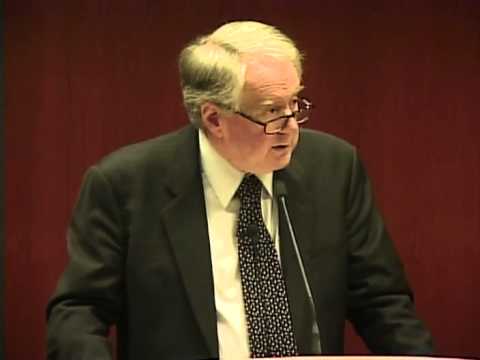
The Honorable Judge William Fletcher
Players: Decision by Judge W. Fletcher, joined by Judges Christen and Friedland.

Facts: Neighbors to a Petaluma residence reported a male and female were “arguing over a gun.” Id. at *1. When officers responded they were met by Mahrt at the gate. Id. He was detained and questioned. Id. 
  Mahrt , and the owner of the property, told the officers that the female involved – Mahrt’s ex-girlfriend – had left the property. Id. Nonetheless, officers conducted a “protective sweep” of Mahrt’s room in the garage. Id. The cops justified the search “due to the report of the possible domestic incident and the mention of a deadly weapon” and “because Mahrt may have been attempting to conceal a victim inside.” Id. 
  No one was found inside the apartment, but ammo cans, ammo, and an apparent AR-15 were discovered. Id. at *2. Cops then learned Mahrt was a felon, obtained consent, searched again, and found guns. Id. 
  Mahrt was charged stateside. His two county PDs did not move to suppress the firearms or ammo. Id. After Mahrt’s motion for new counsel was denied, he plead open and received a six-year sentence. Id. at *3. 
  A Wende appeal was denied in state court, Mahrt – with the assistance of counsel – filed a state habeas petition (denied), and ultimately a § 2254(d) habeas in federal court. Id. ND Cal Magistrate Judge Nandor Vadas granted the federal petition, finding a Sixth Amendment IAC violation. 
 The State of California appealed to the Ninth. Id.

Issue(s): Were the state habeas courts unreasonable in denying the writ?

Held: “It would have been reasonable for the state courts to conclude that a motion to suppress, if brought, would have likely been denied . . . Specifically, the state courts could have reasonably have concluded that the search as justified under the ‘emergency aid’ exception to the warrant requirement.” Id. at *6.

Of Note: Can a habeas petitioner raise an IAC claim against defense counsel for failure to bring a suppression motion, when the petitioner pleaded guilty? That issue is the real heart of Mahrt – and the answer is, “yes.” Id. at *4. 
  Judge Fletcher rejects the State’s “narrow” interpretation of Tollett on the availability of habeas IAC claims after pleas. Id. As he explains, “If the deputies unconstitutionally searched Mahrt’s home, counsel’s failure to move to suppress the fruits of that search prevented Mahrt from making the informed choice to which he was entitled. We therefore conclude that Mahrt’s ineffective assistance of counsel claim is allowed under Tollett.” Id. at *5.
  This is great stuff for habeas folks, opening opportunities in a criminal justice system where the vast majority of criminal cases resolve in guilty pleas. 
  It is also an interesting (and sobering) reminder for trial counsel. 
  The subtext of Mahrt is that the Ninth (fairly) expects explicit discussions with our clients on the pros and cons of pretrial motions (discussions that are even better if done in writing). See id. at *2 (recounting discussions about the motion between defense counsel and Mr. Mahrt). Those discussions must happen before a guilty plea is entered -- and if a decent Fourth motion is abandoned for no good reason, that can be the basis of a later IAC claim. 
  Is the right thing by the client, and an essential step if a pleading defendant is going to make “the informed choice to which he [is] entitled.” Id. at *5.

How to Use: Mahrt’s will be misinterpreted by prosecutors, who will cite the final, AEDPA-compelled Fourth Amendment outcome. Point instead to the decision's threshold holding: “We conclude that trial counsel should have moved to suppress the firearms and ammunition. There was at least a chance that such a motion would have succeeded.” Id. at *5 (emphasis added).  Judge Fletcher carefully goes through the conflicting evidence, the availability of witnesses, and the cop’s (incorrect) original search theory. Id.
   The state-deference, AEDPA-driven outcome means little for Fourth law: this was a bad search and a righteous suppression motion.
                                               
For Further Reading: Three Ninth Circuit jurists have squared-off against the President – in People’s Court.


 (Spoiler alert: the Ninth does just fine).
  For SNL’s coverage of the hearing between POTUS and Judges Canby, Friedland, and Clifton, see clip here.


Image of the Honorable Judge William Fletcher from https://i.ytimg.com/vi/rjHRxqbL1cU/hqdefault.jpg


Steven Kalar, Federal Public Defender, N.D. Cal. Website at www.ndcalfpd.org

.

.

Labels: , , ,