Sunday, September 30, 2018

Case o' The Week: The Forbidden Power - Lynch and Jury Nullification


   Nullification: A critical power of the jury, and a violation of a juror's oath.
   (Huh?)
United States v. Lynch, 2018 WL 4354373 (9th Cir. Sept. 13, 2018), decision available here.


Players: Decision by visiting Judge Rogers, joined by Judge Bybee. Compelling dissent by Judge Watford. 
   Hard-fought appeal by AFPD Alexandra Yates, C.D. Cal. Federal Public Defender.

Facts: In 2007, the Feds charged Lynch with (openly) running a medical marijuana dispensary. Id. at *2. He went to trial.
   During voir dire the district court warned the jury, “nullification is by definition a violation of the juror’s oath.” Id. at *3. The court then asked each juror if they could abide by an oath that “they could not substitute your sense of justice, whatever it may be, for your duty to follow the law, whether you agree with the law or not.” Id. at *12.
  Lynch testified, and explained that an (unidentified) DEA employee told him that the Feds were going to let the counties and state handle marijuana dispensaries. Id. at *3. Lynch was convicted.
  At sentencing, the court found Lynch eligible for Safety Valve on a 5-year mand-min, and sentenced him to a year and a day. Id. at *4.
  
Issue(s): “Lynch assigns error to a warning against nullification given . . . at voir dire.” Id. at *12.

Held: “This warning was permissible . . . because it was an appropriate exercise of a district court’s duty to ensure that a jury follows the law, and it was additionally justifiable given that the need for the warning was a risk that Lynch’s counsel had himself invited.” Id. “The district court’s caution to the jurors that they should not substitute their own sense of justice for their duty to find facts pursuant to the law was entirely appropriate as a discharge of the court’s own duty to forestall lawless conduct.” Id.

Of Note: The Lynch nullification instruction traces back to the misguided Rosenthal marijuana prosecution, in the Northern District of California. See id. at *12 (citing Rosenthal favorably). Lynch argued that the instruction in his case violated the Ninth’s later Kleinman decision, that prohibited a court from threatening to punish a jury that nullified, or a suggestion that a nullified verdict is unlawful. Id. at *13; see also Kleinman blog entry here. In Lynch, Judge Rogers disagrees and tries to distinguish Kleinman. Id.
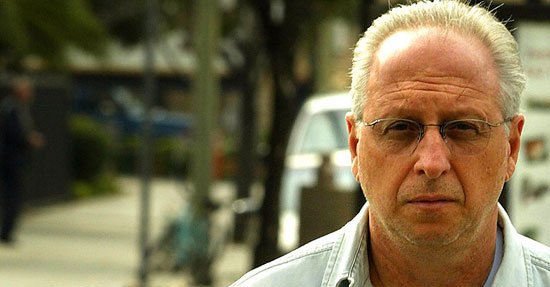
The Hon. Judge Paul Watford
   Dissenting Judge Watford has the better argument. Id. at *19. Judge Watford correctly frames the true issue in the case: “May the court instruct jurors that they are forbidden to engage in nullification, and if so, how forcefully may the court deliver the message?” Id. at *20. The dissent is a thoughtful opinion, carefully describing the historical importance of nullification and explaining why the court in Lynch crossed the line. For those who care about the power (not the “right”) of the American jury, this dissent is a must-read.
   Interestingly, jury nullification is an issue that crosses partisan lines -- good Federalists care deeply about the power of a jury to act as “the conscious of the community.” Id. at *19. Hopefully Judge Watford’s dissent catches the eye of some en banc allies on the Ninth.

How to Use: Déjà vu, all over again. Eight years ago, NorCal suffered under a USAO’s policy that demanded indiscriminate filing of priors – a policy that triggered mandatory minimums when a defendant had the temerity to seek pretrial release. See blog entry on “Priors Policy” here. 
  Some worry this ill-considered “priors policy” may be resurrected in the Northern District. If the “priors policy returns,” read Lynch.
  In Lynch, visiting Sixth Circuit Senior. Judge Rogers eviscerates courageous mand-mins efforts: an attempt to inform the jury of the sentencing exposure in the case, and an attempt by a frustrated D.J. to use Safety Valve to avoid the injustice of a five-year mandatory minimum. (Ironically, an act of judicial nullification in a jury nullification case).
  Lynch is an aggravating, but essential, read for anyone fighting mandatory minimums in federal court.
                                               
For Further Reading: Lynch perpetuates “the world’s silliest legal dichotomy: Juries can nullify, but lawyers and courts can’t, or won’t, tell them that they can. Advocates for nullification call it a right; opponents call it a power.” 
  For a compelling piece supporting Judge Watford’s dissenting views, see History is clear: Juries were supposed to be able to overturn laws,” available here 


Image of the Honorable Judge Paul Watford from https://livzey.com/corporate/portraiture/attachment/judgewatford_9960/  

Steven Kalar, Federal Public Defender, N.D. Cal. Website at www.ndcalfpd.org

.

Labels: ,

Sunday, August 06, 2017

Case o' The Week: Blunt Words on Jury Nullification - Kleinman and Nullification Instructions

  Mary Jane + Rider Refrain = Jury Constrained. 


United States v. Kleinman, 895 F.3d 825 (9th Cir. 2017), decision available here.

Players: Decision by Judge Milan Smith, joined by Judge N.R. Smith and visiting Tenth Circuit Judge Ebel.

Facts: Kleiman ran California medical marijuana collectives. Id. at 830. The government alleged that a majority of the sales were done outside of the storefronts, unlawfully, using techniques found in “normal” illegal drug distribution conspiracies. Id.
  The case was dismissed stateside after Kleinman asserted the protections of California medical marijuana laws -- the feds then picked it up. Id.
  The district court emphasized during jury selection that the jury could not question any purported conflict between federal and state law on medical marijuana, and should consider the case under federal law only. Id. at 831. Kleinman was convicted after trial, and sentenced to 211 months. Id.
  After the conviction and sentence, Congress enacted an appropriations rider that prohibits DOJ from expending funds to prevent states from implementing their laws authorizing the use, distribution, possession, and cultivation of medical marijuana. Id.

Issue(s): “Kleinman argues that the anti-nullification jury instruction the district court gave prior to deliberations misstated the law and impermissibly divested the jury of its power to nullify.” Id. at 835.

Held:The last two sentences of the district court’s instructions could reasonably imply that the jury could be punished for nullification, or that nullification is a moot exercise because the verdict would be invalid . . . . Thus, the last two sentences of the instruction were erroneous.Id. at *837.

Of Note: Can DOJ spend funds to defend a Cali medical marijuana conviction on direct appeal
  Nope. 
  The Ninth holds for the first time that the marijuana rider, and the limitations of McIntosh, “applies to continued expenditures on a direct appeal after conviction.” Id. at 832. 
  Before you move for forfeiture of an Appellate AUSA’s salary, however, read the pages of caveats that follow this new rule. Id. at 832- 835. In Kleinman, the Ninth didn’t remand for an evidentiary hearing on this issue, because there were convictions that violated state law, the arguments on those convictions were dispositive on all counts, and there were there was no relief in sight in any event. Id. at 834. 
  A nice McIntosh sentiment, the Kleinman holding, but in practice, a pretty fine needle to thread.

How to Use: Error - huzzah!
  Reversal? Not so much.
  Judge M. Smith explains that this jury nullification overstep was not structural error, because “there is no constitutional right to jury nullification.” Id. The Ninth assures us (without any harmless error analysis) that the “error was not structural and was harmless.” Id. at 838. Kleinman is now a lead decision on jury nullification (and specifically endorses the Rosenthal instruction that came out of Judge Breyer’s famous ND Cal case). Id. at 836-37. The Court also specifically rejects the Sixth Circuit’s nullification smack-down in Kryske. Id. at 837.
  Have Kleinman handy in your trial arsenal, to brush back AUSAs and D.J.’s keen on quashing a jury’s nullification power. (But be careful to say “power,” not “right!”)
                                               
For Further Reading: “Good people don’t smoke marijuana,” Attorney General Sessions explained to the Senate. The Attorney General is looking for “grown ups in charge in Washington to say marijuana is not the kind of thing that ought to be legalized.” See Washington Post article here
  The grown ups in the Senate have been unpersuaded, thus far.
  On July 27, despite A.G. Sessions’ objections, the Rohrabacher-Blumenauer amendment was adopted by the Senate Appropriations Committee for the FY 2018 appropriations bill. See article here
  Of course, there is now no hope that we’ll actually have a signed FY 2018 appropriations bill by the beginning of the new fiscal year on October 1: a continuing resolution (“C.R.”) seems inevitable.
  Will McIntosh / Kleinman remain relevant law, as budget breakdowns in Congress, the inevitable FY 2018 C.R. and A.G. Sessions’ steadfast opposition, roil through the summer?
   “Blunt” questions plague this “dis-jointed” political tangle.


Steven Kalar, Federal Public Defender N.D. Cal. Website at www.ndcalfpd.org


.

Labels: , , ,

Sunday, October 04, 2015

Case o' The Week: 1,600 Pages, Yet Called "Briefs" - Christensen and Federal Hacking Statute


“Defendants have raised a staggering number of issues on appeal. Their briefs – fourteen in all – totaled over 900 pages.” . . .  “The government is similarly verbose. Its answering brief was nearly 700 pages.” United States v. Christensen, 2015 WL 5010591, at *2 & n.1. (9th Cir. Aug. 25, 2015), decision available here.
  
We’ll skip an issue or two here, and focus on (the winning) one.


Players: Decision by Judge Clifton, joined by Judges Fisher and Chief D.J. Christensen. NorCal’s own CJA Counsel Steven Gruel on the briefs (among others).

Facts: Private investigator Anthony Pellicano (above) illegally tapped calls for his clients. Id. at *2. He paid Turner, a phone employee, to grab needed data. Id. He paid LAPD Officer Arneson, to search confidential police databases for information about targets. Id. Along with other defendants, Turner and Arneson were charged with a bevy of wiretapping and RICO crimes and convicted after trial. Id. at *1. 

Specifically, Turner was convicted of aiding and abetting computer fraud under the Computer Fraud and Abuse Act (“CFAA”). Arneson was convicted of unauthorized computer access of US agency information. Id. at *11.

Issue(s): Was the jury erroneously instructed that it was a crime if Turner and Arneson accessed computers with authorization, but used that access to obtain data beyond that authorization. Id. at *12.  

Held: “Following the convictions, this court decided United States v. Nosal, 676 F.3d 854 (9th Cir. 2012) (en banc). Nosal held the term “exceeds authorized access,” an element of both offenses under the CFAA, to be ‘limited to violation of restrictions on access to information, and not restrictions on its use. Id. at 864. Based on Nosal, we vacate the convictions under the CFAA.” Id. at 11 (emphasis in original). 

“The jury instructions defining both computer fraud and unauthorized computer access of United States agency information were plainly erroneous under Nosal. The error was prejudicial. We therefore vacate Turner’s conviction for aiding and abetting computer fraud, Arnerson’s convictions for computer fraud and unauthorized computer access, and Pellicano’s convictions for aiding and abetting both computer fraud and unauthorized computer access.” Id. at *13.

Of Note: One of (many, many) issues in this appeal was the alleged targeting and ultimate dismissal of a juror in one of the trials involved. Id. at *50 (Christensen, Chief D.J, concurring in part and dissenting in part). Judge Christensen (D. Montana) pens a particularly compelling dissent, strongly suggesting that the juror was targeted for questioning (and excused) not because on his ability to follow the law, because of his (pro-defense) views of the merits of the case. Id. 

This thoughtful dissent on juror independence – and the majority’s counterpoint on jury nullification – is buried in a long opinion, but is an important issue. As Chief Judge Christensen explains, the issue bears directly on the “Sixth Amendment right to a unanimous and impartial jury.” Id. at *53. Worth wading through a long decision to get to this most-troubling dispute.

How to Use: Trying to save Arneson’s conviction (the cop), the government argued that Nosal doesn’t limit criminal liability for access of government information – state and federal laws prevent such access. Id. at *12. The Ninth isn’t buying it. “Congress has created other statutes under which a government employee who abuses his database privileges may be punished, but it did not intend to expand the scope of the federal anti-hacking statute.” Id. 

This Christensen holding is a good Nosal brush-back for the government: the CFAA is an anti-hacking statute, not a general computer crimes catch-all. The sharp lines drawn by the Ninth are handy to have, when facing expansive theories of criminal liability under the CFAA.
                                               
For Further Reading: In a doubly sad day for the Ninth Circuit and the Central District of California, Circuit Judge Harry Pregerson, and his son, District Judge Dean Pregerson have both announced their intention to take senior status this winter. See article here 

The year will bring many more celebrations and reflections on both of their careers – a well-earned transition for both, but a big loss for us all.


Steven Kalar, Federal Public Defender, Northern District of California. Website at www.ndcalfpd.org

.

Labels: , , , , , , ,