Sunday, June 04, 2017

Case o' The Week: Judicial Restraint(s) - Sanchez-Gomez and Shackling of Pretrial Defendants, En Banc


“At the heart of our criminal justice system is the well-worn phrase, innocent until proven guilty . . . . And while the phrase may be well-worn, it must also be worn well: We must guard against any gradual erosion of the principle it represents, whether in practice or appearance. This principle safeguards our most basic constitutional liberties, including the right to be free from unwarranted restraints.”
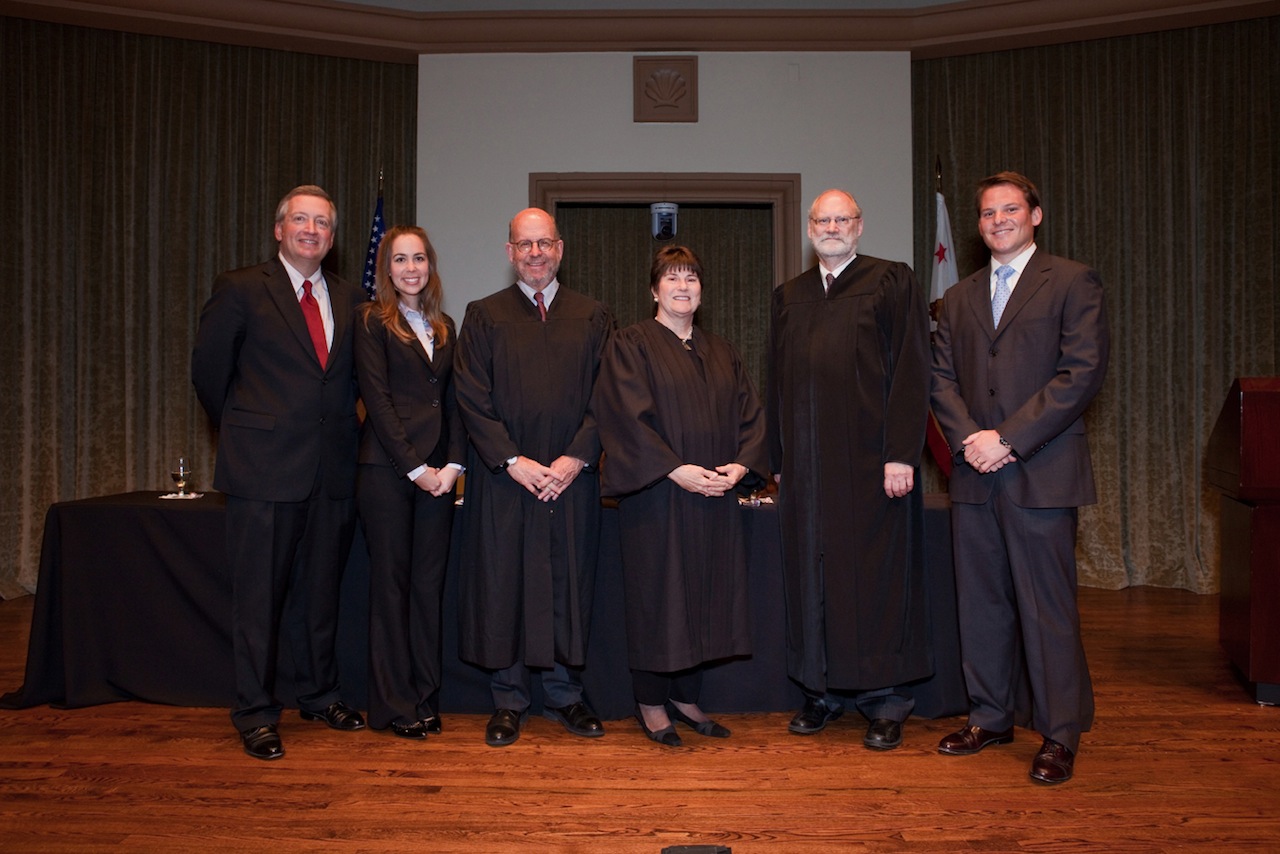
The Honorable Judge Alex Kozinski


United States v. Sanchez-Gomez, 2017 WL 2346995 at *8 (9th Cir. May 31, 2017) (en banc) decision available here.

Players: Admirable decision by Judge Alex Kozinski, joined by Chief Judge Thomas, and Judges Reinhardt, Paez, and Berzon. Potent concurrence (and dissent commentary) by Judge Schroeder. (Six). 
  Dissent by Judge Ikuta, joined by Judges O’Scannlain, Silverman, Graber, and Callahan (Five). 
  Important shared victory for Reuben Cahn, Executive Director, Federal Defenders of San Diego, Inc., Chief Trial Attorney Shereen Charlick, AFPD Ellis Johnston, III, the entire staff of San Diego Defenders’ office, and Ninth Circuit Defender amici.

Facts: With one exception, San Diego federal judges acceded to the Marshals’ request to have pretrial defendants shackled in full restraints. Id. at *2. (District Judge Marilyn Huff “opted out of the policy altogether.”) 
  Defender objections were overruled. 
  The shackling policy was the same regardless of a defendant’s individual characteristics: defendants with a broken wrist, vision-impaired with a cane, brought into court sick and in a wheelchair: all were shackled. 
  When the defense objected, one court chided that it “appreciated counsel not taking anymore time with it.” Id. at *2. 
  Challenges from four defendants were consolidated before the Ninth. Id. at *3.

Issue(s): “We consider whether a district court’s policy of routinely shackling all pretrial detainees in the courtroom is constitutional.” Id. at *2. “Defendants challenge the Southern District’s policy of routinely shackling in-custody defendants without an individualized determination that they pose a material risk of flight or violence.” Id. at *3.

Held: “We now clarify the scope of the right and hold that it applies whether the proceeding is pretrial, trial, or sentencing, with a jury or without. Before a presumptively innocent defendant may be shackled, the court must make an individualized decision that a compelling government purpose would be served and that shackles are the least-restrictive means for maintaining security and order in the courtroom. Courts cannot delegate this constitutional question to those who provide security, such as the U.S. Marshals service. Nor can courts institute routine shackling policies reflecting a presumption that shackles are necessary in every case.” Id. at *9 (footnotes and citations omitted).

Of Note: The Northern District of California, thankfully, has not suffered this blanket shackling policy. In other districts, however, U.S. Marshals continued shackling policies despite earlier and contrary Ninth Circuit authority. See article here.
"The Problem We All Live With," by Norman Rockwell
  Remarkably, even after Sanchez-Gomez was decided, there are early reports of Magistrate Judges in one district balking at unshackling defendants over Marshal objection, despite this controlling en banc decision.
  Federal Marshals famously enforced federal court orders in the 60’s. See generally here. Sanchez-Gomez raises the intriguing question of who enforces a federal court order, when the U.S. Marshal is the subject?

How to Use: How, exactly, did the Ninth get to this issue? The Defenders brought what was really a district-wide challenge, seeking relief not just for the four defendants in this action, but for all in-custody defendants. Id. at *3. Judge Kozinski explains that sometimes such challenges are brought as civil class actions, id. at *3, but can be construed as writs of mandamus as the Court exercises its “supervisory” or “advisory” authority. Id. at *4.
 Sanchez-Gomez is a seminal case on pretrial confinement in court, but is also an important en banc interpretation by the Court on its own jurisdictional powers. The decision is worth a read for that very interesting discussion, and is a good “Federal Courts” primer on mandamus authority and the supervisory powers.
                       
For Further Reading: Sanchez-Gomez is a beautifully written decision. For a thoughtful analysis on why this is a “masterful” opinion (and some timely observations on the uncomfortably-close split the case engendered), see the posting of Professor Shaun Martin, available here.


Image of “The Problem We All Live With,” by original uploader User: Jengod, Fair use, https://en.wikipedia.org/w/index.php?curid=601019


Steven Kalar, Federal Public Defender N.D. Cal. Website at www.ndcalfpd.org


.

Labels: , , , , ,

Sunday, August 28, 2016

Case o' The Week: High times - McIntosh & enjoining the federal prosecution of medical marijuana cases


   The Honorable Judge Diarmuid F. O’Scannlain, hero of the West’s medical marijuana community.
United States v. McIntosh, 2016 WL 4363168 (9th Cir. Aug. 16, 2016), decision available here.

Players:  Decision by Judge O’Scannlain, joined by Judges Silverman and Bea. Big win argued by ND Cal CJA stalwart Marc. Zilversmit, Fed. Defenders of E. Wa & Id. AFPD Robert Fischer, and ED Cal AFPD Andras Farkas.

Facts: A slew of defendants in three districts were indicted for marijuana crimes under the Controlled Substance Act. Id. at *1. They (unsuccessfully) moved to dismiss their indictments, or enjoin their prosecutions on the grounds that a rider on an appropriations bill prohibited the use of federal funds by DOJ to prosecute offenses involving medical marijuana. Id. at *2. 
  The defendants filed interlocutory appeals, and sought writs of mandamus. Id. at *3. 
  (No defendant has yet been convicted or sentenced. Id. at *3).

Issue(s): “We are asked to decide whether criminal defendants may avoid prosecution for various federal marijuana offenses on the basis of a congressional appropriations rider that prohibits the United States Department of Justice from spending funds to prevent states’ implementation of their own medical marijuana laws.” Id. at *1.

Held: “In sum, § 542 prohibits DOJ from spending money on actions that prevent the Medical Marijuana States’ giving practical effect to their state laws that authorize the use, distribution, possession, or cultivation of medical marijuana.” Id. at *8. 
  “We . . . conclude that, at a minimum, § 542 prohibits DOJ from spending funds from relevant appropriations acts for the prosecution of individuals who engaged in conduct permitted by the State Medical Marijuana Laws and who fully complied with such laws.” Id. at *9. “
  [W]e conclude that § 542 prohibits the federal government only from preventing the implementation of those specific rules of state law that authorize the use, distribution, possession, or cultivation of medical marijuana. DOJ does not prevent the implementation of rules authorizing conduct when it prosecutes individuals who engage in conduct unauthorized under state medical marijuana laws. Individuals who do not strictly comply with all state-law conditions regarding the use, distribution, possession, and cultivation of medical marijuana have engaged in conduct that is unauthorized, and prosecuting such individuals does not violate § 542.” Id. at *10.  
  “When Congress has enacted a legislative restriction like § 542 that expressly prohibits DOJ from spending funds on certain actions, federal criminal defendants may seek to enjoin the expenditure of those funds, and we may exercise jurisdiction over a district court's direct denial of a request for such injunctive relief.” Id. at *5.

Of Note: With no convictions, what’s the Ninth’s jurisdictional hook for this big defense win? Judge O’Scannlain turns to 28 USC § 1292(a)(1), and concludes that the Ninth has jurisdiction to consider the interlocutory appeals from the direct denials of the requests for injunctions. Id. at *5. 
  The take-away? The starting point for this litigation in the district courts is a motion for injunctive relief.

How to Use: “The Feds can’t touch pot cases,” our clients will earnestly insist. The reality is a bit more -- nuanced. Most importantly, the Court emphasizes that this funding bar only works if the defendant was in compliance with state law. Id. at *10. In McIntosh, that threshold question was bounced backed for evidentiary hearings. Id. at *11.  
  McIntosh doesn’t mean 4/20 always beats § 841, but it does make one wonder. With no federal funds appropriated for the work, who exactly is authorized to prosecute Form 12s for dirty pot tests, or Form 8s for marijuana pretrial violations, or a host of other interesting pot pickles that seem to bedevil our clients?
                                               
For Further Reading: For an interesting, albeit sobering, article about what McIntosh does and doesn’t mean, see John Hudak, McIntosh decision limits DOJ powers, but medical marijuana advocates should worry, available here. 


Steven Kalar, Federal Public Defender, N.D. Cal. Website at www.ndcalfpd.org


.

Labels: , , , ,

Sunday, July 06, 2014

Case o' The Week: "Show Me the Money" not Sanctionable, in Ninth - Tillman and CJA Counsel


Hon. Judge Margaret McKeown

The Ninth has endorsed a radical proposition:

   CJA counsel can ask to get paid for their work.

United States v. Tillman, 2014 WL 2922659 (9th Cir. June 30, 2014), decision available here.

Players: Great decision by Judge McKeown, joined by Judges Wallace and Gould. Appeal and win by N.D. Cal CJA Attorney John R. Grele.

Facts: CJA counsel John Grele was appointed as learned counsel on a capital case in the District of Nevada. Id. at *1. When death was not authorized, Grele remained as counsel. Id. 
  Years into the case, Grele and the presiding DJ exchanged a series of emails regarding delays in CJA payments and the court’s concerns regarding costs. Id. at *1-*2. In an early email, Grele referred to suspending work until payment was received. Id. at *1. At a later hearing, Grele assured the court “[i]f I get paid in a timely fashion, I can represent [that] I can provide effective assistance of counsel.” Id. at *3. 
  After the hearing, the court issued an order with factual findings, accusing Grele of “attempting to extort the court by delay or withdrawal of representation,” and of “violating his ethical obligations of representation to a client.” Id. The district court referred a copy of the order to the California Bar Association, and new counsel was appointed for Mr. Tillman. Id. at *3. 
  (The California State Bar dismissed the court’s referral at the investigatory stage.). Id.

Issue(s): “This case highlights the tension between judicial efforts to control costs of appointed counsel, the defendant’s right to have counsel appointed, counsel’s reliance on timely payment of Criminal Justice Act (“CJA”) vouchers, and the delays often present in processing vouchers for payment.” Id. at *1. “Grele challenges the district court’s order as an improper sanction and requests that we exercise mandamus jurisdiction to vacate the order . . . . We construe Grele’s portion of the appeal as a petition for a writ of mandamus.” Id. at *4.

Held: “We conclude that mandamus jurisdiction is appropriate to consider the sanctions order, that the district court erred in imposing sanctions without notice and a hearing, and that the order should be vacated.” Id. at *1. “We exercise our mandamus jurisdiction, grant the petition, and vacate the order.” Id. at *4.

Of Note: In a thoughtful opinion, Judge McKeown recognizes the blunt financial realities that face CJA counsel: bills must be paid. “To be sure, the judiciary and the lawyers have an obligation to be stewards of CJA funds. But this oversight should not trade off with the rights of clients. Nor should such supervision ignore the practical reality that inordinate delays in processing CJA vouchers stretch lawyers to their economic limits.” Id. at *6. In the present case, “[a]fter Grele spent years as Tillman’s counsel, the district court improperly removed him for highlighting a problem with voucher payments, which the district court admitted were untimely, and the court did so without giving Grele any notice or opportunity to be heard.” Id. at *6. 
  Judge McKeown also acknowledges the real tension between funding limitations and recruiting CJA counsel – Grele’s criticisms “echoed” decades of critiques on this very real problem. Id. at *7.  
   Tillman is a welcome endorsement of the need for independent (and timely-paid) CJA counsel: a must read for all appointed CJA folks (including Federal Defender staff, sandwiched between furloughs in our recent past, and the Work Measurement Study in our near future . . . .)

How to Use: To its credit, the D. Nev. USAO took no position on Grele’s appeal in Tillman. Id. at *4 n.1. The government correctly recognized the “importance that appointed defense attorneys operate independently of the prosecution,” and that “federal law and administrative policy has long precluded participation by the U.S. Attorney’s Offices in CJA-related matters.” Id. 
  Footnote One is a good resource to share with AUSAs too eager to wade into CJA appointment issues – issues that are properly the unique concern of the Court and counsel.
                                               
For Further Reading: Tillman is not the only contribution of the District of Nevada to the issue of CJA payments. The Administrative Office has adopted the Nevada e-voucher system for CJA payments. 
  For an interesting article from the U.S. Courts on the Nevada eVoucher System, see article here.


Steven Kalar, Federal Public Defender N.D. Cal. Website at www.ndcalfpd.org

.
.

Labels: , , ,