Case o' The Week: Ninth feeling Confrontational - Laron Carter and Video Witness Testimony
The Ninth, happily, demands The Chair.

United States v. Laron Carter, 2018 WL
5726694 (9th Cir. Nov. 2, 2018), decision available here.
Players: Decision by Judge Bybee, jointed by Judge Gould and
DJ Hernandez. Admirable victory for former Fed. Def. of San Diego, Inc. AFD Ben
Coleman.
Facts: Carter went to trial on sex trafficking charges. Id. at *1. A witness named “J.C.” testified
against Carter via video because she was seven months pregnant and reportedly unable
to travel. Id. (J.C. was, by trial, an
adult). Id. The government also suggested
a Rule 15 depo of J.C. mid-trial, but conceded that it could not guarantee Carter’s
attendance at the deposition. Id.
Over Carter’s objection
the district court permitted J.C.’s video testimony. Id. at *2. The government did not introduce evidence from J.C.’s
doctor that she could not travel. Id.
During her video testimony, J.C. could not see well and made an ambiguous
identification of Carter. Id. Carter
was convicted and sentenced to 40 years. Id.
at *3.
Issue(s): “Carter contends that permitting J.C. to testify
against him remotely by two-way video, rather than in person, violated his
Sixth Amendment right to confront the witnesses against him.” Id.
Held: “We agree. Criminal defendants have a right to ‘physical,
face-to-face confrontation at trial,’ and that right cannot be compromised by
the use of a remote video procedure unless it is ‘necessary’ to do so and ‘the
reliability of the testimony is otherwise assured.’ Maryland v. Craig, 497 U.S. 836, 850 . . . (1990). Because alternatives were available
for obtaining J.C.’s testimony that would have preserved Carter’s right to
physical confrontation, the use of a remote video procedure was not necessary
in this case. We therefore vacate Carter’s convictions on the . . . counts
involving J.C. and remand to the district court for resentencing on the
remaining counts.” Id.
“The Supreme Court has not decided whether Craig’s standard applies in these
circumstances, and until now we have applied Craig only in the context of 18 U.S.C. § 3509, a statute enacted in
direct response to Craig that permits
child witnesses to testify by two-way video . . . . We now make clear that a
defendant’s right to physically confront an adverse witness (whether child or
adult) cannot be compromised by permitting the witness to testify by video
(whether one-way or two-way) unless Craig’s
standard is satisfied. And that standard is a stringent one; the use of a
remote video procedure must be reserved for rare cases in which it is ‘necessary.’”
Id. at *4 (internal quotations and
citations omitted).
Of Note: This important case of first impression applies Craig’s strict Confrontation Clause
standards to adult witnesses. Id. (Previous authority had addressed minor
witnesses). Judge Bybee pens a scholarly and thoughtful analysis of the high
standards demanded by the Confrontation Clause – and along the way, speculates
that the Supreme’s Craig decision may
not have survived Crawford. See id. at *4 & n.3.
Carter is now a
lead Confrontation Clause case, and a must-read when confronting Rule 15 depos
or video testimony.
How to Use:
On appeal, the government scrambled for the refuge of “plain error” review,
arguing that Carter did not seek a continuance or severance. Id. at *3 & n.2.
Judge Bybee is
blunt: this argument “has no merit.” Id.
Carter specifically objected at trial, asserting Confrontation Clause violations.
He wasn’t then also obligated to suggest “other strategies for how the
government could introduce evidence against him.” Id.
Tuck footnote two away, as a welcome and pointed
reminder that it is not our job to fix AUSA errors.
For Further
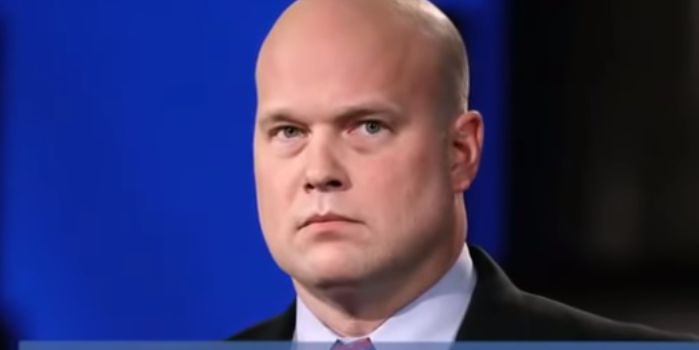
Reading: DOJ’s new A.G, Matthew Whitaker, is a
lawyer who has not been confirmed by the Senate. He has also jumped ahead of the
DAG in spite of the DOJ’s succession plan.
Are federal prosecutions during Mr.
Whitaker’s administration legal? For an interesting discussion of this fascinating question, see article here.
 |
| Attorney General Matthew Whitaker |
Mr. Whitaker, admittedly, may be uninterested in the Judiciary’s views on this issue -- he has bemoaned the Supreme Court’s “bad ruling” in Marbury v. Madison. See NYT article here.
Steven
Kalar, Federal Public Defender N.D. Cal. Website at www.ndcalfpd.org
Image of a witness stand from https://www.outsidethebeltway.com/eyewitness-testimony-dont-believe-your-eyes/
Image of Mr. Matthew Whitaker from https://wp-media.patheos.com/blogs/sites/577/2018/11/MatthewWhitaker.jpg
.
Labels: Bybee, Confrontation Clause, Rule 15 Depositions
posted by Steve Kalar at 11/11/2018 11:04:00 AM
1 comments