Saturday, April 06, 2019

Case o' The Week: Protection sans Objection - Haines and FRE 412 Evidence


  The Federal Rules of Evidence cannot be used as both a sword and a shield.

  (By the defense).
United States v. Haines, 918 F.3d 694 (9th Cir. Mar. 14, 2019), decision available here.

Players: Decision by visiting District Judge Adelman, joined by Judges Wallace and Friedland.  

Left to right, the Honorable Judges Wallace and Friedland, and the Honorable District Judge Adelman
Facts: Haines and his friend King were charged with transporting two minor females from Nevada to California to work as prostitutes. Id. at 696. Over time, the girl alleged to have worked for Haines changed her story to the Feds. By trial, she testified that she did not prostitute for Haines and that her grand jury testimony was false. Id. Instead, she testified that she worked independently. Id.
   At trial, Haines attempted to question the girl about her prior prostitution activities (that did not involve a pimp), arguing that this was relevant to the question of whether he recruited her or encouraged her to engage in prostitution. Id. The district court excluded this testimony under Federal Rule of Evidence 412, the “rape shield” rule. Id.
  Haines was convicted, and appealed.

Issue(s): “Haines argues that evidence of J.C.’s prior prostitution activities should have been admitted under the exception to Rule 412 for 'evidence whose exclusion would violate the defendant's constitutional rights'—here, his due process right to present a complete defense and his Sixth Amendment right to confront witnesses.” Id. at 697.

Held: “[I]n cases involving adult victims forced or coerced into prostitution, courts have rejected such arguments, concluding that evidence of other prostitution activity has little or no relevance. Courts have reasoned that just because a victim agreed to engage in sex for money on other occasions does not mean she consented to, e.g., being beaten or having her earnings confiscated by the defendant.” Id. at 697-89 (citations omitted).
  “Haines cites no case holding that a defense such as the one he sought to present here triggers the exception in Rule 412. And we see no reason to depart from the persuasive authorities set forth above that held to the contrary.” Id. at 698-99.

Of Note: The unusual fact in Haines was that the female victim-witness for this Fed. R. Evid. 412 brouhaha was putatively a defense witness. She had recanted her grand jury testimony by the time of trial (after a jailhouse call from Haines, unfortunately). Atypically, the witness wasn’t objecting to the admission of this prior-prostitution evidence by Haines. The government was therefore using Rule 412 not as a shield, to protect a witness’s privacy, but as a sword, to prevent a defendant from eliciting favorable testimony “from a recalcitrant witness.” Id. at 699.
  No matter, concluded the Ninth, in a disappointing limitation on a defendant’s constitutional right to present a defense. “[A]llowing the victim’s wishes to control opens the door to mischief.” Id.      

How to Use: The narrow window left open on this type of “prior prostitution” evidence is when the government “opens the door” by suggesting that an alleged pimp introduced a minor to prostitution (that she was “an innocent lamb led to the slaughter).” Id. at 700. The Ninth holds this door wasn’t opened in the Haines case, in part because the district court warned the government against this line of evidence and argument.  The Court seems to recognize, however, that this type of evidence could be admissible if made relevant by the government’s approach.
                                               
For Further Reading: On March 26, the Senate confirmed President Trump’s nomination of the Honorable Magistrate Judge Bridget Bade, of Phoenix, to the Ninth Circuit Court of Appeals. See press release here
  Judge Bade will be joining two confirmed Ninth Circuit Trump nominees: the Honorable Judge Mark Bennett of Hawai’i, and the Honorable Judge Ryan Nelson of Idaho. See Ninth Circuit chart here
 Two additional Ninth nominees cleared the Senate Judiciary Committee on April 4, 2019: Mr. Daniel Collins, of L.A.’s Munger, Tolles & Olson, and Mr. Daniel Lee, of L.A.’s Jenner & Block. See article here


Image of (skeptical) United States v. Sha-Ron Haines panel from https://www.youtube.com/watch?v=akIGK_oYmIw


Steven Kalar, Federal Public Defender N.D. Cal. Website at www.ndcalfpd.org


.

Labels: , , , , ,

Sunday, November 11, 2018

Case o' The Week: Ninth feeling Confrontational - Laron Carter and Video Witness Testimony


The Ninth, happily, demands The Chair.


United States v. Laron Carter, 2018 WL 5726694 (9th Cir. Nov. 2, 2018), decision available here.

Players: Decision by Judge Bybee, jointed by Judge Gould and DJ Hernandez. Admirable victory for former Fed. Def. of San Diego, Inc. AFD Ben Coleman.

Facts: Carter went to trial on sex trafficking charges. Id. at *1. A witness named “J.C.” testified against Carter via video because she was seven months pregnant and reportedly unable to travel. Id. (J.C. was, by trial, an adult). Id. The government also suggested a Rule 15 depo of J.C. mid-trial, but conceded that it could not guarantee Carter’s attendance at the deposition. Id. 
  Over Carter’s objection the district court permitted J.C.’s video testimony. Id. at *2. The government did not introduce evidence from J.C.’s doctor that she could not travel. Id. 
  During her video testimony, J.C. could not see well and made an ambiguous identification of Carter. Id. Carter was convicted and sentenced to 40 years. Id. at *3.

Issue(s): “Carter contends that permitting J.C. to testify against him remotely by two-way video, rather than in person, violated his Sixth Amendment right to confront the witnesses against him.” Id.

Held:We agree. Criminal defendants have a right to ‘physical, face-to-face confrontation at trial,’ and that right cannot be compromised by the use of a remote video procedure unless it is ‘necessary’ to do so and ‘the reliability of the testimony is otherwise assured.’ Maryland v. Craig, 497 U.S. 836, 850 . . .  (1990). Because alternatives were available for obtaining J.C.’s testimony that would have preserved Carter’s right to physical confrontation, the use of a remote video procedure was not necessary in this case. We therefore vacate Carter’s convictions on the . . . counts involving J.C. and remand to the district court for resentencing on the remaining counts.” Id.
  “The Supreme Court has not decided whether Craig’s standard applies in these circumstances, and until now we have applied Craig only in the context of 18 U.S.C. § 3509, a statute enacted in direct response to Craig that permits child witnesses to testify by two-way video . . . . We now make clear that a defendant’s right to physically confront an adverse witness (whether child or adult) cannot be compromised by permitting the witness to testify by video (whether one-way or two-way) unless Craig’s standard is satisfied. And that standard is a stringent one; the use of a remote video procedure must be reserved for rare cases in which it is ‘necessary.’” Id. at *4 (internal quotations and citations omitted).

Of Note: This important case of first impression applies Craig’s strict Confrontation Clause standards to adult witnesses. Id. (Previous authority had addressed minor witnesses). Judge Bybee pens a scholarly and thoughtful analysis of the high standards demanded by the Confrontation Clause – and along the way, speculates that the Supreme’s Craig decision may not have survived Crawford. See id. at *4 & n.3.
  Carter is now a lead Confrontation Clause case, and a must-read when confronting Rule 15 depos or video testimony.

How to Use: On appeal, the government scrambled for the refuge of “plain error” review, arguing that Carter did not seek a continuance or severance. Id. at *3 & n.2. 
  Judge Bybee is blunt: this argument “has no merit.” Id. 
  Carter specifically objected at trial, asserting Confrontation Clause violations. He wasn’t then also obligated to suggest “other strategies for how the government could introduce evidence against him.” Id.
   Tuck footnote two away, as a welcome and pointed reminder that it is not our job to fix AUSA errors.
                                               
For Further Reading: DOJ’s new A.G, Matthew Whitaker, is a lawyer who has not been confirmed by the Senate. He has also jumped ahead of the DAG in spite of the DOJ’s succession plan. 
  Are federal prosecutions during Mr. Whitaker’s administration legalFor an interesting discussion of this fascinating question, see article here

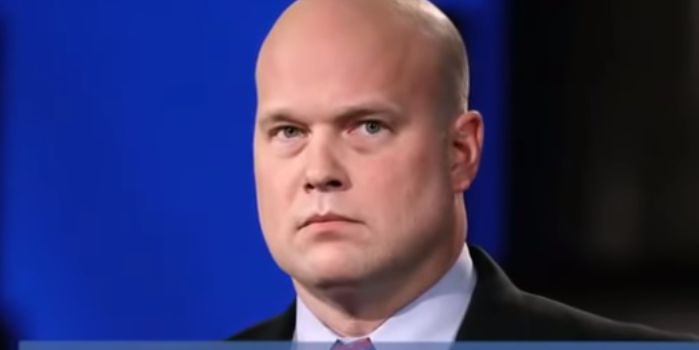
Attorney General Matthew Whitaker
   
Mr. Whitaker, admittedly, may be uninterested in the Judiciary’s views on this issue -- he has bemoaned the Supreme Court’s “bad ruling” in Marbury v. Madison. See NYT article here.


Steven Kalar, Federal Public Defender N.D. Cal. Website at www.ndcalfpd.org


.

Labels: , ,

Sunday, January 14, 2018

Case o' The Week: Seeing Hulen Rouge - Self-incrimination and Supervised Release Violations

   Tell clients to be forthcoming with their treatment providers, while on supervised release.
  (They'll feel good about themselves while serving their revocation sentences).
United States v. Hulen, 2018 WL 343759 (9th Cir. Jan. 10, 2018), decision available here.
  

Players: Decision by Judge Clifton, joined by Judges Wardlaw and Owens. Hard-fought appeal by AFPDs David Merchant and Josyln Hunt, Federal Defenders of Montana.

Facts: Hulen was on supervised release for failure to register as a sex offender. Id. at *1. Hulen admitted to his treatment provider that “he was not doing all he could do to progress in treatment.” Id.
  The provider told Hulen to write down his transgressions, then promptly shot Hulen’s list to the Probation Officer. Id. The P.O. filed a Form 12. Id.
  [NB: Hulen did not admit to new crimes in his list].
  Hulen conceded violations in the district court, was revoked, and sentenced to six months custody. Id. at *2.

Issue(s): “Hulen argues that the use of his statements against him in the revocation proceeding by the district court violated his right against self-incrimination under the Fifth Amendment.” Id. at *1.

Held: “We hold that the district court did not violate Hulen’s right against self-incrimination because that right extends only to prohibit the use of an admission in a criminal case. A proceeding to revoke supervised release is not a criminal case for purposes of the Fifth Amendment right against self-incrimination. Accordingly, we affirm the decision of the district court.” Id. at *1.
  “A revocation proceeding is not a new criminal proceeding, but is instead part of the “matrix of punishment” arising out of the original crime . . . . Thus, the full panoply of rights due a defendant in a criminal proceeding does not apply to revocations. . . . Revocation deprives a probationer only of the conditional liberty properly dependent on observance of special restrictions. . . . . The Fifth Amendment does not provide a right to avoid the consequences of violating those special restrictions. Accordingly, a revocation proceeding is not a criminal case for purposes of the Fifth Amendment right against self-incrimination.” Id. at *4 (citations omitted).

Of Note: In Hulen, the Ninth recites the constrained constitutional rights afforded in violation proceedings, then extends these crabbed approaches to the Fifth Amendment. See, e.g., id. at *3 (“We held that the Sixth Amendment right of confrontation does not extend to revocations in United States v. Hall, 419 F.3d 980, 985–86 (9th Cir. 2005)). 
  Yet in UnitedStates v. Avila, the Ninth just reversed a revocation when a defendant wasn’t afforded confrontation in a contested hearing. No. 17-100065, (Ninth Cir. Nov. 17, 2017) (mem.) (“Under Morrisey v. Brewer, 408 U.S. 471 (1972), every release is guaranteed the right to confront and cross-examine adverse witnesses at a revocation hearing, unless the government shows good cause for not producing the witnesses.”) (citation and quotations omitted).
  What gives, with Hulen and Avila?
  A learned colleague flagged a difference as the origins of the Confrontation Clause right: Hulen is discussing Sixth Amendment Confrontation, and Avila, the due process confrontation right.
  The nutshell? Hulen’s primer on S/R misery is a little more nuanced than at first it may first appear.

How to Use: There is a difference, the Ninth assures us, between conduct leading to a new criminal charge, and a violation of the supervised release “matrix of punishment.” That difference probably eludes Hulen, as he sits in his jail cell.
  Note, however, also the major caveat in Hulen (needed to try to distinguish a long string of contrary Ninth decisions on self-incrimination for supervised release violations): if the conduct involves (or potentially involves) a new crime, the Fifth’s protections against self-incrimination (may) kick in. As Judge Clifton (sort of) concedes, “If an effort had been made to charge and convict Hulen for a new crime based on his admissions, he would presumably be able to claim the benefit of the Fifth Amendment.” Id. at *4.
                                               
For Further Reading: President Trump has placed three of the four U.S. Attorneys in California. They’ll hang onto their interim gigs if re-upped by the district courts, until they are ultimately confirmed by the Senate (likely outcomes, for these three experienced appointees).
  The odd one out? N.D. Cal.

  In the Northern District, Acting US Attorney Alex Tse will hold down the fort until the Trump nominee is announced. See article here


Image of the four Federal Districts within the State of California from http://smarthr.blogs.thompson.com/files/2012/02/jurisdiction-map-rev.jpg

Steven Kalar, Federal Public Defender, Northern District of California


.

Labels: , , , ,

Sunday, April 23, 2017

Case o' The Week: Sixth Amendment Decision Sticks in Defense Craw-ford: Fryberg and the Right to Confrontation


 Feeling non-Confrontational?
 Admirable in personal relationships.
 Less so, in criminal trials.
United States v. Fryberg, 2017 WL 1416516 (9th Cir. April 21, 2017), decision available here.


Players: Decision by Judge Graber, joined by Judges Ikuta and Hurwitz.

Facts: Ms. Gobin sought a domestic violence restraining order against Fryberg. Id. at *1. A Tribal Police Officer (and brother-in-law of Gobin) filed a completed service of return of notice of a hearing on the restraining order. Id. Fryberg didn’t show at the hearing, and a restraining order was entered against him. Id.
  Fryberg got guns while subject to that restraining order. He was charged with 18 USC § 922(g)(8), possessing firearms while under a D.V. protection order. Id. at *2.
  An essential sub-element of this federal charge was that Fryberg had actually been served with notice of the hearing that produced the protective order. Id. Before the case went to trial, the Tribal Police officer that had allegedly served the notice of the hearing, died. Id.
  Over defense objection, the district court admitted the (deceased) officer’s certificate of service: Fryberg was convicted. Id.  

Issue(s): “Defendant argues that the district court erroneously admitted the key piece of evidence that the Government introduced to show that Defendant received actual notice of the hearing on the protection order—the return of service of the hearing notice . . . Defendant argues that (1) the district court erred in admitting the return of service as a ‘public record’ under Federal Rule of Evidence 803(8) and (2) the admission of the return of service violated the Confrontation Clause of the Sixth Amendment.” Id. at *2 (footnotes omitted).

Held:We conclude that the admission of the return of service did not violate either the rule against hearsay or the Confrontation Clause of the Sixth Amendment, and we affirm Defendant’s conviction.” Id. at *1.

Of Note: Crawford “‘rescued’ the right of confrontation ‘from the grave.’” Id. at *5 (quoting Clark, 135 S. Ct. at 2184 (Scalia, J., concurring in judgment)). 
  Fryberg (we would argue) re-entombs it.
   As it confronts Confrontation, the Ninth admits that Fryberg “lies somewhere between” two post-Crawford Ninth decisions. Id. at *6. This “return of service” document, the Court concedes, “had more of a criminal prosecutorial function than the immigration document at issue in Orozca-Acosta.” Id. Ultimately, however, the Ninth deems this “notice” document as something that’s primary purpose was not for use at a future criminal trial – and therefore not subject to Crawford. Id. at *6.
   Way back in ’05, it was clear that the core Crawford question would be: “what is testimonial evidence?” See blog entry here. Fryberg is one disappointing answer.

How to Use: Judge Graber delivers a number of evidentiary sub-holdings that ultimately lead to the decision’s outcome. The Court concludes that the officer was “under a legal duty to report when he completed the return of service,” satisfying FRE 803(8)(A)(ii). Id. at *3.
  Even though the Tribal Officer was a cop, and even though Fryberg faced a criminal case, the Court holds that the "notice of service" was not “a matter observed by law-enforcement personnel” (an express FRE limitation on the “public record” hearsay exception in a criminal case.) Judge Graber deems the notice of service a “largely ministerial act” to avoid this FRE limitation. Id. at *4.
  Finally, the Court rejects Fryberg’s arguments that a “lack of trustworthiness” undermined the admission of this hearsay evidence – the defense contended that the alleged place of service did not, in fact, exist, and observed that the deceased officer was also the D.V.-complainant’s brother-in-law. Id. at *5.
  Fryberg is, unfortunately, a must-read when the witness stand is empty, and the government’s case relies on paper instead of testimony. The "testimonial" legal landscape is not yet fully defined, but this case is another Ninth landmark.
                                               
For Further Reading: Three Ninth jurisdictions – San Francisco, Los Angeles, and an island in the Pacific – were called out by A.G. Sessions during his first Sunday morning interview. See “This Week” interview of 4/23/17 here.       Mulling tea leaves? Watch this interview.


Steven Kalar, Federal Public Defender N.D. Cal. Website at www.ndcalfpd.org

.

Labels: , , , , , ,

Saturday, July 04, 2015

Case o' The Week: Crawford and Kozinski, a Patriotic Pair - Esparza and Testimonial Evidence


  Nothing more patriotic for the Fourth of July than a case upholding core constitutional rights (and a remarkable article advocating for greater justice in our system of criminal law and procedure).
United States v. Esparza, 2015 WL 3938093 (9th Cir. June 29, 2015), decision available here.


Players: Decision by Judge Nguyen, joined by Judge Schroeder and DJ Zouhary. Big win for AFD Kent D. Young, Federal Defenders of San Diego, Inc.

Hon. Judge Jacqueline Nguyen
Facts: Driving a Chevy, Esparza was stopped at a border checkpoint. Id. The registered car owner was “Diana Hernandez.” Id. Over fifty kilos of marijuana were found in hidden compartments in the car. Id. The Border Patrol sent Hernandez a notice that the car had been seized because of the drug stop. Id. A month later, Hernandez sent the DMV a “release of liability” form and a signed statement claiming that she had sold the car to Esparza before the stop. Id. at *2. At trial, the government successfully admitted these documents despite the fact that Hernandez was available (in the courthouse) but not called to testify. Id. The defense presented evidence that the car had been sold through a different chain of individuals not including Esparza, that Esparza was an unwitting courier, and that Hernandez had created or been given the DMV transfer / release of liability documents only after learning of the border stop. Id. at *3. Esparza was convicted and sentenced to 24 months. Id. at *4.

Issue(s): “The question that we must decide is whether the government’s use of Hernandez’s hearsay statement violated the Confrontation Clause.” Id. at *1.

Held: “We hold that because Hernandez’s statement was ‘testimonial,’ see Crawford v. Washington, 541 U.S. 36 . . . (2004), Esparza had the right to confront her as a witness. His rights were violated because he was not given an opportunity to do so. We also conclude that the admission of Hernandez’s statement was not harmless beyond a reasonable doubt, and thus we vacate Esparza’s conviction and remand.” Id.

Of Note: What is a “testimonial” statement? That’s been the core Confrontation Clause question since Crawford, and it is a question upon which Judge Nguyen spends a fair amount of time. Id. at *4. In a thoughtful analysis, the Court reviews the evolution of “testimonial” from the Supreme Court’s decisions in Crawford, through Davis, Clark, and Melendez-Diaz. Judge Nguyen concludes that Hernandez’s DMV assertions were functionally identical to live, in-court testimony and were therefore testimonial. Id. at *5. It is an accessible Crawford discussion with a welcome “testimonial” holding that leads to an ultimate reversal.

How to Use: The disputed docs were “public records created for the administration of DMV affairs,” complained the government, and thus within a hearsay exception. Id. at *6. Not so here, counters Judge Nguyen, distinguishing Ninth authority that had found DMV docs non-testimonial. Id. Use Esparza for the proposition that the Crawford analysis is context specific, and that docs (like DMV records) don’t necessarily dodge the “testimonial” label just by virtue of their origin. Id. (“That her statement is contained in documents that might otherwise qualify under a hearsay exception for public records makes no difference to our analysis.”)
                                               
For Further Reading: Read it and weep (with joy).

Hon. Judge Alex Kozinski
  In Criminal Law 2.0, 44 Geo. L.J. Ann. Rev. Crim. Proc. (2015), Judge Alex Kozinski has penned a remarkable treatise pondering the injustices of the American justice system. 
  With exhaustive documentation, Judge Kozinski chronicles our system’s failures: from bad ID’s, to bad experts, from archaic jury procedures to prosecutorial misconduct, from Brady violations to over-incarceration, and the travesty of AEDPA. More importantly, he posits a bevy of reforms that are thoughtful, provocative, controversial, and ambitious (including a shout-out to NorCal CJA Attorney David Shapiro, and some sharp questions for the ND Cal USAO), id. at xxviii. 
  The piece is funny, frank, and tragic, and is crammed full of welcome resources and recommendations.

  This article should be required reading for law school students, judges, and prosecutors. For those of us who defend indigent folks, it is the most inspirational thing you’ll read all year – read it, enjoy it, use it, and most importantly, fight for His Honors’ proposed reforms. Article available here.


Steven Kalar, Federal Public Defender N.D. Cal. Website at www.ndcalfpd.org

.

Labels: , , , , ,