Friday, March 09, 2007

Case o' The Week: So Long, Sweet Sixteen - Fort en banc petition denied


In a very disappointing order, the Ninth refused to take en banc United States v. Fort, et al., 472 F.3d 1106, 1107 (9th Cir. 2007), Ord. denial of en banc available here. The discovery ramifications from Fort will long haunt the Ninth, but the case presents defense opportunities as well.

Players: Admirable amicus fight by San Diego F.D. Chief Appellate Attorney Steve Hubachek – with compelling stats provided by Nine Defenders and hundreds of AFPDs across the Ninth Circuit.

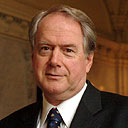
Facts: As reported in greater depth in an earlier memo, available here, Fort is a capital case where the government refused to give discovery despite the district court’s order. Judge Graber (right) wrote that a state officer (a cop) who works on a case long before a federal investigation begins is an “agent” of the federal government, and that this cop’s police reports need not be disclosed to the defense under F.R. Crim. Proc. 16(a)(2). See United States v. Fort, 472 F.3d 1106, 1107 (9th Cir. 2007). Judge W. Fletcher (left) dissented – persuasively, and vigorously. Id. at 1122.

Issue(s): En banc?

Held: No. Judge Wardlaw (right) writes a very thoughtful dissent from denial, joined by Judges Pregerson, Reinhardt, W. Fletcher, Fisher, and Paez.

Of Note: As noted in the earlier memo, Fort is a Big Deal, and this en banc denial is a bitter loss. (Nine Defenders join the amicus, and this isn’t an "issue of exceptional importance" worthy of an en banc call?) There’s now talk of a cert. petition, and the Rules Advisory Committee should take a look at this novel approach. Until then, there’s much mischief to be made.

How to Use: Judge Wardlaw writes a great defense primer on the use of Fort’s -- unique -- interpretation of Rule 16. See Ord., 2006 WL 686615, *2 (Wardlaw, J., dissenting). Her dissent is a must-read, for Fort does much to “alter the landscape of criminal discovery.” Id. at *2. Here’s highlights:

1. Expansion of government agency: The Fort decision dramatically changes the Ninth’s approach to what constitutes a “federal agent.” Id. at *6. If local cops are now federal agents for the “work product” protections of Rule 16(a)(2), they are federal agents for the disclosure provisions of 16(a)(1) – and it doesn’t make a difference if the feds don’t physically possess the materials sought. Id. Also, a cop who is now a “federal agent” for Rule 16 is also a federal agent for Henthorn disclosure. AUSAs should now shoulder an affirmative duty to dig up dirt on their cop/agents and disclose them to the defense. Cite Fort prominently in your next motion. HenthornSee id. at *6; see also United States v. Henthorn, 931 F.2d 29 (9th Cir. 1990).

2. “Sauce for the Goose”: Those 538 white-collar defense attorneys working full time on Apple stock backdating? They should take a break and read Fort. Under Fort’s broad (odd) new definition of agency, a whole new slew of defense materials are now not subject to Rule 16 disclosure. See Wardlaw dissent at *6. A broadened agency theory for the government means less disclosure under Rule 16. Apply that same broad agency theory to defense materials subject to disclosure, and defense disclosure obligations shrivel.

3. Broadened Brady: Now that cops have been swept under Rule 16's wings, federal prosecutors have a duty to burrow for Brady/Giglio material among all the state files of their new “agents.” Preserve this discovery issue in every state-origin case; it’s a safe bet that we’ll see a nice percentage of later Brady reversals for non-disclosure of state Brady material. Id. *6.

4. Federalize state searches: Sloppy state searches got a pass under Crim Pro Rule 41 because cops aren’t federal agents – but no longer, under Fort. Revisit suppression challenges under Fort’s novel new cop-agent theory. Id. at *7.


5. Educate the district court: The big loser in Fort isn’t the defense – it’s the district court. Id. at *8. Explain to your federal judge that the Executive just took a big bite out of the district court's case-management power. Id. There’s nothing like Executive encroachment on Article III power to make a trial judge rethink his or her views on defense requests. (Requests, for example, like Rule 17(c) subpoenas for police reports. (Fort doesn’t touch Rule 17(c) subpoenas)).

For Further Reading:
White collar folks, wake up and beat the drums: you too will soon face Fort when looking for routine accountant, regulatory, or expert docs completed long before your federal case. See Wardlaw dissent. at *6; see also Linda S. Eads, Adjudication by Ambush, 67 NCLR 577 (1989).

Steven Kalar, Senior Litigator N.D. Cal. FPD. Website available at www.ndcalfpd.org

.

Labels: , , ,

Tuesday, January 09, 2007

Case o' The Week: Unwelcome FORTIFICATION of Rule 16 Discovery, U.S. v. Fort


"Manifestly absurd," complains dissenting Judge William Fletcher of Judge Graber's statutory interpretation of Rule 16 in United States v. Emile Fort, __ F.3d. __, No. 06-10473 (9th Cir. Jan. 8, 2007), opinion available here. (Or, to be fair, that's how Fletcher characterizes the logical consequences of the majority's statutory reading . . . .)
In Fort, Judges Graber an
d Tallman deliver an extraordinarily disappointing discovery decision; an opinion that could have a profound impact on federal criminal practice. Judge Fletcher predicts defense chaos will ensue based on the decision's new (and strained) interpretation of Rule 16: let's oblige.

Players: Graber (above right) writes, Tallman (below right) joins; W. Fletcher (upper left) dissents.

Facts: Feds inherited previous state gang investigations and made them into federal, RICO, capital charges. While developing their case, federal AUSAs got copies of San Francisco (local) police reports. The federal prosecutors disclosed many of these reports to the defense, but redacted key names due to witness safety. N.D. Cal. Judge Alsup ordered disclosure of the unredacted reports under a restrictive protective order. Slip op. at 4-5. In a heated hearing, the government refused to comply: Alsup imposed sanctions. Id. at 3. The government took up the discovery and sanction orders in an interlocutory appeal. Id.

Issue(s): “This appeal presents the question whether investigative reports prepared by a local police department prior to a federal prosecutor’s involvement qualify for the discovery exemption created by Rule 16(a)(2) when they are turned over to the federal prosecutor for use in the federal investigation and prosecution of the same acts by the same people.” Id. at 9 (emphasis added).

Held: We hold that the documents [the police reports] in dispute are not discoverable because they are covered by Federal Rule of Criminal Procedure 16(a)(2) whether prepared by federal, state, or local officials. Accordingly, we vacate the June 16 [discovery] order . . . .Id. at 3.

Of Note: Judge William Fletcher questions the majority's statutory interpretation in a forceful and persuasive dissent. [ed. note: This particular judge does not use phrases like “manifestly absurd” lightly: en banc antennae should be quivering].

Judge Fletcher's plain reading of the rule is right; the majority’s interpretation of an exemption to Rule 16 disclosure requirements turns the statute on its head. Moreover, the majority’s strained interpretation opens up all sorts of “sauce for the goose, sauce for the gander” arguments for the defense (as Judge Fletcher warns in his dissent). If this decision doesn’t go en banc, it is a wide-open invitation for a whole raft of new defense challenges (see "How to Use" below).

What a mess this opinion could cause. Imagine not getting the local cop’s police report in a simple felon-in-possession case, or no report disclosed in a little one-shot crack sale that goes federal. The police report is the discovery, in those cases -- and those cases are the bulk of the federal criminal docket. The majority's decision ignores the fact that feds don’t make their own cases anymore: by and large, they just snag investigations from state cops. Fort will profoundly gum up the works in the vast number of state investigations that go federal: how can one defend or resolve a case without even seeing the police report?

How to Use: The majority in Fort oddly interprets Rule 16's use of “agent” of the “government” to include state officers working on a case long before the federal investigation begins. White collar defense bar, take note: given the majority’s novel interpretation, a symmetrical reading of Rule 16(b)(2) would allow the defense to avoid reciprocal defense disclosure of many documents under a dramatically broadened theory of what constitutes the defendant’s “agents” (such as corporate employees, accountants, investigators, firm lawyers, etc.). See Fletcher, W., dissenting at 11-12.

What about dirt from a state or local officer’s personnel file? Under United States v. Henthorn, 931 F.2d 29 (9th Cir. 1990) the defense traditionally only got disclosure if the law enforcement officer was federal, or an officially cross-designated state/federal agent. But, the Fort majority’s strained reading of “agent” should broaden Henthorn discovery obligations. According to Judge Graber, local cops are now federal government “agents,” even before a case goes federal. [I can’t explain it; I just report it]. If that’s true, then Henthorn disclosure obligations should apply to those local cops when a federal case is initiated. Use Fort to broaden federal government disclosure obligations, when seeking impeachment information from local or state officers’ personnel files.

Finally, what about actually getting needed police reports? Try Rule 17(c) subpoenas – a tool not touched by this opinion at all. District court judges unimpressed with Fort's reasoning (and unwilling to tolerate the chaos the opinion will cause for their docket) may now have a new view of the relevance of a 17(c) subpoena for a local police report.

For Further Reading: For a good description of the back story to this heated battle, see Justin Scheck’s Recorder article here (subscription required, free trial available at this link).

Steven Kalar, Senior Litigator N.D. Cal. FPD. Website available at www.ndcalfpd.org


.
.

Sunday, May 18, 2008

Case o' The Week: Amazing Grace Restores Discovery Powers to District Courts

The Ninth's en banc decision in W.R. Grace is the most important criminal decision to be issued in -- a week. See United States v. W.R. Grace, __ F.3d __, 2008 WL 2052204 (9th Cir. May 15, 2008) (en banc), decision available here. Coming hard on the heels of the equally excellent Chapman decision, W.R. Grace overrules the Ninth Circuit's old Hicks opinion and affirms a district court's broad discretion to create -- and to enforce -- case management and discovery orders.

Players: Decision by Judge Fisher; zinger of a concurrence by Judge Hawkins.

Facts: Mining company W.R. Grace and its officers were charged criminally for illegally disposing asbestos in Montana. Id. at *1. To handle the huge numbers of witnesses, after a case management conference the district court entered an order with discovery deadlines. The government blew the deadlines – natch. Id. at *2. The court then limited the government’s witness list for trial to what had been disclosed to date. Id. at *2. The government took an interlocutory appeal. A three-judge panel reversed the limitation order under Hicks, and the case went en banc. Id. at *3.

Issue(s): “[D]id the district court in this case have the authority to order pretrial disclosure by the government of its final list of witnesses and evidentiary documents and to exclude witnesses and evidence not timely disclosed in compliance with such orders?” Id. at *1.

Held: “[W] hold that the district court did have the authority to issue and enforce its pretrial orders compelling the government to disclose its witness list and did not abuse its discretion in doing so. We therefore also overrule ... Hicks, ... to the extent that it purported to deny the district court such authority.” Id.

Of Note: For most practitioners, the new discovery rule of W.R. Grace will have the greatest impact. Another important issue in the case, however, is procedure necessary for the government to seek a § 3731 interlocutory appeal.

Traditionally, the Ninth has required the government to elaborate on its assertion that an interlocutory appeal relates to evidence that is substantial proof of material issues, and that the appeal isn’t pursued for to delay. See, e.g., United States v. Loud Hawk, 628 F.3d 1139 (9th Cir. 1979) (en banc). In W.R. Grace, the Ninth abandoned the Loud Hawk rule and will find jurisdiction to consider the government’s interlocutory appeal on a perfunctory “certification” from the U.S. Attorney. Id. at *4.

This new rule is troubling, particularly given the slow pace of the Ninth’s decisions and the fact that our clients often remain in custody while the government takes an interlocutory appeal and seeks en banc review. Judges Hawkins, Pregerson and Wardlaw get this, and dissent from the § 3731 holding in a particularly forceful, persuasive and lengthy analysis. (Check-out id. at *21 n. 9, citing John McKay, Train Wreck at the Justice Department: An Eyewitness Account, 31 Seattle U.L. Rev. 265 (2008)) .

How to Use: Chapman (blog here) and W.R. Grace – decided a week apart – have done more for the effective defense of complex criminal cases than any other Ninth decision in the last several years.

Recall that Chapman upheld the sanction of dismissal of an indictment with prejudice, for the AUSA’s “reckless disregard” of his constitutional discovery obligations. 2008 WL 1946744 (9th Cir. May 6, 2008). In W.R. Grace, the Ninth finally restores power to the district courts to manage their own docket and avoid being gamed by the government.

Marvel at the remarkable case management order that was upheld in W.R. Grace: a finalized government witness list due a year before trial! Granted, the government in this order retained the right to amend its list for rebuttal witnesses, but nonetheless, W.R. Grace represents a sea change in the district court’s ability to force the government to not hide the evidentiary ball.

In any
case destined for trial, a very early discovery motion using Chapman and W.R. Grace is in order – along with a request for an early case management conference and (now enforceable) discovery order.

[An important aside: the Ninth expressly doesn’t reach the issue of whether defense witnesses are subject to the same rules. See id. at *7 n. 7.]

For Further Reading: Remember the Ninth's horrible Fort decision, where a bizarre reading of Rule 16 limited disclosure of state police reports in a federal gang case? See 478 F.3d 1099 (Mar. 8, 2007) (blog available here). In Fort, District Judge Alsup (right) had made a number of highly critical findings about the discovery conduct of the AUSAs. See id. at 1108 & n.10.

What Fort denied, Grace now returns – Judge Alsup and his district court colleagues suddenly find themselves armed with extraordinarily powerful tools to respond to the government’s attempts to keep the defense “in the dark.” To quote Martha Stewart, “it’s a good thing.”


Steven Kalar, Senior Litigator N.D. Cal. FPD. Website at www.ndcalfpd.org

.

Labels: , , , , ,

Sunday, March 25, 2012

Case o' The Week: No Win for Nguyen, PC for Search Warrants

Tan Duc Nguyen
In Fort, the Ninth held that state cops working a state case were actually "federal law enforcement officers" for discovery purposes, if -- years later -- their state investigation  evolved into a federal prosecution. See generally blog entry here

In Nguyen, the Ninth considers a federal prosecution for obstructing justice, when a defendant lied to state cops investigating a state crime, that could have evolved into a federal voting prosecution -- but didn't. United States v. Nguyen, 2012 WL 874995 (9th Cir. Mar. 23, 2012), decision available here.

Another troubling prosecution, for those fond of the quaint old concept of limited federal criminal jurisdiction.


 Players: Decision by Judge Reinhardt, joined by Judge W. Fletcher and DJ Zouhary. 
          
Facts: Nguyen (above right) was a Republican Congressional candidate running against a Latina Democrat. Id. at *1. Mark Lam, an acquaintance of Nguyen’s, hired a mailing service to send 14,000 letters in the district, to newly-registered Democrat or “declined to state” voters with Hispanic surnames. Id. These letters, written in Spanish, warned that voter information was being collected and might be requested by anti-immigrant organizations. Id. The letter also warned that it was illegal for non-citizens to vote. Id.  

The letter sparked complaints; state agents interviewed Nguyen. Id. Nguyen admitted to having limited knowledge of the letter, but explained that Lam had sent it independently from the campaign. Id. 

A state agent got a search warrant for Nguyen’s home and campaign headquarters. The searches produced evidence that Nguyen was more involved with the letter than he had admitted to agents. Id. at *2. The State of California never charged Nguyen. Id. A year later, the feds brought charges for obstruction of justice, a violation of 18 USC § 1512(b)(3). Id. Nguyen lost a suppression motion and was convicted. Id.

Issue(s): “On appeal, Nguyen does not challenge the basis of his federal indictment, but solely the constitutionality of the warrant that was issued by the state magistrate in connection with the state investigation. . . . . We consider here only the one narrow question presented by Nguyen: Was there probable cause for the state magistrate to believe that a crime had been committed and that the search was likely to reveal evidence of that crime.” Id. at *2.

Held: “[W]e hold that the contents of the letter and the circumstances of its distribution were sufficient to allow the magistrate to conclude that there was a fair probability that the mailing constituted a violation of [the] California Election Code . . .  These facts created a fair probability that the distribution of the letter constituted an act of voter intimidation under California law, and provided a sufficient basis for the issuance of the warrant.” Id. at *5.

Of Note: Wait – what exactly was the federal crime here? Note that the State of California never charged Nguyen with anything, and the feds never charged Nguyen with violating a federal election law. Id. at *2. Instead, the federal charge was that Nguyen “tried to hinder or prevent information from getting to sources that may ultimately turn out to be a federal investigation [for voter intimidation under federal law]. . .” Id. at *2. 

Put differently, Nguyen is now serving federal time for not being honest with state agents that were investigating a state offense that may have turned into a federal voting prosecution – but didn't. 

Huh? 

This bizarre prosecution isn’t lost on this panel. The Court sua sponte “expresses no opinion as to whether the basis of Nguyen’s conviction -- his failure to disclose information regarding the mailing of the letter to a state investigator during the course of a state investigation --  would satisfy the elements of 18 USC § 1512(b)(3).” Id. at *2 & n.1. 

So why didn’t this panel tackle what seems to be the real core question of the case? Because it was a question that the defense didn’t ask: “[o]n appeal, Nguyen does not challenge the basis of his federal indictment.” Id. at *2.

How to Use: Nguyen is a defense loss, but is a useful primer on probable cause challenges to search warrants. Id. at *3. (Perhaps unfortunately), Nguyen’s only challenge on appeal was on whether there was sufficient PC to issue the warrant. Judge Reinhardt accordingly devotes much of the opinion to what probable cause means, and what cause is necessary for a search warrant to issue. Id. at *3-*4.  It is a good example of a very close reading of a warrant affidavit: the Court in Nguyen actually rejects two of the three theories that the state agent put forth in support of her search warrant application. Id. at *4. 

For better or worse, Nguyen is also worth a close read because it flags several hurdles that are good to know before mounting a PC challenge to a search warrant (e.g., a warrant can later be upheld as showing PC for a statute not identified in the application, id. at *3 & n.2, and the lack of a later state prosecution for the crime investigated doesn’t undermine PC as to the search warrant, id. at *5).
                                               
For Further Reading: Turns out the Ninth isn’t alone, with raised eyebrows on this federal prosecution. Juries weren’t big fans of the Nguyen case, either. The first federal prosecution ended in a mistrial. See article here. The second trial resulted in an acquittal on one obstruction of justice charge, with a conviction on the “trying to obstruct a probe” charge. See article here.


Image of Mr. Tan Duc Nguyen from http://www.joincalifornia.com/candidate/6409


Steven Kalar, Senior Litigator N.D. Cal FPD. Website at www.ndcalfpd.org


.

Labels: , , , , , ,

Friday, March 16, 2007

Case o' The Week: "Argument after the Fact" Saves Search: Lopez and Fourth Amendment

Visiting district judge Louis Pollack, E.D. Pa. (left) authors a troubling Fourth Amendment decision that salvages a bad search with an "accessory after the fact" "argument after the fact" on appeal. United States v. Hosvaldo Lopez, __ F.3d __, No. 05-30347, Slip. Op. 2913 (9th Cir. Mar. 12, 2007), decision available here.

Players: Hard fought case by AFPD Bryan Lessley of Eugene Oregon.

Facts: State cops were interviewing a witness in a drug case. Slip. Op. at 2918. A tall, thin Hispanic man drove up in a Ford, pulled a gun on the cops, tried to fire, then drove away. Id. The cops later found the abandoned Ford in a department store parking lot; eight hours later another car approached it. Id. at 2919. A woman got out and drove the abandoned Ford away; a Hispanic male drove the other car, left at another mall exit, and then followed the woman down an adjacent street. Id. Cops stopped the Hispanic male who had dropped off the woman (this defendant, Lopez), took him to a police station, and determined that he wasn’t the attempted shooter. Nonetheless, at the station they got Lopez’s consent to search car that he had been driving. The cops found money, drugs and a gun. Id. at 2920. The district court denied the suppression motion. Id. at 2920.

Issue(s): “[T]he critical question before us is whether the police had probable cause when they questioned Lopez at the police station and obtained written permission to search his car.” Id. at 2925.

Held: We think that Lopez’s role in bringing a driver to rescue the Ford Focus, taken in conjunction with his apparent effort to follow the Fort Focus out of the parking lot, could properly have been perceived by a police officer as suspicious activity . . . . We therefore find that the police had probable cause to believe Lopez was an accessory after the fact, under 18 USC § 3, to the attempted shooter’s crime, and that the police did not act unreasonably in holding him under arrest without a warrant while they investigated further.” Id. at 2934.

Of Note: Accessory after the fact? The government did not argue this in the district court, slipped it into appellate briefs, and the theory was barely mentioned at oral argument. Yet this – dubious – theory saves the day. Read visiting district Judge Pollack’s analysis on the issue: he assures us that, “while not of overwhelming evidentiary weight,” a “reasonable” officer could assume that dropping someone off in a department store parking lot is probable cause. Id. at 294. Not a particularly reassuring assurance.

Equally bothersome is Judge Pollack’s use of Lopez’s (entirely constitutional) silence at arrest to prop up this “accessory” theory. Id. at 2933.

Yet another bad aspect of the decision is its heavy reliance on the fact that Lopez followed the woman as she drove the Focus away – yet this was apparently a busy, one-way street, and there was no other choice when exiting the parking lot. Factual faux pas like these are inevitable when the government sandbags with new “creative” P.C. theories on appeal.

District Judge Pollack is best known for his masterful, persuasive, well-reasoned and lengthy opinion rejecting fingerprint “science” – a decision which he famously reversed six weeks later. (He explained in his second opinion, “I disagree with myself.”) Hope for a similar change of heart in Lopez: an en banc petition is underway.

How to Use: For better or worse, Lopez is laden with language on probable cause for arrest: it is likely to be cited heavily for the black-letter law in future Fourth Amendment decisions. The case does reject the government’s crazy theory that there was probable cause for arrest on the theory that the (short) Lopez was the (tall) shooter from earlier in the day. Id. at 2928. The opinion also dances carefully around state officers’ ability to arrest for federal accessory charges. Id. at 2931 & n.10. Differences in federal and state accessory law didn’t happen to matter in this case, so that issue was moot here – but it might be important in future Fourth Amendment litigation.

For Further Reading: For an interesting discussion of Pollack’s infamous fingerprint reversal (of himself) see “Flaws in Forensic Science,” available here.

For a broader view of the problems with fingerprints generally, see AFPD Rob Eptsein’s excellent article: Fingerprints Meet Daubert: The Myth of Fingerprint “Science” is Revealed,” 75 S. Cal. L. Rev. 605 (2002), available here.


Steven Kalar, Senior Litigator N.D. Cal. FPD. Website at www.ndcalfpd.org

.

Labels: , ,

Tuesday, July 22, 2008

U.S. v. Caseres, No. 06-50546 (7-21-08). The 9th drew a line when it comes to car searches. The police were patrolling in an unmarked car when defendant (oops) made a right hand turn without signalling and the police thought that his passenger windows were tinted too dark. The police began to follow the car, lost him, and found him again. Defendant had parked his car a block and a half away from his house, and was walking to his home. The police approached him, and defendant said some not nice things. A foot chase preceded, which ended with defendant, exhausted, being arrested. The police then waited a bit before searching defendant's car incident to arrest. A firearm and ammunition was found, which was a problem because the defendant had a felony, and was on parole. On appeal from denial of the suppression motion, the 9th (Pregerson joined by Bright and Wardlaw) said, "Whoa, the police can't just search the car because the defendant was arrested outside." The 9th does find that there was no probable cause to arrest him fort he traffic violations because such a turn, if it did not interfere with traffic, was legal, and who knows about the tint? However, there was probable cause to arrest him for threatening an officer. The 9th then went to the car search, and reverses the district court and suppresses the evidence because of a bad search. The opinion goes through all the justifications the government offers -- search incident to arrest, inventory, parole -- and finds them wanting. The 9th keeps going back to the fact that the defendant had left the car, and was going home. The car was parked close to his house, on a residential street, and all the so-called justifications for search, close to the defendant upon arrest, or need to secure the vehicle, were not present. The opinion provides a nice overview of the state of car searches in the 9th, especially when distance and time separates the arrest from the search.

Congratulations to AFPD Jonathan Libby of the Central District of California (Los Angeles) for the win.

Houston v. Schoming, No. 06-15523 (7-22-08). Okay, let's get it out of the way: "Houston, we have a problem," says the 9th (Larson joined by Canby). The problem arises from an attorney conflict-of-interest. Petitioner was charged with various counts of attempted murder and firearms resulting from a long-running feud between the petitioner and the victim and his family, the Chadwicks. The petitioner moved for a continuance so he could retain a lawyer. The denial of that motion was not error given the timing,and lack of basis. However, the attorney's motion to be relieved because of a conflict will result in a granting of the petition. The public defender office had represented the state's star witness, Chadwick, in a prior shooting at Houston. The lawyer stated that he was conflicted -- he felt that Chadwick got a raw deal, that he was innocent, and that there was motive in Houston now shooting back. The state trial court denied, as did the state supreme court on the record, basing the denial on the fact that Chadwick had waived attorney-client, the public defender had not personally represented Chadwick, and the shootings were not factually related (!). The district court acknowledged that the facts were related, but denied the petition because Chadwick had waived. The 9th held that the focus should have included petitioner's right for a conflict free counsel, and counsel's own ambivalence in turning on a former client. This deserved an evidentiary hearing. In dissent, Smith expressed concern about floodgates being opened as defender offices are conflicted off matters (ed note: happens all the time -- that's why there are alternate defender offices, contract lawyers, or panels), and because there was no showing of prejudice: the evidence the petitioner points to, like polygraphs of the victim and parole status, were arguably precluded under state evidentiary rules.

Congratulations to AFPD Anne Traum of the District of Nevada (Las Vegas) for the win.

Wednesday, January 10, 2007

US v. Fort, No. 06-10473 (1-8-07). The 9th issues a very bad discovery order expanding the scope of protected discovery for work product to state police investigative reports that were turned over to the US Attorney for their investigation. The 9th reverses a district court protective order that had disclosure when the government thumbed its nose at the court's request for assistance in drafting. Graber, joined by Tallman, reasoned that the reports fell under work product and analysis. This case itself dealt with an alleged violent gang in a project. Dissenting, W. Fletcher takes the majority to task for confusing work product with concerns about disclosure. This order is badly reasoned and flawed.

Sunday, January 14, 2018

Case o' The Week: Seeing Hulen Rouge - Self-incrimination and Supervised Release Violations

   Tell clients to be forthcoming with their treatment providers, while on supervised release.
  (They'll feel good about themselves while serving their revocation sentences).
United States v. Hulen, 2018 WL 343759 (9th Cir. Jan. 10, 2018), decision available here.
  

Players: Decision by Judge Clifton, joined by Judges Wardlaw and Owens. Hard-fought appeal by AFPDs David Merchant and Josyln Hunt, Federal Defenders of Montana.

Facts: Hulen was on supervised release for failure to register as a sex offender. Id. at *1. Hulen admitted to his treatment provider that “he was not doing all he could do to progress in treatment.” Id.
  The provider told Hulen to write down his transgressions, then promptly shot Hulen’s list to the Probation Officer. Id. The P.O. filed a Form 12. Id.
  [NB: Hulen did not admit to new crimes in his list].
  Hulen conceded violations in the district court, was revoked, and sentenced to six months custody. Id. at *2.

Issue(s): “Hulen argues that the use of his statements against him in the revocation proceeding by the district court violated his right against self-incrimination under the Fifth Amendment.” Id. at *1.

Held: “We hold that the district court did not violate Hulen’s right against self-incrimination because that right extends only to prohibit the use of an admission in a criminal case. A proceeding to revoke supervised release is not a criminal case for purposes of the Fifth Amendment right against self-incrimination. Accordingly, we affirm the decision of the district court.” Id. at *1.
  “A revocation proceeding is not a new criminal proceeding, but is instead part of the “matrix of punishment” arising out of the original crime . . . . Thus, the full panoply of rights due a defendant in a criminal proceeding does not apply to revocations. . . . Revocation deprives a probationer only of the conditional liberty properly dependent on observance of special restrictions. . . . . The Fifth Amendment does not provide a right to avoid the consequences of violating those special restrictions. Accordingly, a revocation proceeding is not a criminal case for purposes of the Fifth Amendment right against self-incrimination.” Id. at *4 (citations omitted).

Of Note: In Hulen, the Ninth recites the constrained constitutional rights afforded in violation proceedings, then extends these crabbed approaches to the Fifth Amendment. See, e.g., id. at *3 (“We held that the Sixth Amendment right of confrontation does not extend to revocations in United States v. Hall, 419 F.3d 980, 985–86 (9th Cir. 2005)). 
  Yet in UnitedStates v. Avila, the Ninth just reversed a revocation when a defendant wasn’t afforded confrontation in a contested hearing. No. 17-100065, (Ninth Cir. Nov. 17, 2017) (mem.) (“Under Morrisey v. Brewer, 408 U.S. 471 (1972), every release is guaranteed the right to confront and cross-examine adverse witnesses at a revocation hearing, unless the government shows good cause for not producing the witnesses.”) (citation and quotations omitted).
  What gives, with Hulen and Avila?
  A learned colleague flagged a difference as the origins of the Confrontation Clause right: Hulen is discussing Sixth Amendment Confrontation, and Avila, the due process confrontation right.
  The nutshell? Hulen’s primer on S/R misery is a little more nuanced than at first it may first appear.

How to Use: There is a difference, the Ninth assures us, between conduct leading to a new criminal charge, and a violation of the supervised release “matrix of punishment.” That difference probably eludes Hulen, as he sits in his jail cell.
  Note, however, also the major caveat in Hulen (needed to try to distinguish a long string of contrary Ninth decisions on self-incrimination for supervised release violations): if the conduct involves (or potentially involves) a new crime, the Fifth’s protections against self-incrimination (may) kick in. As Judge Clifton (sort of) concedes, “If an effort had been made to charge and convict Hulen for a new crime based on his admissions, he would presumably be able to claim the benefit of the Fifth Amendment.” Id. at *4.
                                               
For Further Reading: President Trump has placed three of the four U.S. Attorneys in California. They’ll hang onto their interim gigs if re-upped by the district courts, until they are ultimately confirmed by the Senate (likely outcomes, for these three experienced appointees).
  The odd one out? N.D. Cal.

  In the Northern District, Acting US Attorney Alex Tse will hold down the fort until the Trump nominee is announced. See article here


Image of the four Federal Districts within the State of California from http://smarthr.blogs.thompson.com/files/2012/02/jurisdiction-map-rev.jpg

Steven Kalar, Federal Public Defender, Northern District of California


.

Labels: , , , ,