Sunday, December 27, 2020

Case o' The Week: The Real McCoy - Compassionate Release and "Second Look" Sentencing

 “We return to the Second Circuit's description of the First Step Act and its amendment of § 3582(c)(1)(A): an “incremental” change that does not mandate more lenient sentences across the board but instead gives new discretion to the courts to consider leniency.”


United States v. McCoy, 981 F.3d 271 (4th Cir. 2020), decision available here.

 [Ed. Note: A slow spell in the Ninth lets us flag an important – and time-sensitive – recent Compassionate Release case out of the Fourth Circuit].

Players: Decision by Judge Harris, joined by Judges Diaz and Thacker.

Big win for AFPDs Paresh Patel and Shari Silver Darrow, District of Maryland Office of the Federal Public Defender.   

Facts: These appeals were from Compassionate Release grants for defendants convicted of “stacked” § 924(c) charges. Id. at 274. Their sentences ranged from 35 to 53 years. Id. Because of the First Step Act, if sentenced today the terms for these defenders would be 30 years less. Id.

  After the defendants’ Compassionate Release motions were denied by the BOP, counsel litigated for reductions in the district court. Id. at 277.

  The lead appellee, McCoy, was nineteen when he received a 35 year sentence. Id. McCoy had served seventeen years when the district court granted his C/R motion and reduced his sentence to time served. Id. The Fourth consolidated several government appeals of these resentencing decisions.

Issue(s): “[T]he government presents two primary arguments . . . . First, the government contends that treating a disproportionately long sentence as an ‘extraordinary and compelling’ reason for a potential sentence reduction is not ‘consistent with applicable policy statements issued by the Sentencing Commission,’ as required by § 3582(c)(1)(A).” Id. at 280.

  “And second, the government argues, even if consideration of the defendants’ § 924(c) sentences were not precluded by § 1B1.13, the First Step Act's elimination of sentence-stacking still could not constitute an ‘extraordinary and compelling reason’ for compassionate release . . . .” Id.

Held: Issue One: “[W]e agree with the Second Circuit and the emerging consensus in the district courts: There is as of now no ‘applicable’ policy statement governing compassionate release motions filed by defendants under the recently amended § 3582(c)(1)(A), and as a result, district courts are empowered . . . to consider any extraordinary and compelling reason for release that a defendant might raise.” Id. at 285 (internal quotations and citation omitted).

  Issue Two: “[W]e find that the district courts permissibly treated as ‘extraordinary and compelling reasons’ for compassionate release the severity of the defendants’ § 924(c) sentences and the extent of the disparity between the defendants’ sentences and those provided for under the First Step Act. We emphasize, as did the district courts, that these judgments were the product of individualized assessments of each defendant’s sentence. And we note that in granting compassionate release, the district courts relied not only on the defendants’ § 924(c) sentences but on full consideration of the defendants’ individual circumstances . . . .” Id. at 286.

Of Note: Critical to this great outcome is dusty guideline § 1B1.13, that predated the First Step Act. Short of a quorum, the Sentencing Guideline Commission has been unable to update this guideline and thus slam the door on this opportunity. See id. at 282 & n.6.

When the Commission does get a forum, will its skepticism of Compassionate Release change?  Who knows – but why risk it? This window of opportunity may not last forever: the time for these “Second Look” motions is now.

How to Use: Stacked § 924(c)s are great candidates for these motions. So are drug cases with changed mand mins.

For a great holiday example, check out United States v. Blanco, CR 93-20042 CW (N.D. Cal. Dec. 14, 2020), Ord., Dkt. 2784. 

In Blanco, ND Cal FPD Appellate Chief Carmen Smarandoiu brought a Compassionate Release motion to earn a resentencing on a life mand-min drug case. The resentencing result? Time served after twenty-five years in, and a “lifer” home for Christmas!                                           

For Further Reading: Like the A.G. slot, President Biden has been mum thus far on his potential Sentencing Commission nominees.

  How about another shot for a great President Obama nominee, whose nomination expired with the 114th Congress? See Press Release here 


Image of “The Real McCoy” from https://blog.kiddom.co/the-real-mccoy/


Steven Kalar, Federal Public Defender N.D. Cal. Website at www.ndcalfpd.org


.

Labels: , , , , ,

Sunday, December 20, 2020

Case o' The Week: Jury Finding Not So Binding - Hardiman and Pimentel-Lopez challenges

 Per curiam coal, in the defense stocking . . .


  United States v. Hardiman, 2020 WL 7350248 (9th Cir. Dec. 15, 2020), decision available here.

 Players: Per curiam opinion with Judges Paez and Owens, and Sr. D.J England, Jr. Hard-fought appeal by ND Cal CJA stalwart James Thomson, along with Ethan Stone.

 Facts: At trial, a jury found Hardiman responsible for distributing at least 28 grams, but less than 280 grams, of crack. Id. at *1. At sentencing the district court rejected the jury’s finding, held Hardiman responsible for more than 280 grams, and imposed a guideline sentence. Id. 

 After Hardiman’s direct appeals were final, the Ninth decided United States v. Pimentel-Lopez, 859 F.3d 1134 (9th Cir. 2016). In Pimentel-Lopez, the Ninth held “that a district court is not entitled to make a drug quantity finding in excess of that found by the jury in its special verdict.” 2020 WL 7350248, *1 (internal quotations and citation omitted); see generally blog here

  After Pimentel-Lopez, the district court denied Hardiman’s § 2255 and § 3582(c)(2) motions.” Id.

 Issue(s): Issue One: “Hardiman argues that the district court erred by denying his § 2255 motion because, under Pimentel-Lopez, the court violated his Sixth Amendment rights when it found for sentencing purposes that he was responsible for distributing a higher amount of drugs than the jury specifically found.” Id.

 Issue Two: “Hardiman also argues that the district court erred by denying his § 3582(c)(2) motion in light of Pimentel-Lopez. Hardiman filed a § 3582(c)(2) motion to reduce his sentence based on Amendment 782 to the Guidelines. . . . The district court determined that Amendment 782 retroactively reduced Hardiman's base offense level and that he was eligible to be resentenced pursuant to a new Guidelines range, but that the 18 U.S.C. § 3553(a) factors and the circumstances of his case did not warrant a sentencing reduction.” Id. at *3.

 Held:  Issue One: “[W]e hold that Pimentel-Lopez does not apply retroactively to cases on collateral review under Teague v. Lane . . . .” Id. at *1. “Pimentel-Lopez announced a ‘new’ rule of criminal procedure which is not retroactive under Teague. Accordingly, Pimentel-Lopez is inapplicable to Hardiman's § 2255 motion, and the district court did not err by denying the motion.” Id. at *3.

  Issue Two: “Hardiman’s arguments about Pimentel-Lopez “were not affected by” Amendment 782 and therefore are outside the scope of the proceeding authorized by § 3582(c)(2) . . . Moreover, even under Pimentel-Lopez, a district court has the discretion in its assessment of the § 3553(a) factors to consider a drug quantity higher than the amount specifically found by the jury. . . .” Id. at *3 (footnote, quotations and citation omitted).

 Of Note: Should the § 3582(c)(2) decision be reviewed for abuse of discretion, plain error, or de novo? The Ninth dodges this standard of review – note that the standard of review issue remains open. Id. at *3 & n.4.

 How to Use: The Ninth doesn’t mention that Mr. Hardiman is serving 188 months – despite the fact that the jury found lower drug amounts than the sentencing court. There’s no habeas help, and no drug resentencing love. Do any options remain? Mull whether there is there any Compassionate Release action, litigation that permits revisiting unjust sentences imposed under laws that have since changed? (Note that Compassionate Release is a different subsection of § 3582).                                            

For Further Reading: The science is clear: inmates should be near the front of the line for the COVID vaccine. For a compelling podcast explaining why, see NPR piece here


  California is one of the few states that has prisoners in the list for vaccine in the next three months. See LA Times article here. 

  The CDC votes today on the next round of the vaccine schedule – here’s hoping our poor incarcerated clients don’t get washed out by the massive lobbying effort now underway. See CNN article here.  


Image of coal in stocking from https://middlesexconsulting.com/will-your-head-of-services-get-an-ipad-pro-or-a-lump-of-coal/

Image of COVID vaccine from https://www.insurancejournal.com/news/national/2020/10/30/588822.htm


Steven Kalar, Federal Public Defender N.D. Cal. Website at www.ndcalfpd.org


.

Labels: , , ,

Sunday, June 19, 2016

Case o' The Week: Venn and the Art of Jurisprudential Maintenance - Davis and Fractured Supreme Court decisions


The Ninth gets all Venn on us.
United States v. Davis, 2016 WL 3245043 (9th Cir. June 13, 2016) (en banc), decision available here.


Players: Decision by Judge Paez, joined by Judges Fletcher, Rawlinson, Callahan, and Owens. 
  Concurring opinion by Judge Christen, joined by CJ Thomas, and Judges Tallman, Nguyen, and Hurwitz. 
  Judge Bea, dissenting. 
  Big win argued by ND Cal (and Jones Day) counsel Nathaniel Garrett.

Facts: Davis plead guilty to distributing crack, under a (c)(1)(C) deal. Id. at *2. The agreement acknowledged a guideline range and recommended a sentence below it. Id. Congress then passed the Fair Sentencing Act, and Commission adopted lower retroactive crack guidelines. Id. at *3. Davis filed a § 3582 motion to reduce his sentence. The district court held it was bound by Justice Sotomayor’s concurring opinion in Freeman, and found it lacked jurisdiction because Davis’s sentence was “based on” the (C) deal, not the guidelines. Id. at *4. A three-judge panel affirmed, and the case went en banc.

Issue(s): “[W]e must consider how to interpret the Supreme Court's fractured opinion in Freeman . . ., which addressed whether a defendant sentenced pursuant to a Federal Rule of Criminal Procedure 11(c)(1)(C) plea agreement is eligible for a sentence reduction under . . . § 3582(c)(2) . . .” Id. at *2 (citation omitted].

Held: Revisiting Freeman and our application of Marks to fractured Supreme Court opinions, we hold that where we can identify no rationale common to a majority of the Justices, we are bound only by the result. In so holding, we join the D.C. Circuit, which concluded that Freeman lacks a controlling opinion ‘because the plurality and concurring opinions do not share common reasoning whereby one analysis is a logical subset of the other.’ . . . Bound only by Freeman’s specific result, the D.C. Circuit adopted the plurality opinion’s approach, which holds that “[e]ven when a defendant enters into an 11(c)(1)(C) agreement, the judge’s decision to accept the plea and impose the recommended sentence is likely to be based on the Guidelines; and when it is, the defendant should be eligible to seek § 3582(c)(2) relief.” . . . . We also adopt this approach and overrule Austin. Applying the plurality approach, we conclude that Davis is eligible to seek a sentence reduction under § 3582(c)(2).” Id. at *2 (citation omitted).

Of Note: Great result for drug resentencing – but the far bigger issue decided in Davis is how the Ninth deals with fractured Supreme Court decisions. Judge Paez provides a clear explanation of the two main approaches: one focusing on the reasoning of the various opinions, and the other focusing on the ultimate results. Id. at *5. 
  Judge Paez concedes that the Ninth’s own decisions on the fractured-Supremes conundrum have “not been a model of clarity.” Id.To foster clarity,” this en banc decision “explicitly adopt[s] the reasoning-based approach to applying Marks.Id.
  The Ninth imagines a Venn diagram with the plurality and concurring opinions: one can’t envision overlapping circles with Justice Sotomayor’s and the plurality opinion. Id. at *7.
  With this reasoning approach, the Ninth stands with D.C. and breaks with the approach of four circuits. Id. at *8. (But with our drifting 4-4 Supreme Court, query whether circuit splits are still as vulnerable to cert. calls?)

How to Use: “Even when a defendant enters into an 11(c) (1)(C) agreement, the judge’s decision to accept the plea and impose the recommended sentence is likely to be based on the Guidelines; and when it is, the defendant should be eligible to seek § 3582(c)(2) relief.” Id. at 10. 
  Scratch out § 3582(c)(2), substitute “§ 2255”, and our Johnson habeas clients are off to the races. During this Summer of Johnson Replies, turn to Davis for our (C) clients (and other “plea agreement” arguments in the gov’t Oppositions). Like a virus, the Guidelines infect all sentences: a deal’s recommendation won’t immunize a case from Johnson attack.
                                               
For Further Reading: Great timing, Davis: we may use it next week. Two big Supreme Court decisions are expected in very short order: Mathis, summary here, and Voisine, summary here
  Both cases are important for four Johnson efforts: decisions will start hit at 7:00 a.m. Monday June 20th.


Steven Kalar, Federal Public Defender, N.D. Cal. Website at www.ndcalfpd.org

.

.

Labels: , , , , ,

Sunday, October 26, 2014

Case o' The Week: Crawford + Apprendi = Magic -- Salvador (aka "Magic") Vera and Cop Expert Testimony


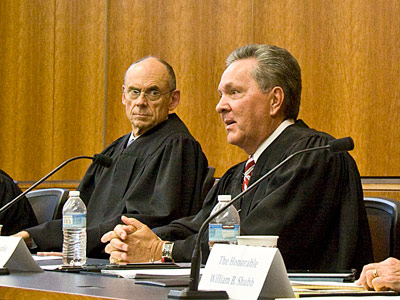
Hon. Judge Raymond Fisher

Mix Crawford and Apprendi, and good things are bound to follow.
United States v. Vera, 2014 WL 5352727(9th Cir. Oct. 22, 2014), decision available here.

Players: Decision by Judge Fisher, joined by Judges Noonan and Wardlaw.

Facts: Wiretaps on Vera and others produced an indictment alleging conspiracy to distribute a variety of drugs (although only 24 grams of heroin were actually obtained in the investigation). Id. at *1-*2. Seventy wiretap calls were the primary evidence at trial.. Id. at *2. Two case agents testified, mingled percipient witness testimony with “expert” testimony on gangs, and intercepted the meaning of the calls. Id. at *2-*3. The defense essentially conceded the conspiracy charge, and focused on the adequacy of the government’s proof of drug type and quantity. Id. The jury returned guilty verdicts, and special verdicts on drug type and quantity. Vera was sentenced to 30 years. Id. at *3.  

Issue(s): “This appeal requires us to revisit issues that arise when law enforcement officers offer both expert and lay opinion testimony interpreting the meaning of intercepted telephone calls.” Id. at *1. “The defendants argue that [the testimony of FBI Agent Lavis] was improper because it (1) impermissibly mixed lay and expert opinions; (2) served as a conduit for testimonial hearsay in violation of Crawford; (3) was not the product of reliable principles and methods; and (4) included impermissible lay opinions.” Id. at *7.

Held: “We again emphasize that such expert opinions must rest on reliable methodology; that such lay opinions may not be supported by speculation or hearsay, or interpret unambiguous, clear statements and that the jury must be instructed on how to appropriately evaluate each form of testimony offered by the officer.” Id. at *1.  

  “We affirm the admission of the gang testimony but reach a different conclusion regarding the testimony interpreting the recorded calls. Because that testimony intermingled lay and expert opinion, the district court’s failure to explain the distinction to the jury constituted plain error. Additionally, this intermingling resulted in the admission of improper expert and lay opinions, which also constituted plain error. Because these error affected the drug quantities found by the jury in a special verdict, and therefore the mandatory minimum sentences the defendants faced, they affected the defendants’ substantial rights and seriously affected the fairness of the judicial proceedings. Accordingly, we vacate the drug quantity findings and the defendants’ sentences.” Id.

Of Note: While this is a great decision on cop “experts” and wiretaps, note the less-welcome decision on gang testimony. Id. at *5. Judge Fisher distinguishes the Second’s great decision in Mejia, and finds no Crawford violation in a detective’s gang opinions. Id. Nonetheless, the opinion does shine in its principled analysis of cops’ testimony on drug jargon. Id. at *8. Investigating agents who also testify as “experts” must be accompanied by an instruction on the differences between percipient and expert testimony. Id. at *8. Moreover, FRE 701 and 702 foundation requirements apply to the testimony – no speculation, no reliance on hearsay, and no “interpretation” of clear and unambiguous statements.Id.

How to Use: The rubber hit the road when Agent Lavis’s opinions on drug weights from the calls – made without adequate foundation – “resulted in admission of specific drug quantity opinions that did not rest on reliable methods.” Id. This intersection of Crawford and Apprendi meant that the high sentences based on quantity are vacated. Id. at *15. In a question of first impression, Judge Fisher concludes the remedy is to remand to a new sentencing jury. Id. Because agent “expertise” is so often abused in this area, this holding is particularly potent stuff and worth a close read in wiretap and drug conspiracy cases.
                                               
For Further Reading: The BOP has told the Sentencing Commission that it will take ten months for it to arrange for reentry programs for drug offenders to be released on Nov. 1, 2015. This means a deadline of signed release orders by January 15, 2015. For a summary of the numbers of folk facing this deadline, see Commission memorandum here


Image of the Honorable Judge Raymond Fisher from https://law.ucdavis.edu/blogs/deans/images/neumiller02.jpg

Steven Kalar, Federal Public Defender ND Cal. Website at www.ndcalfpd.org

.

Labels: , , , , , , , ,