Sunday, June 23, 2019

Case o' The Week: No Old Know, but Now New Knew - Benamor and Knowledge Requirements in Sec. 922(g)(1) Cases


   Taking antique shotguns for granted?
   Fine for the government.
   (Less fine with Vinnie Jones).
United States v. Benamor, 2019 WL 2375885 (9th Cir. June 6, 2019), decision available here.


Players: Decision by Judge Graber, joined by Judge Bybee and DJ Harpool.

Facts: Cops found a shotgun in a van which Benamor, a felon, had driven. Id. at *1. Benamor went to trial on § 922(g) charges. Id. at *2. 
  At trial, an agent testified the shotgun could not have been manufactured before 1915. Id. Benamor moved for a Rule 29 and for instructions that the government had to prove that he knew the gun was manufactured after 1898. Id.  The motions were denied and Benamor was convicted. Id.

Issue(s): “Because firearms manufactured in or before 1898 do not qualify as ‘firearms’ under § 922, Defendant argues that the district court erred by refusing to instruct the jury that, to convict, they had to find that Defendant knew that his firearm was manufactured after 1898.” Id. at *1. 
  “Although Defendant’s shotgun was old, it was not ‘antique’ within the statutory definition, because it was manufactured after 1898. Defendant does not dispute that his shotgun met § 921(a)(3)’s definition of a firearm. Yet he argues that the government was required to prove his knowledge that the shotgun lacked the antiquity that would have placed it beyond § 922(g)’s reach.” Id. at *2.

Held: “Every circuit to address the ‘antique firearm’ exception in the criminal context has held that the exception is an affirmative defense to a § 922(g) prosecution, not an element of the crime.” Id. at *3. 
  “We affirm.” Id. at *1.

Of Note: In addition to the “antique” holding, Benamor also has an interesting Confrontation Clause analysis. Id. at *4. In the guise of “effect upon a witness,” the AUSA elicited incriminating hearsay statements from Benamor’s landlord to the cop. Id. The AUSA then argued this hearsay in closing. 
  The Court finds a Confrontation Clause / Crawford error (although it declines to reverse). Id. at *5. Nonetheless, Benamor is useful to brush-back when an AUSA smuggles testimonial hearsay through an “effect on the hearer” theory.

How to Use: Benamor is, respectfully, wrong – at least as it recounts the elements of a federal gun case.
  Quoting the (now erroneous) Ninth’s en banc decision in Nevils, Judge Graber explains that “To convict someone under § 922(g)(1), the government must prove three elements:
  (1) the defendant was a felon;
  (2) the defendant knowingly possessed a firearm or ammunition; and
  (3) the firearm or ammunition ‘was in or affecting interstate commerce.’” Id. at *2.
  At least as of Friday, that list is missing an element. In the Rehaif decision delivered June 21st, Justice Breyer writes that in a § 922(g)(1) prosecution, “the word ‘knowingly’ applies both to the defendant’s conduct and to the defendant’s status. To convict a defendant, the Government therefore must show that the defendant knew he possessed a firearm and also that he knew he had the relevant status when he possessed it.” Rehaif v. United States, 2019 WL 2552487, at *2 (emphasis added), available here.
  Did Benamor’s indictment allege that he knew that he was a felon? Was the jury instructed that it had to find that Benamor knew he was a felon? Was there any evidence in this trial that Benamor knew of his status as a felon? No, no, and most likely, no.
   The Benamor decision happens to have a nice little discussion of “knowledge” in the context of § 922(g)(1) cases. See id. at *2 (discussing Beasley, 346 F.3d 930, 934 (9th Cir. 2003)); id. at *3 (discussing Staples). Glom these “knowledge” cases onto Rehaif’s “knew status” element –much mischief awaits.     
                                               
For Further Reading: Our gun cases are getting a hard Rehaif review this weekend. While mulling, remember the recent Ninth Circuit win in Bain. In Bain, Judge Tashima booted a deficient plea that was missing facts supporting an essential element -- a fact pattern that now resonates with hundreds of federal gun cases after Rehaif. See Bain blog entry here.
  Consider also James, 987 F.2d 648 (9th Cir. 1993) (reversing when gov’t failed to prove FDIC element in bank robbery trial), available here.  


Image from “Lock, Stock, and Two Smoking Barrels” from https://filmschoolrejects.com/guy-ritchie-is-returning-to-his-comfort-zone/


Steven Kalar, Federal Public Defender, N.D. Cal. Website at www.ndcalfpd.org

.


Labels: , , , , , ,

Sunday, April 21, 2019

Case o' The Week: It Isn't What You Know . . . - Price and Mens Rea Requirements for Int'l Flight Sex Offense Statute

 No “know?”

 No problem.  
United States v. Price, 2019 WL 1575875 (9th Cir. Apr. 12, 2019), decision available here.

Players: Decision by Judge Wardlaw, joined by Judge Nguyen. 
  Concurrence by visiting Sixth Circuit judge Ronald Lee Gilman, “unabashedly” adopting draft opinion written by Judge Stephen Reinhardt, before his untimely passing. 
  Hard-fought appeal by CD Cal AFPD Jonathan Libby.  

Facts: Price, a 46-year old man, moved from his assigned seat to sit next to a young woman on a flight from Tokyo to L.A.. Id. at *1. He fondled the breast of the sleeping 21-year old Japanese student, slipped his hand in her underwear, and touched her vagina. Id. 
  Price was charged with a violation of 18 USC § 2244(b), which prohibits knowingly engaging in sexual contact with another person, without their permission, on an international flight. Id.
  At trial, Price disputed the § 2244(b) jury instruction. Id. at *3. Price asked for an instruction that required proof that he knew the sexual contact was without the woman’s permission. Id.
  The district court denied that instruction, Price was convicted, and appealed.

Issue(s): “Price appeals his conviction, contending that the government was also required to prove beyond a reasonable doubt that he subjectively knew that his victim did not consent.” Id. at *1.

Held: “To read ‘knowingly’ to apply to the second element in § 2244(a) [prohibiting sex acts criminalized in other statutes] would both be grammatically unnatural and produce absurd results. Because a conviction under § 2244(a) does not require that the government prove the defendant’s knowledge of the additional element, we should read § 2244(b) in the same manner.” Id. at *6.
  “In enacting the Sexual Abuse Act of 1986, of which 18 U.S.C. § 2244(b) is a part, Congress sought to expand criminal culpability for sexual acts and contacts and facilitate prosecution of those crimes. Thus it placed the burden on the actor who knowingly engages in sexual contact with another person to first obtain that person’s consent, objectively given. The government need not prove that the defendant subjectively knew he lacked consent, as Price asserted here. It need only prove that the victim did not consent as an objective matter.” Id. at *11.

Of Note: The Ninth’s April 2018 decision in Yovino v. Rizo made recent news. In Yovino, the Supreme Court rejected an en banc vote by Judge Reinhardt that was cast before he passed away, and before the opinion was issued. See Washington Post article here. “Federal judges are appointed for life, not for eternity,” the high Court clucked disapprovingly. Id.
The Hon. Judge Stephen Reinhardt
  It is interesting to remember this SCOTUS’ scolding, when reading the compelling concurrence in Price. See id. at *11 (Gilman, J., concurring). Visiting Judge Gilman persuasively explains why this statute should be read to include a knowing mens rea as to whether the defendant was acting with permission. Id. Judge Gilman explains that before his death, Judge Reinhardt was a member of the Price panel and wrote a draft opinion. Judge Gilman reveals, “Unabashedly, much of this concurrence can be attributed to the portions of Judge Reinhardt’s draft opinion with which I fully agree.” Id.
  “Eternity” might be a stretch, but it is fair to say that Judge Reinhardt’s remarkable legacy continues well beyond his death.

How to Use: Sex offenses on international flights? Rare. 
  Disputes over mens rea requirements? Common. 
   The bulk of Price is statutory analysis of this infrequently-charged crime, inferred from adjacent statutes and assumed from the (low) custodial term at stake for this offense. Id. at *7-*8. For better or worse, turn to Price when mens rea and statutory interpretation battles arise – the decision has some helpful inverse propositions (for example, high-exposure statutes support the need for higher mens rea requirements. Id. at *7.
                                               
For Further Reading: Ninth - 4:3:2. Four vacancies, three nominees, hearings held on two. 
   For a quick tabular recap of the current nomination status of the Ninth Circuit in the 116th Congress, see “Judicial Vacancies and Nominations,” available here.  


Image of “The Price Isn’t Right” from http://bentwoodrealty.com/the-price-isnt-right/429/

Image of the Honorable Judge Stephen Reinhardt from https://www.azquotes.com/quote/1132273


Steven Kalar, Federal Public Defender N.D. Cal. Website at www.ndcalfpd.org

.

Labels: , , , ,

Sunday, October 08, 2017

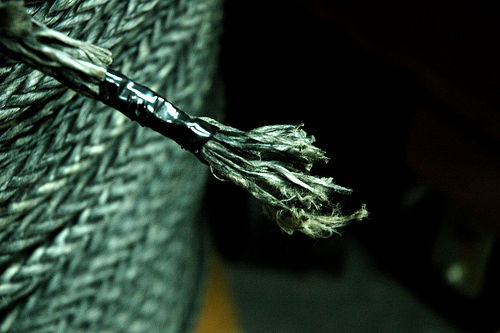
Case o' The Week: A Stitch in Twine Saves Nine (from reversing) - Spatig and Mens Rea in "Knowingly" Statutes

  Mens rea, frayed Twine, on Ninth's mind.
 United States v. Spatig, 2017 WL 4018398 (9th Cir. Sept. 13, 2017), decision available here.

Players: Decision by Judge McKeown, joined by Judge Nguyen and visiting 10th  Circuit Judge Murphy.
 Hard fought appeal by AFD Steven Richert, Federal Defenders Services of Idaho.

Facts: Spatig ran a company that ended up with lots of bulk paint and paint-related materials. Id. at *1. When Spatig’s wife became ill he stopped working and decided to store these materials at his Idaho residence (with no EPA permit). Id. County officials found the stuff in 2005 and destroyed much of it. Id.
  However, in 2010, hazardous materials were again found strewn across the property: corroded, rusted, and not stored safely. Id. An EPA team came in, removed over 3,000 containers, and spent almost half a million dollars on the clean-up. Id.
  Spatig was charged with knowingly storing and disposing hazardous waste, without a permit, in violation of 42 USC § 6928(d)(2)(A) (the “Resource Conservation and Recovery Act,” or “RCRA.”) Id.
  The government won an in limine motion to preclude evidence on Spatig’s diminished capacity, arguing the offense was a general-intent crime. Id. Spatig was convicted after trial.

Issue(s): “The key issue on appeal is whether § 6928(d)(2)(A) defines a crime of general or specific intent, as that decision dictates whether Spatig can advance a diminished-capacity defense. We have consistently held that diminished capacity defenses are not available to defendants who are accused of general intent crimes.” Id. at *2 (quotations and citations omitted).

Held: “[W]e affirm because § 6928(d)(2)(A) defines a general-intent crime.” Id. “Because § 6928(d)(2)(A) defines a crime of general intent, the district court did not err in excluding evidence of Spatig’s diminished capacity.” Id. *4.

Of Note: “But wait,” you protest, “what about Twine?” In that 1988 decision, Judge Brunetti looked at a pair of statutes that prohibited knowingly conveying a threat – the same operative verb in the charge facing Spatig. See United States v. Twine, 853 F.2d 676 (9th Cir. 1988). The Court held that those statutes required an “intent to threaten,” and thus required “specific intent.” Id. at 680.
  Judge McKeown is unpersuaded.
  Twine, Judge McKeown concludes, covers offenses that are “akin to ‘classic’ specific-intent crimes,” while the hazardous waste statute in Spatig is “agnostic” as to the defendant’s aim. Id. at 2017 WL 4018398 at *3.
  The Court also takes a swipe at Twine, opining that the Ninth has “softened on the reasoning” of the decision and reporting the circuit split engendered by the case. Id. at *3 & n.2.
  It is a disheartening discussion for those on all sides of the political spectrum who worry about federal prosecutions in a strict liability world, checked only by prosecutorial discretion.   

How to Use: Good Conservatives (well, at least, good Federalists) distrust the regulatory state and worry about the constant erosion of mens rea requirements in federal criminal statutes and regs. As President Trump’s judicial appointees join the district courts and Ninth (and more Justices join the Supreme Court), the time is ripe for a renewed mens rea effort by the federal defense bar.
   More immediately, and despite the discounting of the Spatig panel, note that Twine remains good law. Spatig’s “akin to classic specific-intent” distinction of Twine feels like an awfully fuzzy test. When advocating for specific intent for a “knowingly” statute, brush off your copy of Reading Law, channel Justice Scalia’s originalism vibe, and root about old common law for “classic” specific-intent analogues that are arguably “akin” to offenses in “knowingly” statutes.   
                                        
For Further Reading: “The Supreme Court has long recognized a ‘presumption’ grounded in our common law tradition that a mens rea requirement attaches to ‘each of the statutory elements that criminalize otherwise innocent conduct.’”
  Who penned these wise words?  Then-Judge, now-Justice Gorsuch. See Neil Gorsuch on criminal defendants and the rule of law, available here. 


Steven Kalar, Federal Public Defender, Northern District of California. Website available at www.ndcapfpd.org


.

Labels: , , , , ,

Sunday, July 19, 2015

Case o' The Week: Ninth (Sai)Pans specific intent requirement. - Ye and Mens Rea for Passport offense


It's a Winn-Win situation . . . (for the government).
United States v. Ye, 2015 WL 4153634 (9th Cir. July 10, 2013), decision available here.

Players: Decision by Judge Friedland, joined by Judges Clifton and N.R. Smith.  

Facts: Ye, a Chinese citizen, overstayed her visa in Saipan and gave birth a child.
Hon. Judges Michelle Friedland and N.R. Smith
Id. The child’s place of birth made her a U.S. Citizen entitled to a U.S. passport. Id. Ye and her husband could have obtained a U.S. passport for the child if they both applied in person, or if one parent signed a notarized authorization statement. Id. This notarized statement, however, would have caused (unspecified) problems for the father of the child in China -- so the father’s brother traveled to Saipan, posed as the father, and executed the child’s passport application. Id. Both the brother (the child’s uncle) and Ye, the mother, were charged with conspiracy to violate 18 U.S.C. § 1542, providing false information in a passport application. Id. Ye was convicted after trial.

Issue(s): “[Ye] argues that the district court’s jury instructions erroneously failed to condition her convictions on a finding that she intended to violate the passport laws.” Id. at *1.

Held: “We hold that the crimes for which Ye [were] convicted are not specific intent crimes, so her challenges to the jury instructions fail.” Id. at *1. “We now join our sister circuits and hold that, consistent with [the Supreme Court’s decision in] Browder, a conviction under the first paragraph of 18 U.S.C. § 1542 does not require specific intent.” Id. at *3.

Of Note: “But wait,” you ask: “in ’78 didn’t the Ninth hold that a district court ‘correctly instructed the jury’ that ‘an act is done willfully if done voluntarily and intentionally with the specific intent to do something the law forbids’ – under the same paragraph of this statute?” 

You remembered correctly. Id. at *3, citing Winn. 

However, Judge Friedland distinguishes Winn because that was a “sufficiency of the evidence” case, “so its approval of the ‘willfully’ jury instruction is best understood as stating that the instruction had not improperly reduced the government’s burden of proof.” Id. at *3. That’s a pretty close reading of precedent to avoid the Miller v. Gammie bar on flipping a prior panel (though the Ninth admittedly gets a little boost from Justice Sotomayor, who had as a judge made the same fine distinction). Id. at *3 & n.2. Another unfortunate salvo in the attack on our beloved and beleaguered federal mens rea requirements.

How to Use: It’s an old (and fair) gambit to intentionally add small errors to a declaration, ask a witness to interlineate and correct them when they object, and then later argue that the witness must have read the document carefully before signing because errors were caught and fixed. Here, the government used that trick: DHS agents intentionally inserted errors in interview read-backs to Ms. Ye, to trigger corrections and later prove the accuracy of the translators. Id. at *5. That strategy helped the government fend off a Crawford attack on the translators in Ye, and it was reported without criticism by Judge Friedland. Sauce for the goose, sauce for the gander: point to this passage when a D.J. gives you grief for your investigator’s use of that technique.
                                               
For Further Reading: Many people in prison “really don’t need to be there.” A quote from Justices Kennedy and Breyer? Well, yes, probably, but this week the insight is from House Speaker John Boehner. See article here. 

Last week Mr. Boehner endorsed the SAFE Justice Act, welcome legislation that narrows the use of mand mins, encourages alternative sentences, and has a number of other reforms. 

Meanwhile, Senate Whip Cornyn (R-Texas) suggested that a bi-partisan sentencing overhaul deal may be announced as soon as next week. Seearticle here.  

Throw in the historic first Presidential visit to a federal prison, NYT article here,  and maybe this will be the long overdue Summer of Change?   


Steven Kalar, Federal Public Defender Northern District of California. Website at www.ndcalfpd.org


Labels: , , , , , , ,

Sunday, October 06, 2013

Case o' The Week: Big Win from J. Nguyen - Liu and Mens Rea for Criminal Copyright Offenses


Adobe, Dolby, Symantec, Gucci, and other companies have spoon-fed AUSAs and ICE agents a slew of criminal copyright prosecutions in the last several years. In a welcome decision, the Ninth has formally stiffened the mens rea requirements for these copyright cases. United States v. Liu, 2013 WL 5433753 (9th Cir. Oct. 1, 2013), decision available here.

Hon. Judge Jacqueline Nguyen
Players: Decision by Judge Nguyen, joined by Judges Noonan and Fisher. Big win for ND Cal counsel David Cohen and Jason Campbell.

Facts: Julius Liu ran “Super DVD,” a company that commercially replicated CDs and DVDs. Id. at *1. “Private investigator Cynthia Navarro, working on behalf of Symantec, posed as a potential lessee to investigate Super DVD’s warehouse . . . . Through a window, she could see into a locked room that was filled wall to wall with spindles of CDs.” Id. at *2. Federal agents searched Super DVD and found thousands of replicated disks. Id. Some disks contained Latin music, others had copies of Crouching Tiger, Hidden Dragon. Id. Liu did not have copyright authorization for either the music or the movie. Id. At trial, Liu testified that he was unaware that the client who asked for copies of Crouching Tiger did not have copyright permission. Id. He also described his efforts to determine the ownership of the Latin music by the client who requested the copies. Id. At trial, the district court changed jury instructions on “willfully” and “knowingly” the night before closing arguments, without highlighting substantive changes. Id. at *3. Liu was convicted of criminal copyright infringement and trafficking in counterfeit labels and sentenced to four years custody. Id.

Issue(s): “Under the relevant criminal statutes, Liu’s guilt turns on whether he acted ‘willfully’ and knowingly.’” Id. at *1.

Held: 1. “Willfully”: “[T]he term ‘willfully’ requires the government to prove that a defendant knew he was acting illegally rather than simply that he knew he was making copies.” Id. “We now explicitly hold that ‘willfully’ as used in 17 U.S.C. § 506(a) connotes a voluntary, intentional violation of a known legal duty.” Id. at *5 (internal quotations and citations omitted). “[T]he district court in this case erred by defining willfulness in such that the jury could have convicted Liu without finding that he knew that his actions were unlawful.” Id. at *7. “[W]e vacate Liu’s convictions and sentence for criminal copyright infringement . . . and remand . . . .” Id. at *9.


    2. “Knowingly”: “Liu also challenges the jury instructions . . . for trafficking in counterfeit labels. That offense requires proof that the defendant acted ‘knowingly.’ 18 U.S.C. § 2318(a)(1). Like ‘willfully,” the word ‘knowingly’ is susceptible to more than one meaning in this context. It could mean either that the defendant knew that he was trafficking or that he knew that the labels were counterfeit. We hold that ‘knowingly’ in this context means the latter, and thus the government must prove that Liu knew the labels were counterfeit.” Id. “[T]he district court erred in its instruction on knowledge – both because the court failed to clarify that ‘knowingly’ referred to knowledge that the labels were counterfeit and because it supplied [a] confusingly broad statement about the government not needing to prove knowledge . . . .” Id. at *11.

Of Note: Although the Ninth has previously assumed that proof of specific intent to violate someone’s copyright is required, Id. at *5, this explicit holding on willfully appears to be a decision of first impression in the Circuit. Id. That holding, combined with a robust reading of the word “knowingly,” id. at *10-*11, makes Liu a welcome decision honoring meaningful mens rea requirements. Liberals and conservatives agree: Congress is methodically eroding the mens rea requirement in criminal offenses. See Without Intent: How Congress is Eroding the Criminal Intent Requirement in Federal Law, article available here.   
   Encouraging to see the Ninth put some bite back into the mens rea requirements of federal statutes.

How to Use: A hidden gem in Liu is a potent discussion the process of crafting jury instructions. Id. at *3-*4. The instruction procedure here was so confused, and so last-minute, it earned the defense good appellate review standard despite the lack of a formal objection. Id.  
   Liu is a powerful prophylactic cite for a pretrial jury instruction memo– if the defense isn’t given a meaningful opportunity to review and object to proposed instructions, ‘tis the district court and government that will pay the price on appeal.
                                               
For Further Reading: “Silk Road” defendant Ross Ulbricht has made initial appearances in the ND Cal on his way East. He’s ably represented here by SF AFPD Brandon LeBlanc. For a thoughtful discussion of the case (and for a useful teaching tool on federal criminal procedures), see blog post here. 


Steven Kalar, Federal Public Defender N.D. Cal. Website at www.ndcalfpd.org


.

Labels: , , , , , , ,