Sunday, September 03, 2017

Case o' The Week: Divided Loyalties - Ocampo-Estrada and Divisibility of Cal H&S Sec 11378

  Tough row to hoe, to get the Ninth to concede that drugs facts are “elements” in federal drug statutes. See United States v. Buckland, 289 F.3d 558 (9th Cir. 2002) (en banc.)
   Turns out the Ninth is far more open, however, to finding elements in state drug  offenses.
United States v. Ocampo-Estrada, 2017 WL 3707900 (9th Cir. Aug. 29, 2017), decision available here.


Players: Decision by visiting Tenth Circuit Judge Ebel, joined by Judges Milan Smith and N.R. Smith.

Facts: Ocampo-Estrada was a meth supplier. Id. at *1. Before trial, the government alleged a § 851 prior to create a twenty-year mandatory minimum sentence: an old conviction under California H&S Code § 11378. Id. *2. The district court did not inform Ocampo he had to challenge the prior to avoid statutory waiver under 21 USC § 851(c)(2). Ocampo didn’t challenge the prior as failing to qualify as a “felony drug offense.” Id. at *3. 
  Ocampo was convicted after trial, and sentenced to the twenty-year mand-min.

Issue(s): “[T]he threshold question then is whether California Health & Safety Code section 11378 is a divisible statute.” Id. at *5.

Held:We hold that it is. In United States v. Martinez-Lopez, — F.3d —, No. 14-50014, 2017 WL 3203552, at *5 (9th Cir. July 28, 2017) (en banc), our en banc Court recently held that a similar statute, California Health & Safety Code section 11352, is divisible with respect to its controlled-substance requirement. In other words, the controlled substances referenced in section 11352 are treated as listing separate offenses, rather than merely listing separate means of committing a single offense. The rationale of Martinez-Lopez applies with equal force to section 11378, the statute before us.” Id.  

Of Note: Ocampo-Estrada builds upon and expands the unfortunate outcome of the Ninth’s en banc decision in Martinez-Lopez. See blog here. Judge Berzon’s compelling critique of the Martinez-Lopez decision applies with equal force to Ocampo-Estrada: why are the feds telling California the elements of state drug crimes? 
  On a more positive note, Ocampo-Estrada lost the battle but won the war in this case. The government convinced the Ninth to plow through and get to a modified categorical analysis – but once there, the Court shrugged and held the government hadn’t met its burden to prove which controlled substance was the basis for the § 11378 prior. Id. at *6. Ultimately, a fact-specific win for this particular defendant that will (hopefully) result in a sentence far below the twenty-year mand min.  

How to Use: As noted above, Ocampo-Estrada didn’t raise this specific objection when the prior was alleged. Why wasn’t this challenge waived? In a useful analysis, the Court explains that it is the district court’s statutory obligation to “advise [the defendant] that he was required to make timely challenges to the proposed enhancement in order to avoid a statutory waiver.” Id. at *3. Without that explicit advisement, the government’s waiver argument were for naught. 
  Better to preserve all objections, of course, but useful to know that inadequate advisements when a § 851 prior is filed may still protect against appellate waiver.   
                                               
For Further Reading: On the subject of priors – A.G. Sessions has very publicly directed stated his support for mandatory minimum sentences in drug cases. The ABA House of Delegates disagrees. It recently adopted a resolution opposing the imposition of mand-mins. See article here
  A second, withdrawn proposal would have specifically urged A.G. Sessions to rescind his policy, announced in May, to federal prosecutors directing them to pursue the most serious, readily provable offense. Id. 
  Why withdrawn? DOJ lodged last-minute objections. Look for the ABA’s call to rescind to be brought back at the ABA’s midyear meeting in February.


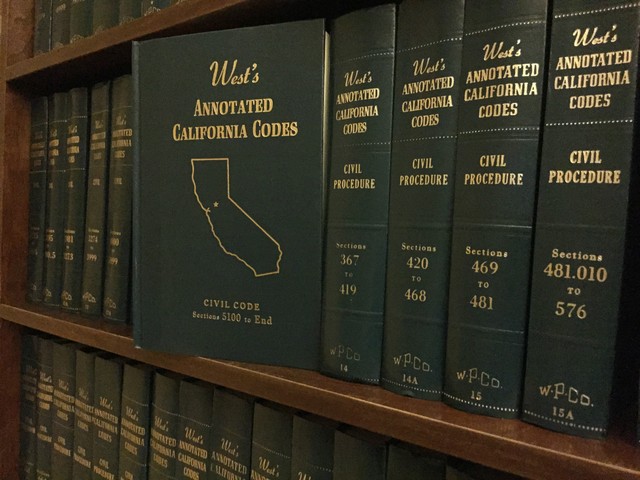
Image of West’s Annotated California Codes from https://i.ebayimg.com/00/s/MTIwMFgxNjAw/z/BvQAAOSwf-VWWoj8/$_58.JPG


Steven Kalar, Federal Public Defender N.D. Cal. Website at www.ndcalfpd.org


.

Labels: , , , , ,

Monday, July 31, 2017

Case o' The Week: Frustrated with the Whole Endeavor - Martinez-Lopez and Indivisible vs. Divisible Statutes

“Concurring in part and dissenting in part, but frustrated with the whole endeavor.”
   Judge Bybee’s candid assessment is a good preview for the Ninth’s latest foray into Taylor categorical / modified categorical sentencing.
  United States v. Martinez-Lopez, 2017 WL 3203552 (9th Cir. July 28, 2017) (en banc) decision available here.

Earl Warren Building, home of the California Supreme Court, San Francisco, California

Players: Decision by Judge Tallman, joined by Judges Kozinski, O’Scannlain, McKeown, Clifton, Bybee, Callahan and Bea.
  Judge Berzon, CJ Thomas, and Judge Reinhardt concurring in part. Partial concurrence and partial dissent by Judge Bybee. 
  Judges Reinhardt and CJ Thomas dissenting in part.
  Hard fought appeal by CD Cal Deputy Public Defenders David Menninger and Matthew Larsen, with Defender amicus by Assistant Federal Defenders Vincent Brunkow and Kara Hartzler, Federal Defenders of San Diego, Inc.

Facts: Mr. Martinez-Lopez was convicted of illegal reentry following deportation, in violation of 8 USC § 1326. Id. at *2. The court treated a California H&S Code § 11352 (drug prior) as divisible, employed the modified categorical approach, determined it was a +16 offense level offense under (the old) reentry guidelines, and sentenced him to 77 months. Id.
  The case went on banc: during the litigation the Supreme Court decided Mathis v. United States, 136 S. Ct. 2243 (2016).

Issue(s): “We took this case en banc to revisit the divisibility of California drug statutes.” Id. at *1.
  “On appeal, Martinez-Lopez argues that section 11352 is indivisible with regard to both its controlled substance requirement and its actus rea requirement.” Id. at *2.

Held:We disagree, and conclude that both requirements are elements under Mathis, thus rendering section 11352 divisible and subject to the modified categorical approach. Because Martinez-Lopez previously pled guilty to selling cocaine, which qualifies as a drug trafficking offense under the guidelines . . . we affirm.” Id. at *2.

Of Note: What are the elements of § 11352? On that answer much hinges: elements determine the "divisibility" of a statute, and divisibility determines whether a federal court can muck about prior conviction records in a modified categorical approach (which translates into radically more time for our clients). 
  Judge Berzon, an expert in this area of law (see Descamps), balks at Judge Tallman’s categorization of the actus rea component of § 11352 as an “element.” See id. at *9 (Berzon, J., concurring). A majority of the California Supreme Court did not so hold in People v. Patterson, 778 P.2d 549 (1989)id. at *12, and nary a single Cali court has cited Patterson for the proposition claimed in the majority opinion, id. at *13. 
  In a recommendation that would do a Federalist proud, Judge Berzon suggests that the Ninth Circuit not presume to tell the State of California what California law means. Instead, the Ninth should ask. Id. at *19.
   Penning this from the federal building in San Francisco, across the street from the home of the California Supreme Court, the irony of this dilemma is palpable. The
Tenderloin Neighbors: the California Supreme Court, and the Ninth Circuit Court of Appeals
California Supreme Court is a whopping .4 miles from the Ninth Circuit, here in the City by the Bay. The Justices and Judges could have trudged through the Tenderloin, met at Philz, and hashed it out over a cup of joe. Or, as Judge Berzon less flippantly suggested, the Ninth could have certified this state law issue to the Cal Supreme Court for a definitive answer on whether the actus rea in Cal H&S Code § 11352 is a means, or an element. Id. at *20.
  Recall that Judge Berzon’s formidable arguments in Aguila Montes de Oca ultimately prevailed in Descamps. Knock wood that SCOTUS again recognizes that she has the better argument in Martinez-Lopez.

How to Use: When this case went en banc we mused a bit about the potential downstream effects of Martinez-Lopez. See blog entry here
  As to the immediate impact, note that Martinez-Lopez was sentenced under the November 1, 2012 edition of the guidelines. Id. at *2 & n.2. The November 1, 2016 (current) version of this guideline, § 2L1.2, is no longer plagued with this specific offense adjustment. See USSG Sec. 2L-X (Nov. 1, 2016), available here.
     Like the recent Chavez-Cuevas case, , Martinez-Lopez is, in some sense, an instant relic – it involves a guideline which no longer exists.
                                               
For Further Reading: When Martinez-Lopez went en banc, we also wondered what impact the (at that point unknown) Ninth Justice would have on the Supreme Court’s Taylor jurisprudence. See blog entry here
  Now, with Justice Gorsuch on the Court, it is worth a revisit to Professor Evan Lee’s thoughtful post on the tight SCOTUS majority in Mathis (and the potential impact of a fed-up Kennedy on the Taylor line of law). See SCOTUS blog here


Image of the walk from the Ninth Circuit Court of Appeals to the California Supreme Court, in San Francisco, from Google Maps.


Steven Kalar, Federal Public Defender N.D. Cal. Website at www.ndcalfpd.org


.

Labels: , , , , , , ,

Sunday, October 02, 2016

Case o' The Week: Deja Vu, All Over Again - En Banc Ninth Returns to Categorical Sentencing


An en banc court of the Ninth Circuit will definitively teach us how to determine the divisibility of criminal statutes, and when to employ the categorical and modified categorical approaches.
 Again.
United States v. Martinez-Lopez, No 14-50014 (Ord., sua sponte, taking case en banc) (9th Cir. Sept. 26, 2016), order available here.

Supreme Court seat, draped in black after Justice Scalia's passing.
 Players: Sua sponte en banc call announced by Chief Judge Thomas. Original appeal by CD Cal AFPDs Matthew Larsen and David Menninger. 
  Original panel, filing order vacating submission of the case: Judges Reinhardt, Noonan and Nguyen. 
  Related case, United States v. Rosales-Aguilar, stayed pending resolution of Martinez-Lopez by Judges Kozinski, O’Scannlain, and Bybee.

Facts: Martinez-Lopez pleaded guilty to illegal reentry, and was hit with the +16 OL increase for a “drug trafficking” prior under Cal.Health & Safety Code § 11352. Appellant’s Opening Brief, Dkt. 14-1 at 7 (“AOB”). 
  Martinez-Lopez (unsuccessfully) contested the enhancement, arguing that under Descamps, 133 S.Ct. 2276 (2013), this statute was not divisible, and the modified categorical approach was thus verboten. Id. at 4. 
  After oral argument in the Ninth, the panel stayed submission pending resolution of United States v. Rosales-Aguilar, No. 14-50315. Then, last August, there was a sua sponte call for en banc consideration of Martinez-Lopez
  On September 26, 2016, Martinez-Lopez was ordered to be heard en banc. Argument is scheduled for the week of January 17, 2017. The Court then granted Martinez-Lopez’s motion to file supplemental briefing in light of Mathis v. United States, 136 S.Ct. 2243 (2016).

Issue(s): (Narrow): Is § 11352 a “divisible” statute, permitting a modified categorical analysis?

  (Broad): How will the Ninth Circuit approach the “divisibility” of statutes after the Supreme Court’s decision in Mathis?

Held: ? We’ll know in 2017 (or maybe 2018.) An earlier Ninth en banc effort on a similar sentencing issue took seventeen months from oral argument, to the arrival of the decision. See Aguila Montes de Oca post here.  
  (Interestingly, Aguila Montes de Oca survived little longer than the deliberation: it was abrogated two years later by Descamps).

Of Note: What’s an “element?” We’ve been debating that, well, “elemental” question since Apprendi and Buckland, 289 F.3d 558 (9th Cir. 2002) (en banc). 
  Justice Kagan took another stab at the question in the Mathis decision, explaining what constitutes an “element” in the context of the ACCA. 136 S.Ct. 2243. 
  Why the brouhaha? It’s an important question, because if a statute just provides alternative means of committing a crime (mere facts illustrating how one can commit the crime), a district court can’t rummage about an old conviction record with the modified categorical analysis. Id. at 2253. 
  By contrast, if a statute requires different elements – requirements that must be proved to a unanimous jury for a conviction -- the modified categorical approach can be “used as a tool to identify the elements of the crime of conviction.” Id. 
  It makes a big difference: for Mr. Martinez Lopez, this categorization question means years in federal custody.
  So, are the verbs of H&S §11352 – transports, imports, sells, furnishes, administers, or gives away – “mere facts,” or required elements, after Mathis? The State has been clear – for eighty years Cali D.A.’s have not needed jury unanimity on how a defendant violates § 11325 to earn a conviction (the classic requirement of an “element.”)
  Will the Ninth honor what California has made clear: that H&S § 11352 is laced with "mere facts," verbs that are not elements? Time will tell.            

How to Use: If illegal reentry cases aren’t on your docket, does Martinez Lopez matter? 
  Yep. 
  For example, Johnson litigators have argued that Ninth caselaw on the divisibility of the fed bank robbery statute is pre-Mathis. When correctly interpreted as a single crime with a single set of elements, § 2113(a) reaches non-violent conduct and is not a “crime of violence.” See United States v. Asim Daniels, 11-CR-470 H (S.D. Cal. 2016) (reply brief of AFD Kara Hartzler).
  Potentially plenty of collateral impact, from this en banc case. Watch for opportunities to preserve this issue for appeal, on this unsettled issue.
                                               
For Further Reading: Which Ninth jurist will ultimately have the biggest impact on the outcome of Martinez-Lopez?
  Trick question: it probably is the as-yet-unknown Ninth – Justice.
   For further musings on Mathis, the Supremes, and trends for the categorical analysis, see the SCOTUS blog here.  


Image of the black-draped chair, at the Supreme Court, from https://img.washingtonpost.com/rf/image_1484w/2010-2019/WashingtonPost/2016/02/16/Production/Daily/A-Section/Images/Supreme_Court_Draped_in_Black-043eb.jpg

Steven Kalar, Federal Public Defender, Northern District of California. Website at www.ndcalfpd.org

.

Labels: , , , , ,

Sunday, March 06, 2016

Case o' The Week: Ninth Gives Taylor Sentencing a Werle - ACCA Violent Felonies in United States v. Werle


  Complicated, complex, tricky, technical – wonderful.
  The Ninth’s latest Taylor decision is a riot.
United States v. Werle, 2015 WL 828132 (9th Cir. Mar. 3, 2016), decision available here.


 Players: Decision by N.D. Cal Senior (and former Chief) D.J. Claudia Wilken, joined by Judges Fletcher and Fisher. Big win for ED Cal AFPD Matthew Campbell.

Facts: Werle entered a conditional plea to being a felon in possession, after a suppression hearing. Id. at *1. The PSR claimed Werle fell within the ACCA, triggering a fifteen-year mandatory minimum sentence. Id. Werle had a number of convictions for Washington State “felony riot.” Without those riot priors he would have not qualified for the ACCA mand-min. Id.

Over defense objection the district court held that the riot statute was overinclusive, but divisible. Id. The district court then conducted a modified categorical analysis, examined charging docs and plea agreements from the riot priors, and concluded that they qualified as ACCA predicate “violent felonies.” Id. Werle appealed.

Issue(s): “In this case, we consider whether a conviction for felony riot under a Washington state statute is a violent felony for purposes of the ACCA sentencing enhancement.” Id. at *1.

[Ed. Note: Specifically, the issue was whether the riot prior qualified as a ‘violent felony’ under the “force” clause of the ACCA, 18 U.S.C. § 924(e)(2)(B).]

Held: “We hold that is not, because it is overinclusive indivisible with respect to the term, ‘force.’ Accordingly, we reverse and remand for resentencing.” Id.

Of Note: “Limited, limited, limited” – sweet music to our ears. Judge Wilken carefully explains that the scope of Taylor categorical inquiry is “limited.” Id. at *3. The application of the modified categorical approach is “even more limited.” Id.

Why is the government so constrained, when it tries to establish predicates for sentencing enhancements? The Court explains these limitations are “rooted in the ACCA’s statutory language, the Sixth Amendment’s requirement that facts that increase a defendant’s maximum penalty be proven to a jury beyond a reasonable doubt, and practical concerns.” Id. Judge Wilken then goes on to elaborate on why each of those concerns mandate the “limited” inquiry for the Taylor analysis.

The paragraph at *3, headnote [9] of Werle is one of the cleanest, most-accessible explanations of how -- and why -- Taylor sentencing law works as it does: well worth a close read and heavy citation (or cribbing wholesale into the Johnson Section 2255 motions being frantically drafted in the Ninth).

How to Use: The core holding of Werle is this: if a statute is overinclusive as to any element, and indivisible as to that element, there is no modified categorical analysis. Id. at *4. Here, everyone agreed that the statute was both overinclusive AND divisible as to one element of the riot statute. Id. at *4 (person or property target of force). However, the Ninth holds that the statute was also overinclusive and indivisible as to another element (the degree of force). Id. at *5. Use Werle to force the government through the many, many hoops necessary before modified-categorical-land.

(And don’t overlook the Court’s rejection of the government’s argument regarding “armed with a deadly weapon” – analysis ripe for exportation to other “armed” felonies in our Johnson saga. Id. at *5) (“[T]he fact that an individual is armed does not necessarily mean that he or she has used the weapon in any way.”)          
                                   
For Further Reading: The San Francisco hearings of the CJA Committee concluded last week. All written testimony from these hearings can now be found here

Videos of the testimony will be up soon –make a point to watch Panel Six (five fearless CJA Reps, very literally “speaking truth to power.”) 


Steven Kalar, Federal Public Defender, N.D. Cal. Website at www.ndcalfpd.org


.
.

Labels: , , , , , , , ,