Sunday, June 02, 2019

Case o' The Week: Ninth's Not Life-Affirming - Graves and the Categorical Analysis of Section 851 Priors


We dig Graves.
United States v. Graves, 2019 WL 2293421 (9th Cir. May 30, 2019), decision available here.

Players: Decision by Judge Clifton, joined by Judges Paez and Court Int’l Trade Judge Katzmann.

Facts: Graves was charged with meth and marijuana offenses. Id. at *1. Before trial, the government gave notice under 21 USC § 851 of its intent to seek a life sentence based on two drug priors. Id. One of those convictions was for Cal. Penal Code § 4573.6, “inmate drug possession.” Id. The district court held that the priors qualified as “felony drug offenses” that triggered the enhancement.
  Graves was found guilty, and under the Section 851 enhancements, sentenced to the mandatory-minimum term of life. Id. 
  The District Court then went on to conduct a separate § 3553 analysis, to “perfect the record and to make clear that if the court were to exercise discretion, if it had any to impose a sentence at less than life, it would not.” Id.

Issue(s): “[  ] Graves challenges the life sentence imposed by the district court after it concluded he had two prior felony drug offenses under 21 U.S.C. § 841(b)(1)(A), mandating a sentence of life imprisonment. The district court concluded that his two prior convictions, including for a violation of California Penal Code § 4573.6, qualified as predicate felony drug offenses.” Id. at *1. 
  “Graves argues the district court erroneously concluded his . . . § 4573.6 conviction qualified as a felony drug offense because the statute is both overbroad and not divisible.” Id. at *2.

Held: We conclude that Graves’ section 4573.6 conviction does not qualify as a predicate offense and therefore vacate his sentence and remand for re-sentencing.” Id. at *1. “There is no dispute that section 4573.6 criminalizes controlled substances under California law that are not regulated under federal law, so the statute is overbroad . . . .We therefore must determine if the statute is also divisible.” Id. at *2.
  “We conclude that the statute is not divisible based on the plain text, state court decisions, and the contrast to convictions under the California Health and Safety Code.” Id. at *3. “We conclude . . . that California Penal Code § 4573.6 is not a divisible statute and therefore cannot be a categorical “felony drug offense” triggering a “mandatory term of life imprisonment” under 21 U.S.C. § 841(b)(1)(A) (2016).” Id. at *4.

Of Note: In Graves, the government and the district court again try the old “belt and suspenders” approach to sentencing. 


Even if the original mand-min sentence was legally incorrect, the district judge assures us, the judge still would give a life sentence. Seizing this assurance, on appeal the government argued it was unnecessary to vacate the life sentence, because the D.J. “perfect[ed] the record” and promised that a life sentence would still be imposed under the Section 3553 factors. (Notably, the district court reached this decision despite the fact that the defendant had not participated in a PSR interview, or submitted a sentencing memorandum, due to the mandatory life term.) Id. at *4.
  Yet again, the Ninth rejects this effort to inoculate against appellate review, vacates the sentence, and remands for a fresh new sentencing (hopefully with some First Step Act love thrown in). Id. at *4.

How to Use: Does the categorical approach even apply to Sec. 851 priors? The government argued that it was “far from clear” that it does. Id. at *2 & n.3. Judge Clifton “was not convinced,” and the Court “resort[s] to the categorical approach in this context.” Id. at *2. 
  To the extent it was in question, Graves seals the deal: Section 851 priors are subject to the familiar categorical analysis approach.  
                                               
For Further Reading: Under the First Step Act of 2018 (“FSA,”) Mr. Graves may be looking at mandatory term far below “life.” 
   For a thoughtful piece touting the FSA, see The First Step Act is a Major Step for Sentencing Reform, by former Sentencing Commission Chair, Judge Patti Saris, available here.


Image of “Grave digger” from https://voca58.org/Feature_Lament_Grave_Digger.html


Steven Kalar, Federal Public Defender, N.D. Cal. Website at www.ndcalfpd.org

.

.

Labels: , , , , ,

Sunday, January 13, 2019

Case o' The Week: Congress takes the First Step, Ninth takes the Second -- Valencia-Mendoza and use of state priors as federal sentencing enhancements


The federal government of the United States just entered its longest shutdown in history.

Federal courts will run out of money next week.

Public defenders will soon join their CJA comrades and will be expected to mount vigorous, constitutionally-mandated defenses for our indigent clients – without pay.
  

Great news from the Ninth couldn’t come at a better time.
United States v. Valencia-Mendoza, 2019 WL 149827 (9th Cir. Jan. 10, 2019), decision available here.

Players: Decision by Judge Graber, joined by Judges McKeown and Christen. Huge win for AFD William Miles Pope, Fed. Defenders of Eastern Washington & Idaho.  

Facts: Valencia-Medonza pleaded guilty to illegal reentry. Id. at *1. He received a +4 OL increase under USSG § 2L1.2, because of a prior Washington “felony” conviction. Id. 
  Commentary to § 2L1.2 defines a felony as an offense “punishable by imprisonment for a term exceeding one year.” Id. The stat max for this Washington prior was five years. Based on Ninth precedent, the D.J. imposed the bump. Id. 
  Under Washington’s mandatory sentencing range, however, the actual max that Valencia-Mendoza could have received was six months. Id.  

Issue(s): “We must decide whether Defendant’s state conviction was a ‘felony’ for purposes of the federal Sentencing Guideline. According to the government, the statutory maximum punishment for Defendant’s state offense was five years, so he was convicted of an ‘offense punishable by imprisonment for a term exceeding one year.’ U.S.S.G. § 2L1.2 cmt. n.2. Defendant acknowledges the statutory maximum but argues that, because the maximum sentence that he actually could have received was only six months, he was not convicted of an ‘offense punishable by imprisonment for a term exceeding one year.’” Id. at *3.

Held:Our precedent required the district court to disregard the maximum term that Defendant actually could have received under state law, in favor of the maximum term that Defendant theoretically could have received if different factual circumstances were present. Reviewing de novo the interpretation of the Sentencing Guidelines . . . we conclude that later Supreme Court decisions are clearly irreconcilable with our precedent on this point. Accordingly, we vacate the sentence and remand for resentencing.” Id. at *1. (citation omitted).

“In sum, the Supreme Court has held that courts must consider both a crime’s statutory elements and sentencing factors when determining whether an offense is ‘punishable’ by a certain term of imprisonment.” Id. at *9.

The Hon. Judge Susan Graber
Of Note: Judge Graber’s terrific decision parts ways with the Ninth’s precedent in Rios-Beltran,361 F.3d 1204, 1208 (9th Cir. 2004). See id. at *4. The Ninth has historically looked at the stat max when evaluating the viability of state priors for federal sentencing. Id. With a nice Miller v. Gammie whammy, the Ninth now comes in line with SCOTUS (and the Fourth, Eighth and Tenth Circuits). Id. at *8. 
  (The decision is also consistent with the government’s position in the Fifth! See id. at *8 & n.4 (a particularly enjoyable footnote)).
  Valencia-Mendoza is a thorough and well-reasoned opinion. The decision also brings the Ninth squarely in line with a solid phalanx of out-of-circuit authority, and the Supreme Court. The government’s p.f.r.e.b. efforts (if it even bothers) should (we hope) die quickly on the vine.

How to Use: California famously used to have mid-range determinate sentencing below the “stat max” – a scheme that got the State sideways with SCOTUS and Apprendi. See Cunningham, 549 U.S. 270 (2007). The State then quickly scrambled for a fix after Cunningham – S.B. 40 and the later Realignment Act re-jiggered the sentencing schemes. See generally summary here
  Do Cali’s current “sentencing triads” trigger the same limitations for federal enhancements as the Washington system in Valencia-Mendoza? See generally  sentencing overview here

   Yup! (We think). 


  Like Sriracha, Valencia-Mendoza’s spicy bite tastes good on everything. Glop the analysis onto state priors the government tries to assert in USSG § 2L1.2, USSG § 2K2.1, Career Offender, § 922(g) charges, § 924(e)(2)(A) and § 3559(c)(2)(F)(ii) (First Step Act revised) cases, § 851 allegations, ACCA sentences – yum!

For Further Reading: On Friday January 11th, AO Director Duff informed the Judiciary that we are almost out of dough. 
  Furloughs and “work without pay” loom for federal court staff – and for Federal Public Defenders – on the 19th, if the shutdown isn’t resolved next week. See generally article here


Image of shutdown graph from https://www.bbc.com/news/world-us-canada-46848435  

Image of the Honorable Judge Susan Graber from https://law.lclark.edu/live/profiles/352-susan-p-graber 


Steven Kalar, Federal Public Defender N.D. Cal. Website at www.ndcalfpd.org

.

Labels: , , , , , , , ,

Sunday, September 03, 2017

Case o' The Week: Divided Loyalties - Ocampo-Estrada and Divisibility of Cal H&S Sec 11378

  Tough row to hoe, to get the Ninth to concede that drugs facts are “elements” in federal drug statutes. See United States v. Buckland, 289 F.3d 558 (9th Cir. 2002) (en banc.)
   Turns out the Ninth is far more open, however, to finding elements in state drug  offenses.
United States v. Ocampo-Estrada, 2017 WL 3707900 (9th Cir. Aug. 29, 2017), decision available here.


Players: Decision by visiting Tenth Circuit Judge Ebel, joined by Judges Milan Smith and N.R. Smith.

Facts: Ocampo-Estrada was a meth supplier. Id. at *1. Before trial, the government alleged a § 851 prior to create a twenty-year mandatory minimum sentence: an old conviction under California H&S Code § 11378. Id. *2. The district court did not inform Ocampo he had to challenge the prior to avoid statutory waiver under 21 USC § 851(c)(2). Ocampo didn’t challenge the prior as failing to qualify as a “felony drug offense.” Id. at *3. 
  Ocampo was convicted after trial, and sentenced to the twenty-year mand-min.

Issue(s): “[T]he threshold question then is whether California Health & Safety Code section 11378 is a divisible statute.” Id. at *5.

Held:We hold that it is. In United States v. Martinez-Lopez, — F.3d —, No. 14-50014, 2017 WL 3203552, at *5 (9th Cir. July 28, 2017) (en banc), our en banc Court recently held that a similar statute, California Health & Safety Code section 11352, is divisible with respect to its controlled-substance requirement. In other words, the controlled substances referenced in section 11352 are treated as listing separate offenses, rather than merely listing separate means of committing a single offense. The rationale of Martinez-Lopez applies with equal force to section 11378, the statute before us.” Id.  

Of Note: Ocampo-Estrada builds upon and expands the unfortunate outcome of the Ninth’s en banc decision in Martinez-Lopez. See blog here. Judge Berzon’s compelling critique of the Martinez-Lopez decision applies with equal force to Ocampo-Estrada: why are the feds telling California the elements of state drug crimes? 
  On a more positive note, Ocampo-Estrada lost the battle but won the war in this case. The government convinced the Ninth to plow through and get to a modified categorical analysis – but once there, the Court shrugged and held the government hadn’t met its burden to prove which controlled substance was the basis for the § 11378 prior. Id. at *6. Ultimately, a fact-specific win for this particular defendant that will (hopefully) result in a sentence far below the twenty-year mand min.  

How to Use: As noted above, Ocampo-Estrada didn’t raise this specific objection when the prior was alleged. Why wasn’t this challenge waived? In a useful analysis, the Court explains that it is the district court’s statutory obligation to “advise [the defendant] that he was required to make timely challenges to the proposed enhancement in order to avoid a statutory waiver.” Id. at *3. Without that explicit advisement, the government’s waiver argument were for naught. 
  Better to preserve all objections, of course, but useful to know that inadequate advisements when a § 851 prior is filed may still protect against appellate waiver.   
                                               
For Further Reading: On the subject of priors – A.G. Sessions has very publicly directed stated his support for mandatory minimum sentences in drug cases. The ABA House of Delegates disagrees. It recently adopted a resolution opposing the imposition of mand-mins. See article here
  A second, withdrawn proposal would have specifically urged A.G. Sessions to rescind his policy, announced in May, to federal prosecutors directing them to pursue the most serious, readily provable offense. Id. 
  Why withdrawn? DOJ lodged last-minute objections. Look for the ABA’s call to rescind to be brought back at the ABA’s midyear meeting in February.


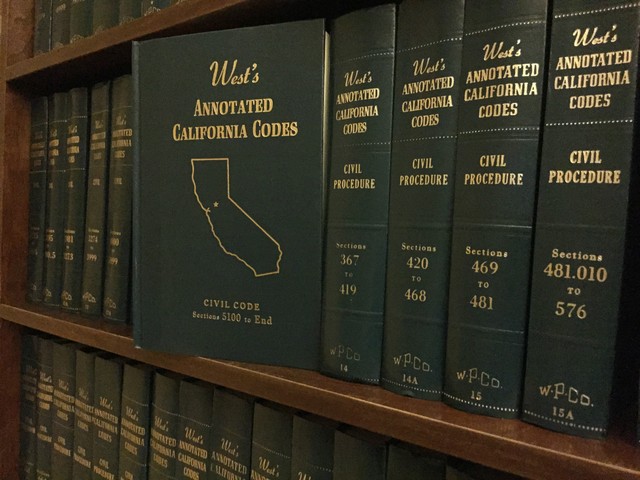
Image of West’s Annotated California Codes from https://i.ebayimg.com/00/s/MTIwMFgxNjAw/z/BvQAAOSwf-VWWoj8/$_58.JPG


Steven Kalar, Federal Public Defender N.D. Cal. Website at www.ndcalfpd.org


.

Labels: , , , , ,

Sunday, March 26, 2017

Case o' The Week: Silver clouds and black linings - Rodriguez and Review of Title III Wiretap Applications and Orders


   The good news? The Ninth imposes a new (and higher) two-step standard on the district courts, when reviewing Title III wiretap applications and orders.
  (The bad news? The Ninth finds the government meets that standard, here).
United States v. Rodriguez, 2017 WL 971809 (9th Cir. Mar. 14, 2017), decision available here.

Players: Decision by visiting D.C. District Judge Friedman, joined by Judges Paez and Tashima.

Facts: Several district judges granted wiretap orders targeting Rodriguez and an alleged Mexican Mafia drug conspiracy. 
  Drug charges were eventually filed in the court of the third, presiding district judge. The third DJ reviewed the entire wiretap motion using only the (deferential) abuse of discretion standard, then denied the motion. Id. at *4. 
  The government filed an § 851 prior. Id. at *8-*9. Rodriguez was convicted after a trial and was sentenced to 600 months. Id. at *1.

Issue(s): “[Rodriguez] argues that the district court erred because it applied the incorrect standard of review when deciding his motion to suppress and that the government's wiretap application did not include a full and complete statement of facts as required by 18 U.S.C. § 2518(1)(c).” Id. at *1.
  “[  ] Rodriguez argues that the district court erred by deciding his motion to suppress under an abuse of discretion standard and improperly deferring to the issuing judge, rather than conducting its own independent review of whether the wiretap affidavits contained a full and complete statement of facts sufficient to satisfy 18 U.S.C. § 2518(1)(c).” Id. at *3.

Held: “When we review a district court’s decision on a motion to suppress wiretap evidence, we determine de novo whether the information in an affiant’s application for a wiretap amounts to ‘a full and complete statement as to whether or not other investigative procedures have been tried and failed or why they reasonably appear to be unlikely to succeed if tried or to be too dangerous. . . . If the wiretap application meets the requirements of § 2518(1)(c), then the Court reviews for abuse of discretion the issuing court’s finding that the wiretap was necessary under § 2518(3)(c) and its decision to grant the wiretap.” Id. at *3.
 “We conclude that district courts should apply the Ninth Circuit’s two-step approach when considering a motion to suppress wiretap evidence. Therefore, a reviewing district court judge must review de novo whether the application for a wiretap contains a full and complete statement as to whether or not other investigative procedures have been tried and failed or why they reasonably appear to be unlikely to succeed if tried or to be too dangerous . . . . If the wiretap application meets these requirements . . ., then the district court judge should review for abuse of discretion the issuing judge’s conclusion that the wiretap was necessary.” Id. at *4 (internal quotations and citations omitted).

Of Note: The good news is that Rodriguez’s two-step process is a far better approach than the more deferential review often applied by district courts. Moreover, the Ninth questions the lack of meaningful factual review below, and the DJ's improper deference to the “half century of judicial experience” of the judges who issued the Title III orders. Id. at *4.
  The bad news is that the Ninth doesn’t remand. Instead, the Court applies this two-step approach and mows down a variety of wiretap factual challenges: failure to disclose a search condition in the application, boilerplate language, and a brief surveillance period before wiretaps were sought. Id. at *5-*9.
  For better or worse, Rodriguez’s mixed bag is now must-read before tackling a Title III challenge in the Ninth.

How to Use: Section 851 of Title 21 sets forth a detailed procedure for alleging priors triggering mand-mins in a drug case. In a very rare outcome, the Ninth reverses and remands because Rodriguez’s § 851 hearing was botched. Id. at *12.
   Judge Friedman gives a detailed description of the requirements for alleging a prior, what has to happen during the § 851 hearing, and the failure to meet the statutory requirements here. 
  As we ponder a future with more of these miserable § 851 proceedings, Rodriguez is a good place to start.
                                               
For Further Reading: Four years ago, NorCal’s own Josh Cohen asked if Title III was dead after the Rajaratnam white collar wiretap. See Josh A. Cohen, Is Title III Dead? The Future of Wiretap Challenges in the Wake of Rajaratnam, The Champion, available here
   Interesting to mull this helpful article again in light of Rodriguez, and query how Josh’s call for a “collective prayer – for individuals’ privacy” is being answered.
  For defense bar Norteños, this is a particularly pressing question. In the last several years, the Northern District of California has had an extraordinary wiretap boom (clustered largely in Oakland). See “For Further Reading” here. 
  The Administrative Office of the U.S. Courts reports wiretap data in July: check back this summer to see if the Feds’ eavesdropping addiction continues unabated. See AO stat link here


Steven Kalar, Federal Public Defender N.D. Cal. Website at www.ndcalfpd.org

.

Labels: , , ,