Sunday, February 11, 2018

Case o' The Week: Savor the Waiver - Laney and Defendant Confirmation of Jury Waivers

 Defense counsel wants a bench trial.
 The AUSA wants a bench trial.
 The district court is fine with a bench trial.
 Is the defendant down with an empty jury box?


 The Ninth would like to know.
United States v. Laney, 2018 WL 706497 (9th Cir. Feb. 5, 2018), decision available here.

Players: Decision by Judge Hawkins, joined by Judges W. Fletcher and Tallman. 
  Admirable win for ND Cal CJA panel stalwarts Scott Sugarman, Sugarman & Cannon, S.F., and for Robert Beles, Beles & Beles, Oakland.

Facts: Laney and his co-defendant, Federico, were managers in construction companies. Id. at *1. In a complicated scheme, they were accused of colluding to inflate costs, then pocketing payments for fictitious work. Id. at *2. They were charged with mail fraud. Id.
  Trial counsel (different attorneys than appellate counsel) submitted stipulations for a bench trial, with counsel’s e-signature. The stips had no signatures from the defendants, and no indication that defendants’ were involved in discussions leading to the stip. Id. The district court accepted the stip, there was an eleven-day bench trial, and the pair were found guilty of multiple counts. Id.
  Laney and Federico were sentenced to sixty and seventy months, respectively. Id. They appealed, challenging (among other things), the validity of the jury waivers.

Issue(s): “In these consolidated appeals, we must determine whether a presumption of validity attaches to a stipulation by defense counsel that their clients waive their right to a jury trial on their criminal charges.” Id. at *11 (footnote omitted). “Laney and Federico contend that their convictions must be vacated because the record does not reflect adequately that they made voluntary, knowing, and intelligent waivers of their rights to a jury trial.” Id. at *3.

Held: “We conclude that counsel’s stipulations in this case did not raise a presumption of validity, and the record is insufficient to show that the jury trial waivers were voluntary, knowing, and intelligent. Therefore, although we conclude that the convictions are supported by sufficient evidence, we reverse and remand based on the ineffective jury trial waivers.” Id. at *1 (emphasis added).

Of Note: In a decision of first impression, the Ninth joins sister circuits in holding that a waiver of a jury trial must (logically) be signed by the defendant him or herself. Id. at *3.
  That’s a laudable rule, but as a practical matter, this new requirement for defendant signatures is probably irrelevant. DJs alarmed by this trial do-over in Laney will likely heed the Ninth’s advice – the Circuit has “implored the district courts to conduct colloquies with the defendant before accepting a waiver of his or her right to a jury trial.” Id. at *3 (quotations and citation omitted).
  If you and the government plan on a bench trial, anticipate a DJ demanding a defendant’s in-court colloquy and express waiver (a better policy approach, in any event). This is a heck of a waiver to ask of a defendant: best that our clients going into that decision very well informed, and very clear on the record.

How to Use: Sasquatch in the Humboldt redwoods. 
 Bipartisanship in D.C.

A Bipartisan Bigfoot in D.C.

  Conditional pleas in the Northern District of California. 
  Each of these fantastic beasts are rumored to exist -- though documented instances have proven exceedingly rare.
  Add to this list, “Structural Error reversal on appeal.”
  Structural Error, a great bulwark of constitutional rights, has been steadily eroded on all fronts in the last decade or two. That makes the structural error reversal in Laney particularly sweet. Id. at *5.
  Note that Judge Hawkins specifically rejects the government’s scramble at post-trial reconstruction, offered to try to salvage the convictions from the structural error reversal. Id. This is a useful rebuff for appellate folks to remember in future cases: Rule 23 issues (jury waivers) are evaluated in the context of the time of the waiver, not in retrospect after the trial is complete.
                                               
For Further Reading: Remarkably, AUSAs often balk at bench trials (the federal government really doesn’t trust a federal judge to deliver a verdict?) Should the federal government get to veto our clients’ request for a bench trial, particularly in sensitive cases, such as child porn?
  For an interesting article arguing against a black ball for the government, see, Waiver of Jury Trials in Federal Criminal Cases: A Reassessment of the “Prosecutorial Veto” available here.  


Image of Bigfoot in Dupont Circle from https://pbs.twimg.com/media/Bh08EgOIgAEtz4Q.jpg


Steven Kalar, Federal Public Defender, Northern District of California. Website at www.ndcalfpd.org

.


Labels: , , , ,

Sunday, February 04, 2018

Case o' The Week: Low Marks for Gov't Semantic Gymnastics - Lidia Rodriguez and "Reckless Disregard" Jury Instruction

  Huzzah for the Heartland.
United States v. Lidia Rodriguez (9th Cir. Jan. 30, 2018), decision available here.


Players: Notable decision by the Hon. D.J. Mark Bennett, N.D. Iowa, joined by Judges Kozinski and Friedland. 
  Admirable win for AFPD M. Edith (“Edie”) Cunningham and FPD Jon Sands, Office of the Federal Public Defender, District of Arizona. 

Facts: Lidia Rodriguez, a citizen, was stopped at the border coming into the States: she and her passenger were questioned. Id. at *1. The passenger had a border crossing card, but was allegedly “ill at ease,” wore a new shirt (a purported sign of aliens who changed out of clothes after crossing the desert), and had an empty wallet despite his story that he was coming to the States to shop. Id. at *1-*2. The passenger later admitted in a depo (admitted at trial) that he was an undocumented alien with a false border-crossing card. Id. 
  Rodriguez was tried on a charge of transporting an illegal alien for financial gain. The government sought a “reckless disregard” instruction. Id. at *3. The reckless disregard instruction ultimately given to the jury did not require proof that Rodriguez was aware of the risk (a subjective component). Id. at *4. 
  After an Allen charge, and an alternate juror subbing in, Rodriguez was convicted. Id. at *3.

Issue(s): “Rodriguez seeks reversal of her conviction and remand for a new trial . . . . She contends a jury instruction incorrectly defined ‘reckless disregard.’” Id. at *1.

Held: “We reverse.” Id. 
  “[A] correct definition of ‘reckless disregard,’ consistent with Supreme Court and Ninth Circuit law, would include the defendant’s disregard of a risk of harm of which the defendant is aware.” Id. at *7 (quotations and citations omitted) (emphasis added).

Of Note: Lidia Rodriguez is a terrific decision – both for its legal analysis, and for its holdings. In a careful deconstruction, Judge Bennet surveys the evolution of the “recklessness” mens rea requirement. He parses (and rejects) cases that relied upon in the commentary to the Ninth’s model instruction, and explains why the Eighth, Tenth, and Eleventh have it wrong in light of the Supreme’s 1994 Farmer opinion. Id. at *3-*8. 
  Along the way, the Ninth grumbles that it is “unable to follow or accept the government’s semantic gymnastics” arising from a recklessness definition that didn’t require a subjective awareness of risk. Id. at *6. 
  Rodriguez is now a lead opinion on the “reckless” mens rea standard – it is your starting point in any case where this instruction may loom. (Along these lines, dust off your Rolodex and start calling shrinks. We’ll need mental health experts to address our clients’ (subjective) capacity to appreciate the “risk of harm.” With “subjective” in play for this instruction, our clients’ various impairments become very real and relevant issues).

How to Use: Appellate advocates –read Rodriguez. The Court gives us a very favorable read on the preservation of objections for instructional error, id. at *4, sternly enforces the government’s waiver of its “harmless error” argument, id. at *8, and rejects that damnable “exceptional circumstances” trope that gifts the government a Mulligan on its harmless error whiffs, id. at *9-*11. 
  Our AOB’s will glitter with Rodriguez nuggets.
                                               
Hon. Judge Mark Bennett
For Further Reading: Who is this Hawkeye, this outspoken visiting D.J.? 
  The Honorable District Judge Mark Bennett is a jurist with views. He’s a brave critic of the grave injustices of mandatory minimum sentences. See NPR interview here. 
  He’s a brave visiting judge in the Ninth, cheerfully challenging incorrect majority opinions with dissenting dissertations. See United States v. Leal-Felix, 625 F.3d 1148, 1151 (9th Cir. 2010) (Bennett, D.J., dissenting), rev’d by 665 F.3d 1037 (9th Cir. 2011) (en banc). 
  And perhaps most notably, Judge Bennett is at the forefront of efforts to recognize the reality of implicit bias, and its pervasive impact on our criminal justice system. See, e.g., Judging Implicit Bias: A National Empirical Study of Judicial Stereotypes, available here. 
  Love those heartland values.


Image of the Honorable Judge Mark W. Bennett from https://herculesandtheumpire.com/tag/judge-mark-bennett/


Steven Kalar, Federal Public Defender Northern District of California

.


Labels: , , , , , , ,

Sunday, September 03, 2017

Case o' The Week: Divided Loyalties - Ocampo-Estrada and Divisibility of Cal H&S Sec 11378

  Tough row to hoe, to get the Ninth to concede that drugs facts are “elements” in federal drug statutes. See United States v. Buckland, 289 F.3d 558 (9th Cir. 2002) (en banc.)
   Turns out the Ninth is far more open, however, to finding elements in state drug  offenses.
United States v. Ocampo-Estrada, 2017 WL 3707900 (9th Cir. Aug. 29, 2017), decision available here.


Players: Decision by visiting Tenth Circuit Judge Ebel, joined by Judges Milan Smith and N.R. Smith.

Facts: Ocampo-Estrada was a meth supplier. Id. at *1. Before trial, the government alleged a § 851 prior to create a twenty-year mandatory minimum sentence: an old conviction under California H&S Code § 11378. Id. *2. The district court did not inform Ocampo he had to challenge the prior to avoid statutory waiver under 21 USC § 851(c)(2). Ocampo didn’t challenge the prior as failing to qualify as a “felony drug offense.” Id. at *3. 
  Ocampo was convicted after trial, and sentenced to the twenty-year mand-min.

Issue(s): “[T]he threshold question then is whether California Health & Safety Code section 11378 is a divisible statute.” Id. at *5.

Held: “We hold that it is. In United States v. Martinez-Lopez, — F.3d —, No. 14-50014, 2017 WL 3203552, at *5 (9th Cir. July 28, 2017) (en banc), our en banc Court recently held that a similar statute, California Health & Safety Code section 11352, is divisible with respect to its controlled-substance requirement. In other words, the controlled substances referenced in section 11352 are treated as listing separate offenses, rather than merely listing separate means of committing a single offense. The rationale of Martinez-Lopez applies with equal force to section 11378, the statute before us.” Id.  

Of Note: Ocampo-Estrada builds upon and expands the unfortunate outcome of the Ninth’s en banc decision in Martinez-Lopez. See blog here. Judge Berzon’s compelling critique of the Martinez-Lopez decision applies with equal force to Ocampo-Estrada: why are the feds telling California the elements of state drug crimes? 
  On a more positive note, Ocampo-Estrada lost the battle but won the war in this case. The government convinced the Ninth to plow through and get to a modified categorical analysis – but once there, the Court shrugged and held the government hadn’t met its burden to prove which controlled substance was the basis for the § 11378 prior. Id. at *6. Ultimately, a fact-specific win for this particular defendant that will (hopefully) result in a sentence far below the twenty-year mand min.  

How to Use: As noted above, Ocampo-Estrada didn’t raise this specific objection when the prior was alleged. Why wasn’t this challenge waived? In a useful analysis, the Court explains that it is the district court’s statutory obligation to “advise [the defendant] that he was required to make timely challenges to the proposed enhancement in order to avoid a statutory waiver.” Id. at *3. Without that explicit advisement, the government’s waiver argument were for naught. 
  Better to preserve all objections, of course, but useful to know that inadequate advisements when a § 851 prior is filed may still protect against appellate waiver.   
                                               
For Further Reading: On the subject of priors – A.G. Sessions has very publicly directed stated his support for mandatory minimum sentences in drug cases. The ABA House of Delegates disagrees. It recently adopted a resolution opposing the imposition of mand-mins. See article here. 
  A second, withdrawn proposal would have specifically urged A.G. Sessions to rescind his policy, announced in May, to federal prosecutors directing them to pursue the most serious, readily provable offense. Id. 
  Why withdrawn? DOJ lodged last-minute objections. Look for the ABA’s call to rescind to be brought back at the ABA’s midyear meeting in February.


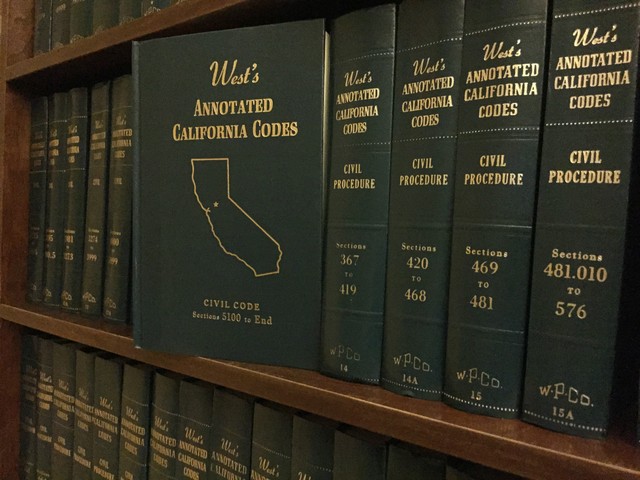
Image of West’s Annotated California Codes from https://i.ebayimg.com/00/s/MTIwMFgxNjAw/z/BvQAAOSwf-VWWoj8/$_58.JPG


Steven Kalar, Federal Public Defender N.D. Cal. Website at www.ndcalfpd.org


.

Labels: , , , , ,

Sunday, July 09, 2017

Case o' The Week: In a Lone Star State of Mind - Ochoa and Section 1326(d) Challenges

 Should the Ninth be brought “in line” with the Fifth and other circuits?


 A visiting Texas district judge thinks so (as do two members of the Ninth).
United States v. Ochoa, 2017 WL 2836820 (9th Cir. July 3, 2017), decision available here.

Players: Per curiam decision, with Judges Graber, McKeown, and visiting ND Texas Chief District Judge Barbara M.G. Lynn. 
 
The Honorable Judge Susan Graber
Concurrence urging en banc review by Judge Graber, joined by Judge McKeown and Chief D.J. Lynn.
  Admirable victory for ND Cal FPD Chief Ass’t Geoff Hansen, and Research & Writing Attorneys Lara Vinnard and Steven Koeninger.

Facts: Ochoa pleaded guilty to conspiring to commit a violation of the Arms Export Control Act (22 USC § 2778). Id. at *1.
  While incarcerated, Ochoa was served with an immigration notice to appear. The notice alleged Ochoa was convicted of conspiracy to export defense articles without a license, including guns and ammo as alleged in the indictment. Id. The notice alleged that this conviction was an agg felony. Id. at *2.
  The IJ found Ochoa removable and explained he did not see “any relief available.” Ochoa accepted the decision, did not appeal, and was removed. Id.
  He reentered, was found in California, and charged with illegal reentry. Id. Ochoa moved under § 1326(d) to dismiss the indictment, alleging the original removal was illegal. Specifically, Ochoa argued that § 2278 was overbroad, not divisible, and was thus not an agg felony. Id. at *4.
   The motion was denied, and Ochoa was found guilty after a stipulated facts bench trial. United States v. Ochoa, CR 14-00525-RS, Dkt. # 37.

Issue(s): “[Ochoa] argues that the removal order was invalid because his . . . conviction for conspiring to violate 22 USC § 2778 was not a categorical match to the Immigration and Nationality’s Act . . . aggravated felony or firearms categories.” 2017 WL 2836820, *1.

Held: “[W]e hold that Defendant was not originally removable as charged, and so could not be convicted of illegal reentry. We therefore reverse the judgement of conviction.” Id. at *1.

Of Note: Huge win on the merits.
The Honorable Judge Michael Hawkins
  The buzz worthy issue, however, is the panel’s most reluctant application of the Ninth’s Pallares-Galan and Camacho-Lopez decisions – and Judge Graber's concurrence seeking en banc review (joined by Judges McKeown and Lynn). See id. at *10 (Graber, J., concurring) ("These anomalies call for en banc consideration to bring our jurisprudence in line with the statute and other circuits.")
  The 2006 Camacho-Lopez opinion by Judge Hawkins relied on the 2004 Pallares-Galan decision. Camacho-Lopez logically held that if an alien was convicted of an offense for which he was not originally removable, and the IJ erroneously advised on discretionary relief, the alien would be excused from proving the first two prongs of a § 1326(d) challenge:
 
1. that he exhausted administrative remedies, and

  2. that the deportation proceedings improperly deprived him of the opportunity for judicial review.

Id. at *2, discussing Camacho-Lopez, see also id. at *5 (Judges Graber, McKeown, and D.J. Lynn, concurring).

  Judge Graber 's concurrence attacks this line of established Ninth jurisprudence. The concurrence argues that a Ninth Circuit en banc court should bring the Ninth “in line” with other Circuits (like the Fifth, from whence visiting ND Texas Chief D.J. Lynn hails). Id. at *10, *9 (citing Villanueva-Diaz).
  The concurrence, however, fails to note that the government squarely waived this argument. See, e.g., United States v. Ochoa, CR 14-00525-RS, Dkt. # 27, Gov’t Opp at 3:9-12. (“More to the point, if Mr. Ochoa was ‘removed when he should not have been,’ then he suffered a prejudicial violation of his rights, and his motion should be granted. United States v. Camacho-Lopez, 450 F.3d 928, 930 (9th Cir. 2006).”). 
  (Worth pointing out that way back in Camacho, the government made this identical concession – a concession which Judge Hawkins appropriately enforced. 450 F.3d at 930).
  For Ochoa to go en banc, the Ninth would have to turn a very deliberate blind eye to this whopping government waiver or forfeiture. See generally United States v. Garcia-Lopez, 309 F.3d 1121, 1123 (9th Cir. 2002) (enforcing government’s waiver of argument on appeal).
   Judge Graber says it best in her Ochoa concurrence: “We will enforce a valid waiver even if the claims that could have been made on appeal absent that waiver appear meritorious . . . .” Ochoa, 2017 WL 2836820, *9 (Judges Graber, McKeown, and Chief DJ Lynn, concurring).

How to Use: This is a grudging holding on the merits, but a correct Taylor analysis. 
  Ochoa is now a lead Ninth case on Taylor overbreadth: worth a close read for your next § 1326(d) statutory challenge. See id. at *3-*4.
                                               
For Further Reading: Seems like a silly question, but should the government have to, well, you know, appeal, to have its issue heard on appeal?
  For a thoughtful piece discussing this very timely question, see Yates, Morgan, Truth or Unintended Consequences: Reining in Appellate Court Action in the Absence of a Government Appeal Vol. 82 : Iss. 3 , Article 11 (2015), available here.


Image of the Honorable Judge Michael Hawkins from http://www.lawcrossing.com/images/articleimages/michael_hawkins_big.jpg  


Steven Kalar, Federal Public Defender, N.D. Cal. Website at www.ndcalfpd.org


.

Labels: , , , , , ,

Saturday, May 27, 2017

Case o' The Week: Ninth Dodges Pot, Shot - Davies and Plea Agreement Collateral-Attack Waivers


  A non-cap habe raises execution issues, in a Section 2241 opinion.
  Davies v. Benov, 2017 WL 2125897(9th Cir. May 17, 2017), decision available here.

Players: Decision by Judge Gould, joined by Judges Wardlaw and Callahan.

Facts: Davies owned medical marijuana dispensaries in California, which he contended complies with state law. Id. at *1. He was charged federally in the ED Cal, and plead guilty to a five year term. Id. The plea agreement had a waiver provision that read, “Regardless of the sentence he receives, the defendant also gives up any right he may have to bring a postappeal attack on his conviction or his sentence. He specifically agrees not to file a motion under 28 U.S.C. § 2255 or § 2241 attacking his conviction or sentence.” Id. A year into Davies’ term, Congress passed an appropriation rider. That rider prohibited the use of federal funds to prosecute offenses otherwise legal under state medical marijuana laws. Id. at *2. Davies filed a Section 2241 habeas petition, arguing that BOP’s use of federal funds to incarcerate him violated this appropriations rider. Id. The magistrate judge denied the petition, holding that the plea agreement waiver barred the challenge. Id.

Issue(s): “The sole question presented here is whether the plea agreement’s waiver provision clearly bars Davies from bringing his § 2241 petition, which challenges his continued incarceration based on the appropriations rider. “ Id. at *2.

Held: “The waiver language included in Davies's plea agreement is broad and unambiguous, and we hold that it precludes Davies’s petition on the grounds he raised.” Id. at *2.”

Of Note: Davies made an interesting, albeit unsuccessful, argument. The waiver language in this plea agreement prohibited an appeal of “any aspect of the sentence imposed in this case.” Id. at *3 (emphasis added). By contrast, the collateral-attack waiver provision did not have that “any aspect of his sentence” clause. Id.
  Davies argued that the collateral-attack waiver was less broad than the appellate waiver. It’s an – appealing – argument, given the old contra proferentem rule we learned in law school (a rule acknowledged by Judge Gould, who concedes that because the government drafted the agreement, “ambiguities are construed in favor of the defendant.” Id. at *2 (citing United States v. Charles, 581 F.3d 927, 931 (9th Cir. 2009).
  Unfortunately, the Ninth holds the waiver language is not ambiguous: “Despite differences in the language of the direct-appeal and collateral-attack waiver provisions, the collateral attack waiver provision states the scope of the waiver: Davies gives up any right to bring a post-appeal attack on his conviction or sentence. The scope of the collateral-attack waiver provision clearly covers his present challenge. Limitations on any right to attack his sentence encompasses challenges to the execution and conditions of his sentence, as his challenge is styled here, as well as to the legality of his sentence.” Id. at *3.

How to Use: What about inmates serving federal prison sentences for (medical) marijuana offenses, who pleaded open, or who were convicted after trial? Unlike Davies, they are unencumbered by these collateral-attack waivers.
  Judge Gould expressly reserves the question if the BOP can use federal funds to incarcerate these folks: “we need not reach and save for another day the issue of whether the expenditure of federal funds to incarcerate individuals who fully complied with state medical marijuana laws violates the appropriations rider.” Id. at *3. 
  Would make for an interesting § 2241 petition, for these inmates in federal prison.
                                               
For Further Reading: With any luck, Johnson warriors will be freeing another tranche of over-serving petitioners after a Dimaya victory next Tuesday. SCOTUS’s next opinion drop is May 30 at 9:30 EDT: opinions will be live-blogged here. 


Steven Kalar, Federal Public Defender, N.D. Cal. Website at www.ndcalfpd.org

.

Labels: , , ,