Monday, December 26, 2016

Case o' The Week: "Return to Sender" = Return for Trial: Yepiz and Right to Retained Counsel


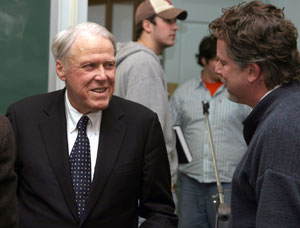
Hon. John T. Noonan

 A bounced-back letter means a bounced-back case, when Ninth considers right to counsel of choice.
United States v. Yepiz, 2016 Westlaw 7367827 (9th Cir. Dec. 20, 2016, 2016), decision available here.

Players: Decision by Judge Noonan, joined by Judge Reinhardt. Partial dissent by Judge Nguyen.

Facts: Yepiz and his co-defendants went to trial on RICO charges. Id. at *1. Four months before trial, Yepiz wrote directly to the district judge and complained of difficulties he had with his retained counsel. Id. at *5. The court rejected the letter because local rules prohibit ex parte contact with the judge – but it didn’t explain why in the returned letter. Id. 
  Yepiz wrote another pair of letters asking for an in camera hearing to request appointed counsel. Id. The court ultimately held the hearing, but rejected the request for appointed counsel as “untimely” and on the “eve of trial.” Id. 
  Yepiz wrote a fourth letter with concerns about his counsel during trial. Id.   He appealed after being convicted at trial.

Issue(s): “Unlike most substitution cases that arise when an indigent defendant requests new court-appointed counsel in place of an existing appointed attorney, the present appeal concerns a defendant's request to replace retained counsel with appointed counsel.” Id. at *6 (internal quotations omitted). 
  “Yepiz claims the district court abused its discretion when it failed to inquire into his April letter seeking to replace [retained counsel] Estrada with court-appointed counsel.” Id.

Held: “We agree.” Id. “The right to counsel of choice includes the constitutional right to discharge retained counsel, and a defendant may generally do so for any reason or no reason so long as the substitution would [not] cause significant delay or inefficiency or run afoul of ... other considerations, such as the fair, efficient and orderly administration of justice. . . . [D]enial of a defendant's right to counsel of choice is a structural error, requiring that convictions be vacated even without a showing of prejudice. . . . Where a court allows a defendant to discharge his retained counsel and the defendant is financially qualified, the court must appoint new counsel for him under the Criminal Justice Act (CJA), at any stage of the proceedings. . . .” Id. at *6.
  We . . . find that the district court abused its discretion when it arbitrarily and without explanation rejected Yepiz's April 2006 letter. Given the defects in the district court's handling of Yepiz's requests, we VACATE Yepiz's conviction and REMAND for a new trial.” Id. at *8 (internal quotations and citations omitted).

Of Note: Structural errors are rarer than hen’s teeth. That standard – structural error – is the crux of Judge Nguyen’s dissent. Id. at *8 (Nguyen, J. dissenting in part). Judge Nguyen would employ a harmless error analysis by characterizing the appeal as alleging ineffective assistance of counsel, not choice of counsel. Id. In her view the case hinges on the status of the pro se letter Yepiz wrote to the court four months before trial (bounced, most likely, by a clerk). Id. at *8. 
  Judge Nguyen worries that “[t]he majority’s holding means that district courts can’t enforce local rules prohibiting represented parties from writing pro se letters to the judge.” Id. at *10. Whether or not that’s true, it is fair to say that Yepiz means that the scribbled letters of our pen pal clients are likely to get a much closer read from their judicial audience.

How to Use: Do we have an ethical obligation to transmit to the court a client’s request for new counsel? Of course, doing so is good form and is the “right” thing to do. But is it an ethical requirement
  Yep. 
  “Once Estrada learned that his client might want to discharge him, he had a duty to promptly discuss the issue with Yepiz and, if Yepiz indeed had that intent, to honor it. An attorney has an ethical obligation to seek substitution or withdrawal if his client wants the representation to end.” Id. at *9. The cases relied upon by Judge Nguyen don’t state that obligation quite as bluntly, but note well her rule: if a client wants to fire us, we let the court know.
                                               
For Further Reading: The Eleventh Circuit held this year that a client needn’t show “good cause” to dismiss his retained counsel. See decision here.  
  A case of interest, because the author of Jimenez-Antunez is a lead candidate for the vacant Supreme Court seat. See article here


Image of the Honorable Judge John T. Noonan from http://www.wabash.edu/images2/news/Noonan-morrillo-story-1.jpg

Steven Kalar, Federal Public Defender N.D. Cal FPD. Website at www.ndcalfpd.org

.

Labels: , , ,

Sunday, August 07, 2016

Case o' The Week: Ninth cuts him free (on 924(c)) -- Benally and Mens Rea for "Crimes of Violence"


Hon. Judge Noonan

The Ninth's not buffaloed, Springfield. United States v. Benally, 2016 WL 4073316 (9th Cir. Aug. 1, 2016), decision available here.

Players: Decision by Judge Noonan, joined by Judges D.W. Nelson and O’Scannlain. Big win by D. Arizona AFPD Dan Kaplan.

Facts: Benally was convicted of a § 924(c) charge, with a federal involuntary manslaughter (18 USC § 1112) as the underlying “crime of violence.” Id. at *1.

Issue(s): “Joe Arviso Benally appeals a jury conviction for involuntary manslaughter under 18 U.S.C. §§ 1112 and 1153 and for using a firearm in connection with a “crime of violence” under 18 U.S.C. § 924(c).” Id. at *1.

Held: “We hold that involuntary manslaughter is not a ‘crime of violence’ and reverse the § 924(c) count of conviction.” Id. at *1. “After Leocal and Fernandez–Ruiz, a ‘crime of violence’ requires a mental state higher than recklessness—it requires intentional conduct. See Covarrubias Teposte, 632 F.3d at 1053 (“The effect of our holdings is that in order to be a predicate offense under either 18 U.S.C. § 16 approach, the underlying offense must require proof of an intentional use of force or a substantial risk that force will be intentionally used during its commission.” (quoting United States v. Gomez–Leon, 545 F.3d 777, 787 (9th Cir. 2008))). Involuntary manslaughter under § 1112, requiring a lesser mental state of “gross negligence,” prohibits conduct that cannot be considered a “crime of violence” under § 924(c)(3). Under the categorical approach, therefore, involuntary manslaughter cannot be a “crime of violence.” Springfield’s opposing rule is clearly irreconcilable with the reasoning and results of Leocal and Fernandez–Ruiz and is no longer good law. Benally's § 924(c) count of conviction for using a firearm in connection with a ‘crime of violence” is REVERSED.’ Id. at *4.

Of Note: In a dusty old decision, the Ninth had held that involuntary manslaughter under § 1112 was a crime of violence, concluding that “gross negligence” was sufficient mens rea for a c.o.v. United States v. Springfield, 829 F.2d 860 (9th Cir. 1987). Here, a mere three-judge panel concludes that Springfield is no longer good law – no en banc court involved. This welcome result is courtesy of our friend, Miller v. Gammie, 335 F.3d 889 (9th Cir. 2003) (en banc): a case that allows a three-judge panel to determine that Ninth caselaw is “effectively overruled” by intervening higher authority (in this case, the intervening authority was Leocal and Fernandez-Ruiz).
  For Johnson warriors, Miller v. Gammie is the broom three-judge panels will use to sweep out cobwebbed Ninth law. Judge Noonan’s analysis is a clear and helpful guide for that housekeeping. See Benally at *3.

How to Use: This tip seems self-evident, but because the government is throwing everything against the Johnson barn door it is worthwhile to point it out. Neither Leocal or Fernandez-Ruiz discuss the mens rea necessary to commit a “crime of violence” for § 924(c). Instead, those cases interpret the “crime of violence” mens rea for 18 USC § 16. Judge Noonan undertakes the common sense analysis in Benally: “because the wording of the two statutes is virtually identical, we interpret their plain language in the same manner.” Id. at *3 (footnote omitted). Benally teaches that Johnson is the hammer: the whole USC and USSG look like nails.
                                       
For Further Reading: In a bevy of briefs urging Johnson stays, the government has told district courts that they should look to the Ninth’s Jacob and Gardner stayed SOS cases.
  We agree: that brace of cases is critical to the stay analysis.
  On August 1, the Ninth Circuit lifted the stays on both of these cases, over briefed government objection, and sent them both to the district court to get them resolved. See Jacob v. United States, No. 15-73302 (9th Cir. Aug. 1, 2016) (Ord.), Gardner v. United States, No. 15-72559, No. 15-73302 (9th Cir. Aug. 1, 2016) (Ord.).
  Folks are incarcerated, overserving illegal sentences, and deserve their day in court: let’s get this litigation rolling. See United States v. Castilleja, 2016 WL 3024108 (E.D. Wa. May 5, 2016) (Ord. denying stay).


Image of the Honorable Judge Noonan from https://www.flickr.com/photos/cmichel67/8964238814  (Incidentally, photographer Christopher Michel’s excellent series of photos of Judge Noonan highly commended http://www.christophermichel.com/People/Judge-John-Noonan/ )


Steven Kalar, Federal Public Defender N.D. Cal. Website at www.ndcalfpd.org

.

Labels: , , , ,

Sunday, September 07, 2014

Case o' The Week: Ten Too High, in Ninth Eyes - Hardrick and Child Pornography, 404(b), and Sentencing


Hon. Stephen Reinhardt

“I do not profess to know the solution to the problem of how to cure the illness that causes otherwise law-abiding people to engage in the viewing of child pornography. I know only that lengthy sentences such as the one in this case, ten years (and below the guidelines at that) for a first offense, cannot be the answer.”
  United States v. Hardrick, 2014 WL 4358467, *6 (9th Cir. Sept. 4, 2014) (Reinhardt, J., concurring), decision available here.

Players: Decision by Judge Murguia, joined by Judges Reinhardt and Noonan. Notable concurrences by Judges Reinhardt and Noonan.

Facts: Agents i.d.’ed two IP addresses in Hardrick’s home associated with child porn. Id. at *1. Two seized computers each contained child porn videos. Id. Hardrick admitted to agents he used Limewire to download porn, but disclaimed knowingly downloading child porn. Id. He went to trial on two counts of knowing receipt. Id. The district court denied Hardrick’s motion to exclude uncharged child porn videos, finding them admissible under FRE 404(b). Id. Two videos were played to the jury: an agent testified that other vids found on both PCs (not admitted) were child porn. Id. at *2. Hardrick was convicted and sentenced ten years. Id. at *3.

Issue(s): “Harrick challenges the admission at his trial of evidence that he possessed other child pornography videos for which he was not charged.” Id. at *1. “Hardrick argues on appeal (1) that the district court abused its discretion in its balancing of the probative value of the uncharged-video evidence against the danger of unfair prejudice to him, and (2) that the district court erred by giving an insufficient limiting instruction on the 404(b) evidence and by failing to give another limiting instruction sua sponte when the 404(b) evidence was admitted into evidence.” Id. at *3.

Held: “The district court’s determination that the probative value of the 404(b) evidence outweighed the danger of unfair prejudice to Harrick was not an abuse of discretion.” Id. “[T]he district court limited the videos’ prejudicial effect by permitting the case agent to provide only ‘brief commentary’ on the location and file names of the other videos and not permitting the government to show the videos to the jury.” Id. “The district court also gave a limiting instruction at the close of the evidence.” Id. “We conclude that the district court properly exercised its discretion when it admitted the evidence of the uncharged child pornography videos found on Hardrick’s computers.” Id. at *4.

Of Note: Judges Reinhardt and Noonan concur, but write separate concurrences to flag the injustice of a ten-year sentence for someone convicted of receiving and viewing child pornography. See id. at *5 (Reinhardt, J., concurring in opinion, opining that psychological treatment rather than long prison sentences may be better approach); id. at *6 (Noonan, J., concurring in opinion, opining that the gov’t should advertise penalties to advance deterrence).
   These concurring judges are in good company: the Sentencing Commission has flagged child porn sentencing as one of its priorities. For the comments of the Federal Defenders on Child Porn sentencing, see letter here. (“The feedback from the courts continues to be loud and clear that guidelines for child pornography offenses are broken.”)

How to Use: Judge Murguia also rejected a challenge to the sufficiency of the evidence. Id. at *5. A gov’t forensic experts had testified that the child porn was downloaded into different locations on the same computer – something a virus or Trojan horse would be unlikely to do. Id. at *5. Location matters – Hardrick worth a close read when considering forensic defenses to these cases.
                                               
For Further Reading: What’s up with drug resentencing? Well, while the DOJ has received the names of eligible candidates from the Sentencing Commission, Defenders have not (!?!). The Commission will hopefully distribute names to the defense soon. A reminder on timing: no court can take action on a resentencing until Nov. 1, 2014, and no inmate can be released until Nov. 1, 2015. See USSC Press Release here
    It has been estimated that roughly 100 ND Cal inmates will be eligible for relief on 11/1/15 – although we’re awaiting final figures. For a helpful summary on retroactivity, see the Commission’s primer here.


Image of the Honorable Judge Reinhardt from http://www.pomona.edu/Magazine/PCMWin04/FSreinhardt.shtml

Steven Kalar, Federal Public Defender N.D. Cal. Website at www.ndcalfpd.org


.
.

Labels: , , , , ,