Saturday, July 06, 2019

Case o' The Week: BIA Goes Own Way - Betansos and Plea Bargains for Categorical Analysis "Realistic Probability"


  Let’s Make a Deal (part of the categorical analysis . . .)
Betansos v. Barr, 2019 WL 2896367 (9th Cir. July 5, 2019), decision available here.


Players: Decision by Judge Murguia, joined by Judge Bea and DJ Bastian.   

Facts: The Board of Immigration Appeals (“BIA”) found Betansos ineligible for cancellation of removal. Id. at *2. His previous conviction for indecent exposure, under California Penal Code § 3141(1), was held to be a crime involving moral turpitude (“CIMT.”) Id. at *1.
   In Nunez, the Ninth had previously reversed an unpublished BIA decision on this precise question, holding that this offense was not categorically a CIMT. Id. The BIA, however, revisited the issue in a published decision, Matter of Cortes Medina, 26 I & N. Dec. 79 (BIA 2013). Id. In Cortes Medina, the BIA contradicted the Ninth’s decision in Nunez and found that Cal. Penal Code § 3141(1) was categorically a CIMT – this time offering rationales for its decision.

Issue(s): “We must now decide whether to defer to the BIA’s more recent determination in Cortes Medina that a violation of § 3141(1) categorically constitutes a CIMT. If we defer to Cortes Medina, we must also decide whether we will do so retroactively.” Id.

Held: “[W]e conclude that we must defer to Cortes Medina pursuant to the framework [set forth in the Supreme Court’s decision in Brand X]. We also conclude that Cortes Medina applies retroactively in Betansos’s case. We therefore deny Betansos’s petition for review.” Id. at *2.
   “Reasonable minds can differ when deciding whether certain crimes are morally turpitudinous. Indeed, we did so in Nunez. However, pursuant to Brand X, we must defer to the BIA’s decision in Cortes Medina.” Id. at *8.

Of Note: The nub of this loss is Chevron deference to the BIA’s “categorical” categorization of indecent exposure as a CIMT. Id. at *5. It is a disappointing outcome, and there’s the sense that the Ninth isn’t too keen on the BIA’s determined effort to scoop up this offense as a CIMT.
   Of greater interest to criminal practitioners is Judge Murguia’s very thoughtful concurrence. Id. at *11 (Murguia, J., concurring). She acknowledges that the Supreme Court requires immigration petitioners to show a “realistic probability” that a statute is overbroad in its application and therefore not a categorical match. Id. (citing Duenas-Alvarez). Judge Murguia complains, however, that the BIA’s examples in its decision are decades-old. Id. Why are there so few published decisions to use in a categorical analysis? Because “[t]he vast majority – and nearly all –of criminal cases are resolved through plea bargains.” Id. Plea bargains don’t get published, so the BIA – and the Ninth – have no way to access how broadly a statute is really being used in the real world.
  Judge Murguia ends with a call to action: “Developing a mechanism for considering what conduct prosecutors charge and results in defendants accepting pleas may be particularly helpful in cases such as this one . . . .” Id. at *11.
  An intriguing invitation.

How to Use: Accept Judge Murguia’s invitation! The Taylor categorical goo largely exists because state D.A.’s, legislatures, and judges are too creative and too flexible when scooping in conduct – they (very) broadly interpret state criminal statutes to uphold convictions. Let’s add to that list the “hold your nose and down it goes” plea bargains as examples, when arguing that a state statute is overbroad for a categorical match. 
  Buddy up with your friendly state public defender, and start fishing for transcripts of plea deals illustrating the broad use of Taylor-contested state statutes. Under the Betansos concurrence, those plea transcripts will be welcome exhibits for federal categorical challenges.
                                           
For Further Reading: Judge Jay Bybee has announced that he is taking senior status at the end of this year. See article here
  If a nomination and confirmation makes it through, Judge Bybee’s position will be the tenth Ninth spot to be filled by President Trump.


Steven Kalar, Federal Public Defender N.D. Cal. Website at www.ndcalfpd.org

.


Labels: , , , ,

Saturday, June 30, 2018

Case o' The Week: Government's Pleas Fall on Skeptical Ninth Ears - Armando Vera and Use of Co-D Plea Agreements at Sentencing


 If at first you don’t succeed,
 Find a co-d, make him plead,
 Use co-D’s plea to prove your fact,
 Then up to the Ninth, who sends you back.


United States v. Armando Vera, 2018 WL 3097956 (9th Cir. June 25, 2018), decision available here.


Players: Decision by Judge Owens, joined by Judges Wardlaw and Nguyen.  

Facts: Brothers Salvador and Armando Vera were convicted of a drug-trafficking conspiracy after trial. Id. at *1. In a welcome holding rejecting cop “interpretations” of recorded calls, the Ninth’s first opinion vacated the drug quantity findings and the defendant’s sentences. See United States v. Salvador Vera, 770 F.3d 1232 (9th Cir. 2014), see also blog entry here. 
  On round two of sentencing, the government decided not to try to fix the cops’ methodology, or actually call the co-conspirators to establish drug amounts. Armando Vera, 2018 WL 3097956, at *2. Instead, the government “relied heavily” on the co-conspirators’ plea agreements to pin drug amounts on the Vera brothers. Id.
   Over objection, the district court found these agreements reliable, declarations against interest, and – primarily relying on the facts from the plea agreements – re-sentenced one brother to 27 years, and the second to 14 years. Id.

Issue(s): “At sentencing, the Confrontation Clause does not apply, . . . and district courts have wide latitude when deciding upon which information to rely, . . . But that information must still have “sufficient indicia of reliability to support its probable accuracy.” U.S.S.G. § 6A1.3(a).” Id. at *3.

Held: “Here, the district court relied heavily upon the co-conspirator plea agreements to determine the drug quantities attributable to the Veras, concluding that the plea agreements were reliable statements against interest under Federal Rule of Evidence 804(b)(3). This was reversible error.” Id.
  “Of course, “hearsay is admissible at sentencing, so long as it is accompanied by some minimal indicia of reliability.” Littlesun, 444 F.3d at 1200 (internal quotation marks omitted). But here, the district court’s primary rationale for relying upon the plea agreements —Rule 804(b)(3)—was incorrect. At sentencing, district courts may not rely solely on Rule 804(b)(3) to use non-self-inculpatory statements in a co-conspirator’s plea agreement to determine a defendant’s drug-quantity liability.” Id. at *4.
  “Vacated and remanded.” Id. at *6.

Of Note: Can a complaint affidavit be used to support the government’s facts at sentencing? Weird, but the government stretched for that argument here, urging in a 28(j) letter that complaint affidavits supported the drug amount findings in Vera. Id. at *5 & n.4.
  The panel “assumes without deciding” that a complaint affidavit can be used at sentencing, but holds the reliability of the government’s showing still falls short. Id.
  A good ultimate holding by the panel, but this complaint-tactic remains a government scheme that merits close watching – it seems terrifically unreliable, litigation-driven, hearsay evidence.

How to Use: AUSAs inexplicably lard-up plea agreements with facts inculpating co-defendants – even when the pleading defendant isn’t snitching. Of course, a pleading defendant trying to “curry favor” with the government, id. at *3, doesn’t really care if facts inculpating co-Ds are actually true.
  Judge Owns understands this reality: his pragmatic analysis works through the dubious reliability of the government’s rambling factual bases. As he explains, in Vera “Neither the district court nor the government cited any authority suggesting that a factual basis in a plea agreement pointing the finger at someone else qualifies as Rule 804(b)(3) material, and there is ample case law . . .  suggesting otherwise.” Id. at *3.
  Use Armando Vera to brush back on the novels AUSAs jam into Paragraph 2 (the factual bases) of our plea agreements. As the Vera opinion illustrates, those lengthy statements nailing co-Ds aren't particularly reliable, have little value in litigation, earn our clients unwarranted snitch jackets, and seriously complicate efforts to resolve cases. 
                                               
For Further Reading: The conduct in this case was in 2008. Two sentencing remands and a decade later, Vera I and II don’t say much for the reliability of our current federal sentencing system. 
  What say we use the Federal Rules of Evidence at sentencing, to increase reliability? For an interesting piece making that pitch, see Deborah Young, Fact-Finding at Federal Sentencing: Why the Guidelines Should Meet the Rules, available here 


Steven Kalar, Federal Public Defender, N.D. Cal. Website at www.ndcalfpd.org

.

Labels: , , , ,

Saturday, May 27, 2017

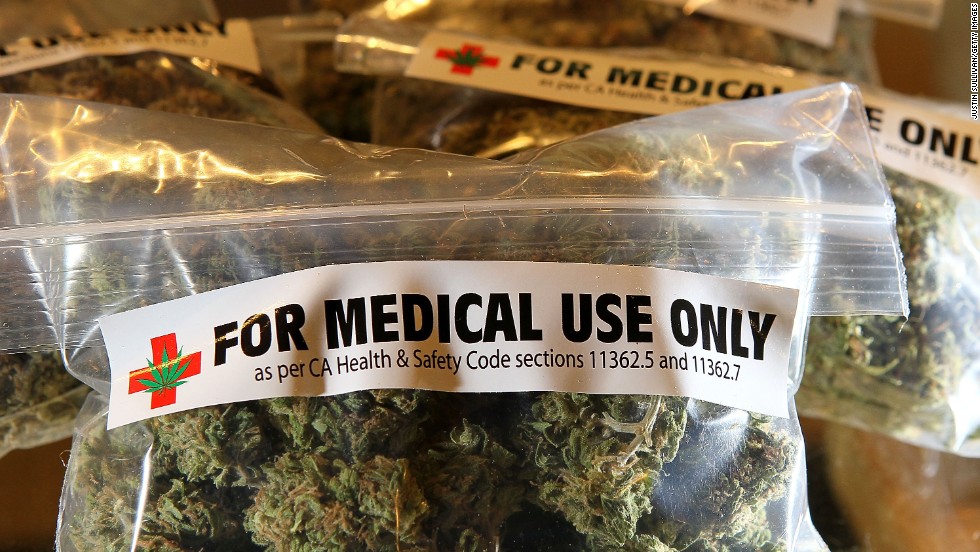
Case o' The Week: Ninth Dodges Pot, Shot - Davies and Plea Agreement Collateral-Attack Waivers


  A non-cap habe raises execution issues, in a Section 2241 opinion.
  Davies v. Benov, 2017 WL 2125897(9th Cir. May 17, 2017), decision available here.

Players: Decision by Judge Gould, joined by Judges Wardlaw and Callahan.

Facts: Davies owned medical marijuana dispensaries in California, which he contended complies with state law. Id. at *1. He was charged federally in the ED Cal, and plead guilty to a five year term. Id. The plea agreement had a waiver provision that read, “Regardless of the sentence he receives, the defendant also gives up any right he may have to bring a postappeal attack on his conviction or his sentence. He specifically agrees not to file a motion under 28 U.S.C. § 2255 or § 2241 attacking his conviction or sentence.” Id. A year into Davies’ term, Congress passed an appropriation rider. That rider prohibited the use of federal funds to prosecute offenses otherwise legal under state medical marijuana laws. Id. at *2. Davies filed a Section 2241 habeas petition, arguing that BOP’s use of federal funds to incarcerate him violated this appropriations rider. Id. The magistrate judge denied the petition, holding that the plea agreement waiver barred the challenge. Id.

Issue(s): “The sole question presented here is whether the plea agreement’s waiver provision clearly bars Davies from bringing his § 2241 petition, which challenges his continued incarceration based on the appropriations rider. “ Id. at *2.

Held:The waiver language included in Davies's plea agreement is broad and unambiguous, and we hold that it precludes Davies’s petition on the grounds he raised.” Id. at *2.

Of Note: Davies made an interesting, albeit unsuccessful, argument. The waiver language in this plea agreement prohibited an appeal of “any aspect of the sentence imposed in this case.” Id. at *3 (emphasis added). By contrast, the collateral-attack waiver provision did not have that “any aspect of his sentence” clause. Id.
  Davies argued that the collateral-attack waiver was less broad than the appellate waiver. It’s an – appealing – argument, given the old contra proferentem rule we learned in law school (a rule acknowledged by Judge Gould, who concedes that because the government drafted the agreement, “ambiguities are construed in favor of the defendant.” Id. at *2 (citing United States v. Charles, 581 F.3d 927, 931 (9th Cir. 2009).
  Unfortunately, the Ninth holds the waiver language is not ambiguous: “Despite differences in the language of the direct-appeal and collateral-attack waiver provisions, the collateral attack waiver provision states the scope of the waiver: Davies gives up any right to bring a post-appeal attack on his conviction or sentence. The scope of the collateral-attack waiver provision clearly covers his present challenge. Limitations on any right to attack his sentence encompasses challenges to the execution and conditions of his sentence, as his challenge is styled here, as well as to the legality of his sentence.” Id. at *3.

How to Use: What about inmates serving federal prison sentences for (medical) marijuana offenses, who pleaded open, or who were convicted after trial? Unlike Davies, they are unencumbered by these collateral-attack waivers.
  Judge Gould expressly reserves the question if the BOP can use federal funds to incarcerate these folks: “we need not reach and save for another day the issue of whether the expenditure of federal funds to incarcerate individuals who fully complied with state medical marijuana laws violates the appropriations rider.” Id. at *3. 
  Would make for an interesting § 2241 petition, for these inmates in federal prison.
                                               
For Further Reading: With any luck, Johnson warriors will be freeing another tranche of over-serving petitioners after a Dimaya victory next Tuesday. SCOTUS’s next opinion drop is May 30 at 9:30 EDT: opinions will be live-blogged here


Steven Kalar, Federal Public Defender, N.D. Cal. Website at www.ndcalfpd.org

.

Labels: , , ,

Sunday, April 02, 2017

Case o' The Week: Once More Into the Breach - Plascencia-Orozco and Breach of Plea Agreements


Honorable Judge Carlos Bea

 Practice pointer: When an opinion starts by observing that a defendant stands out as a “cara dura,” things probably won’t end well.
United States v. Plascencia-Orozco, 2017 U.S. App. LEXIS 5445 (9th Cir. Mar. 29, 2017), opinion available here.

Players: Decision by Judge Bea, joined by Judges Callahan and Ikuta.

Facts: Plascencia-Orozo stole the I.D. of U.S. citizen “Del Muro.” He attempted unlawful entry using the Del Muro identity in 2008 and 2011. Id. at *4.
  In 2008, Plascencia plead guilty to importation of marijuana: remaining counts were dismissed pursuant to a plea agreement. Id. The plea agreement allowed the dismissed agg ID and reentry charges to be resuscitated in the event of a breach, or if Plascencia unlawfully returned to the U.S. during his term of supervised release. Id. at *11.
  Plascencia was removed after serving his term.
  Two months later, in 2011, he was caught attempting to reenter again, with the “Del Muro” identity.
  Plascencia was charged with agg ID theft and attempted illegal reentry. Id. One set of the agg ID / reentry charges came from the (dismissed) 2008 counts, on a theory Plascencia had breached his ‘08 plea agreement. Id. at *5-*6.
  In a pretrial hearing, the district court found a breach of the plea agreement by a preponderance of the evidence. Plascencia was convicted after trial. Id. at *3, *6.

Issue(s): “Plascencia argues that the district court erred by ruling that Plascencia had breached his 2008 plea agreement at a pretrial motions-in-limine hearing. Instead, Plascencia argues, the district court should have submitted the issue to the jury. Alternatively, Plascencia contends, it should have at least required the government to seek a finding of breach before reindicting Plascencia on the 2008 charges.” Id. at *16.

Held:We have never squarely held that a district judge may find that a defendant breached a prior plea agreement at a pretrial hearing, without submitting the question to a jury.” Id. at *18 (footnote omitted). “We join the First Circuit in holding that the question of breach is for the district judge, not a jury, to decide.” Id. at *19.

  “We have also never expressly addressed whether the government must seek a judicial finding of breach before indicting a defendant on charges barred by a plea agreement. [W]e think that . . . —a motion to dismiss under Rule 12(b), with an evidentiary hearing to resolve disputed factual issues and a burden of proof that rests squarely on the government—are sufficient to protect a defendant’s due-process right to enforce the terms of his plea agreement. Plascencia has pointed us to no statute or case law requiring the government to seek a preindictment finding of breach, and we decline to recognize such a requirement here.” Id. at *21 (footnote omitted).

  “In sum, we conclude that the proper way for a defendant to raise a prior plea agreement as a defense to a criminal charge is to move to dismiss that charge under Federal Rule of Criminal Procedure 12(b). If the government thinks that the defendant has breached the plea agreement, such that it no longer applies, then it must proffer sufficient evidence to establish that breach by a preponderance of the evidence. . . . The matter need not be submitted to a jury, nor need it be decided before the indictment or information is filed. The district court followed these procedures here, and its ruling at the motions-in-limine hearing that Plascencia had breached his plea agreement was not reversible error.” Id. at *23.

Of Note: The defense of this case was – challenging. Plascencia initiated bar complaints against two attorneys, ended up with three attorneys, and was denied a fourth. He made “an obscene gesture” at a juror, and testified that he was the father of Del Muro’s children (contradicting the testimony of the mother of Del Muro’s children). The only (somewhat) bright spot is the Ninth’s reversal of a “free standing” order that Plascencia to use his true name in the future. Id. at *37-*38.

How to Use: Judge Bea notes (and avoids) conflicted standards of review in the breach context. Id. at *14 n. 8. Despite that sidestep, Plascencia creates new law for breach in the Ninth, and lays out the analysis of breach under the existing rules. It is now a lead Ninth opinion on how to tackle breached plea agreements.
                                               
For Further Reading: Can you exploit a D.J.’s wink, and deliberately breach a plea agreement when a better sentence than the deal is the likely outcome?
  For a good article on this ethical bind, see Can Defense Counsel Ethically Breach a Plea Agreement?, available here.


Steven Kalar, Federal Public Defender N.D. Cal. Website at www.ndcalfpd.org

.

Labels: , , ,