Sunday, November 20, 2005

Case o' The Week: L.A. Gunns for Shackle Policy, United States v. Howard
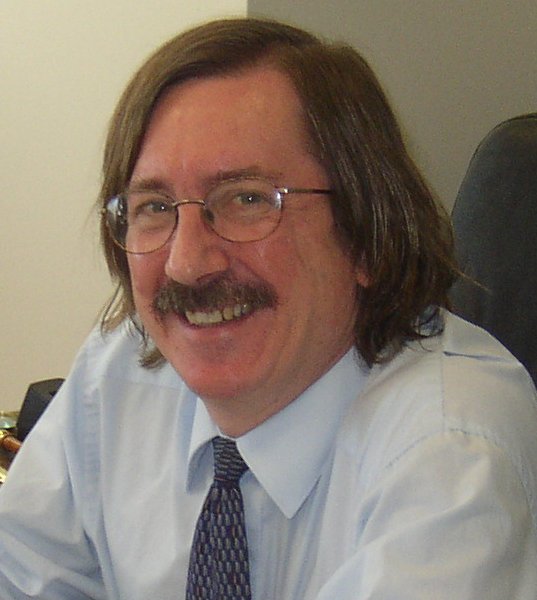

CD Cal AFPD Carl Gunn (left) wins a long, hard-fought victory in United States v. Howard, __ F.3d. __, No. 03-50524, Slip Op. 15309 (9th Cir. Nov. 15, 2005), available here. In Howard, the Ninth holds it is a due process violation to have a blanket policy of shackling all pretrial detainees, without any showing of necessity.

Players: Central District of California vet AFPD Carl Gunn (left).

Facts: After consultation with magistrate judges, the Marshals in the massive Central District of California (L.A.) shackled every defendant at their initial appearance. Slip op. at 15317-18. There was “little in the record” describing the need for the policy. Id. at 15319. In each of these 17 consolidated cases, the Fed P.D. objected to the shackling; in each, the motion to unshackle was denied without an evidentiary hearing. Id. at 15320. The Defender brought interlocutory appeal from the magistrate’s orders.


Issue(s): 1. Moot? Did the Court of Appeals have jurisdiction over interlocutory appeals that were moot because the defendants had long ago resolved their cases? 2. Due Process: Does the blanket shackling policy violate due process?

Held: 1. Not Moot: This case is capable of repetition, yet evading review - and cannot be addressed in a civil action, because it is brought by the Defender. “Therefore, defendants’ claims are effectively unreviewable on appeal from a final judgment. The district court’s order reviewing the magistrate judges’ determinations is an appealable collateral order.” Id. at 15325. 2. Due Process/Shackling: “On the merits, because it is undisputed that the policy effectuates a diminution of the liberty of pretrial detainees and distracts from the dignity and the decorum of a critical stage of a criminal prosecution, we conclude that the shackling policy requires adequate justification of its necessity. On the basis of the limited record before us, we conclude we must vacate the district court’s order upholding the policy, but we do not preclude the reinstatement of a similar policy upon a reasoned determination that it is justified on the basis of past experiences or present circumstances in the Central District.” Id. at 15318.

Of Note: The Ninth – lead by Judge Schroeder – is careful to not hold that the blanket shackling policy is a violation of due process. “Defendants contend that due process requires that there be no restraining whatsoever without an individualized determination. We observe, without deciding the issue, that this may go farther than due process requires. But we do not have to reach this question. The record here gives no justification or describes any circumstances existing district-wide that would support the district requiring such restraint.” Id. at 15326. Instead, Judge Schroeder describes a narrow due process ruling: “At a minimum, due process requires that before there is any district-wide policy affecting all incarcerated defendants whom the government must transport to a first appearance, there must be some justification.” Id.

How to Use: Steve Sady reads Howard in the context of the Supreme Court’s recent decision in Deck v. Missouri, 125 S.Ct. 2007 (2005). In Deck, Justice Breyer explained that visible shackles during the penalty phase of a capital case are a constitutional violation for which the defendant need not show prejudice. Thus, Howard tucks neatly behind Deck’s wake: shackling is a problem, Deck emphasized that, and Howard follows with a limited holding. Consider using Deck and Howard to challenge shackling during federal sentencing proceedings: the Deck rationale does not rely heavily on the fact that capital penalty proceedings are before a jury.

For Further Reading: Though his name is not in the opinion, this victory is the fruits of AFPD Carl Gunn’s efforts. Carl has been a public defender for twenty-two years; nineteen in L.A. with brief interludes in Alaska and Washington. When he last returned to work in LA, he was “pissed” to find this new shackling policy and immediately mounted a coordinated attack. This is just one of Carl’s many righteous fights: run “Carlton F. Gunn” in Westlaw and you’ll find United States v. Alvarez-Sanchez, 511 U.S. 350 (1994) (regarding admissibility of confession while in state custody, before federal proceedings); United States v. Rojas-Flores, 384 F.3d 775 (2004) (acceptance of responsibility still possible after purely legal challenge); United States v. Wenner, 351 F.3d 969 (2003) (Washington burg offenses not “crimes of violence.”).

Steven Kalar, Senior Litigator N.D. Cal. FPD. Website available at www.ndcalfpd.org

Sunday, December 16, 2018

Case o' The Week: Convictions resist a battery of challenges - Kirkland and "Explosive Devices"


  “Batteries not included."
   Ruins Christmas mornings.
  (Convictions? Not so much).


United States v. Kirkland, 2018 WL 6186513 (9th Cir. Nov. 28, 2018), decision available here.

Players: Decision by Judge Watford, joined by Judges Fisher and Friedland. Hard-fought appeal by former CD Cal AFPD Carl Gunn.

Facts: Cops found a box when they searched Kirkland’s home. It contained a radio frequency receiver that could be used to detonate a device, a detonator, and shotgun shells that could provide an explosive charge. Id. at *1. Missing were eight batteries needed to make a functional bomb. Id. At trial, a government expert testified that the box could be made a bomb in minutes, by inserting batteries and by connecting the detonator. Id. Kirkland was convicted of being a felon in possession of a destructive device, and of possessing an unregistered destructive device. Id.

Issue(s): “On appeal, Kirkland challenges the sufficiency of the evidence to support his convictions, on the ground that the device he possessed does not qualify as a ‘destructive device.’ He also argues that his sentence should not have been enhanced under the ‘destructive device’ provision of the Sentencing Guidelines, U.S.S.G. § 2K2.1(b)(3)(B), as that enhancement turns on the same definition of ‘destructive device.’” Id. “He challenges only the sufficiency of the evidence to support the jury’s finding that he possessed a combination of parts ‘from which’ an explosive bomb could be ‘readily assembled.’ In his view, a conviction under subsection (C) requires proof that the defendant possessed every component necessary to construct a functional weapon. Under Kirkland’s reading of the statute, he would be entitled to a judgment of acquittal because the device in question needed eight C-cell batteries to operate, and the government did not introduce any evidence establishing that he possessed such batteries.” Id. at *2.

Held: “We do not think the statute can be read in the manner urged by Kirkland. Nothing in the text of § 921(a)(4)(C) states that a defendant must possess every component necessary to render a partially constructed device capable of detonating. The statute requires only that the defendant possess a combination of parts from which a functional device ‘may be readily assembled.’ As used in this provision, the term “readily” means quickly and easily: The combination of parts possessed by the defendant must be capable of being assembled into a functional device within a short period of time and with little difficulty—measures that may depend on the expertise of the defendant constructing the device. That requirement does not categorically exclude situations in which the assembly process entails the acquisition and addition of a new part.” Id.
  “At the end of the day, regardless of which components are missing from the device, the ultimate question will be the same: Can the missing parts be obtained quickly and easily, and if so, can they quickly and easily be incorporated to render the device functional?” Id. at *3.

Of Note: Gunn’s at war. More specifically, the Ninth contends that Carl Gunn’s urged interpretation was “at war with Congress’s purpose” in enacting the “combo of parts” provision of this statute. Id. at *3.
  Maybe so, maybe not, but – as the defense warned -- this decision leaves “intractable line-drawing” problems for future cases. If this box had batteries, but no detonator, would that be a bomb that is “readily assembled?” What if it was missing the radio frequency receiver? What if the parts were, but it had not been wired?
  All of these scenarios are now “inherently factbound issues that juries will have to resolve on a case-by-case basis.” Id. at *3.

How to Use: Judge Watford flags an important exception to the Kirkland holding: a destructive device needs explosive material. Id. at *3. That wasn’t at issue here, because the shotgun shells were the explosive component of this device. Id.  
  Note this important Kirkland exception to the bits and bobs theory of conviction: a bomb needs something that goes boom.
                                               
For Further Reading: Will President Trump’s appointments remake the Ninth? Perhaps less than is assumed. 
  For an interesting article on the actual numbers, see a Brookings report here


Image of “batteries not included” from http://christophergamboa.com/tag/clean-eating/

Steven Kalar, Federal Public Defender Northern District of California. Website at www.ndcalfpd.org

.

.

Labels: , ,

Sunday, June 10, 2012

Case o' The Week: Defendant's loss, a Defense Win - Leal-Vega and the Taylor Categorical Analysis


Legislatures are so creative. Bored by common, generic definitions of frequent crimes (like burglary) State Legislatures love to cook up novel definitions that expand criminal liability. California, for example, has criminalized  the possession for sale of drugs that fall outside of the standard federal definition of “controlled substances.”

Bad for clients fighting state cases. A great trend, however, for federal defendants fighting the Taylor sentencing analysis. See United States v. Leal-Vega, 2012 WL 1940217 (9th Cir. May 30, 2012), decision available here.


Players: Important case litigated by former AFPD Carl Gunn. Decision by Judge M. Smith.

Facts: In 1999, Leal-Vega pled guilty to violating Cal. Health and Safety Code § 11351 (possession for sale of a ‘controlled substance).” Id. at *1. 

A decade later he was convicted of illegal reentry, and Probation hit him with a sixteen offense level adjustment for a prior “drug trafficking offense” under USSG § 2L1.2. Id. The district court found that the prior felony did not qualify categorically as a “drug trafficking offense,” because California law criminalizes the possession for sale of "controlled substances" not within the federal definition. Id. at *2. The government appealed.

Issue(s): “The Government contends that the sixteen-level enhancement should have been applied because Section 11351 is categorically a ‘drug trafficking offense’ under U.S.S.G. § 2L1.2. Alternatively, the Government contends that even if Section 11351 does not categorically qualify, Leal-Vega’s conviction qualifies as a ‘drug-trafficking offense’ applying the modified categorical analysis because the substance involved was tar heroin, a substance covered by the federal Controlled Substances Act . . . .” Id. at *1

Held: “We hold that a conviction under Section 11351 does not qualify categorically as a ‘drug trafficking offense’ for the purposes of U.S.S.G. § 2L1.2. However, we hold that Leal-Vega’s prior Section 11351 conviction qualifies as a ‘drug trafficking offense’ using the modified categorical approach, and we reverse and remand for sentencing.” Id.

Of Note: The Taylor jurisprudential goo has been one of the hottest issues in the Ninth (and the Supremes) for the past decade or so. Two Ninth judges have taken a particular interest in the topic: the Honorable Jay Bybee (author of the fractured Aguila Montes de Oca decision), and the Honorable Milan Smith, author of Leal-Vega. Judge M. Smith has had the better approach, in our opinion – he was the first to explain that a California burglary never really ought to qualify as a “violent offense” under a categorical analysis. See blog post here. 

Judge Smith gets it right again in Leal-Vega, correctly explaining why the government’s approach to Section 11351 would undermine the reasoning behind the categorical approach set forth in Taylor. Id. at *4-*6. Leal-Vega provides a thoughtful explanation of the most important area of unsettled sentencing law: it is worth a close read for a good understanding of what Taylor really means.

How to Use: Mull this truth: a California crime of possession of a “controlled substance” for sale is now not categorically a “drug trafficking” offense under the Guidelines. We like it, but even we concede this holding isn’t intuitive unless you really dig into the state statute. Leal-Vega illustrates the importance of a brutally skeptical eye when looking at the categorical analysis of state priors that increase guideline sentences.

 The modified categorical approach still hurts, of course – here the Court permits a modified categorical analysis, and the “tar heroin” facts surrounding Leal-Vega’s prior cost him the win. Id. at *7. Nonetheless, the confusion around Aguila Montes de Oca’s fractured modified categorical approach (and its reliance on “necessary” facts) means that there are still many opportunities for mischief in Section 11351 cases.

 Build on Leal-Vega’s understanding of the broad state definitions of controlled substances to attack the categorical qualification of other state (and potentially federal!) prior convictions that increase sentencing exposure.
                                               
For Further Reading: What a contrary cuss is Carl – god bless him. To read straight from the horse’s mouth how to exploit the Leal-Vega decision, hit his blog for a recap of the opinion (he modestly forgets to note it is his case). See “Hanging out with Carl Gunn,” here


Image of the California State Legislature from http://blog.timesunion.com/tedisco/at-2-a-m-do-you-know-what-your-governor-and-legislature-are-doing/894/


Steven Kalar, Senior Litigator N.D. Cal. FPD. Website at www.ndalfpd.org

Labels: , , , ,

Sunday, April 15, 2012

Case o' The Week: Nosal, No Sale, for Gov't -- - Nosal and the CFAA


Chief Judge Alex Kozinski
"Minds have wandered since the beginning of time and the computer gives employees new ways to procrastinate, by gchatting with friends, playing games, shopping or watching sports highlights. Such activities are routinely prohibited by many computer-use policies, although employees are seldom disciplined for occasional use of work computers for personal purposes. Nevertheless, under the broad interpretation of the CFAA, such minor dalliances would become federal crimes. While it’s unlikely that you’ll be prosecuted for watching Reason.TV on your work computer, you could be. Employers wanting to rid themselves of troublesome employees without following proper procedures could threaten to report them to the FBI unless they quit. Ubiquitous, seldom-prosecuted crimes invite arbitrary and discriminatory enforcement." 

United States v. Nosal, 2012 WL 1176119, *4 (9th Cir. Apr. 10, 2012) (en banc), decision available here.


Players: Important win for appellate gurus Ted Sampsell Jones (argued), and Dennis Riordan. Decision by CJ Kozinski, joined by eight judges. Dissent by Judge Silverman, joined by Judge Tallman.

Facts: Nosal worked for an executive search firm. Id. at *1. He started a competing company, and convinced some of his former colleagues to download confidential files from his old firm, to use in his new one. Id. “The employees were authorized to access the database, but [the executive search firm] had a policy that forbade disclosing confidential information.” Id.

Nosal was indicted on many counts, including violations of the Computer Fraud and Abuse Act (CFAA), 18 USC § 1030. Id. Nosal challenged the CFAA counts, arguing that this wasn’t unauthorized access into a computer (hacking), but (if proved true), was theft of data by folks who had legitimate access to the files.

ND Cal District Judge Marilyn Patel agreed and dismissed the CFAA counts, holding that the CFAA prohibits hackers from accessing computer information without authorization – not theft by employees who are authorized to access the data. Id. A three-judge panel reversed. See generally blog description of three-judge panel decision, here.

The case went en banc.

Issue(s): “Computers have become an indispensable part of our daily lives. We use them for work; we use them for play. Some-times we use them for play at work. Many employers have adopted policies prohibiting the use of work computers for nonbusiness purposes. Does an employee who violates such a policy commit a federal crime? How about someone who violates the terms of service of a social networking website? This depends on how broadly we read the Computer Fraud and Abuse Act (CFAA), 18 U.S.C. § 1030.” Id. at *1 (emphasis added).

Held: “We need not decide today whether Congress could base criminal liability on violations of a company or website’s computer use restrictions. Instead, we hold that the phrase ‘exceeds authorized access’ in the CFAA does not extend to violations of use restrictions. If Congress wants to incorporate misappropriation liability into the CFAA, it must speak more clearly.Id. at *7.

Of Note: Gallons of ink will be spilled on Nosal and its impact on computer crimes – it is a very important case. Putting all that aside, read Nosal simply for the enjoyment of joyful legal writing. CJ Kozinski – a computer geek in judge’s clothing – gets it: the government’s interpretation of the CFAA would have criminalized logging on a work computer and “g-chatting with friends, playing games, shopping or watching sport hightlights.” Id. at *4.


Are you of a libertarian bend, prone to tuning into “Reason.TV” while at work? Id. Do you hit Ebay, while filling out timesheets and CJA vouchers? Id. at *5 &n.8. Visit Hulu and JDate? Id. Netflix and Pandora? Id. Do you describe yourself on Craigslist’s dating site as “talk dark and handsome,” when you’re really “short and homely?” Id. at *5. The Chief has no problem with you getting fired – but he and the Ninth don’t want you prosecuted for a federal crime.

How to Use: Fellow blogger Steve “Rule of Lenity” Sady loves Nosal - and you should too. CJ Kozinski explains that the rule is not only intended only to protect citizens, who need fair notice of criminal laws. Id. The Rule of Lenity also ensures “that Congress will have fair notice of what conduct its law criminalizes. We construe criminal statutes narrowly so that Congress will not unintentionally turn ordinary citizens into criminals.” Id. at *7. Great quotes for the defense bar’s favorite rule of construction.

For Further Reading: Are you making too much of a “simple little case,” bringing cutting-edge challenges on “silly issues” that make prosecutions slow and expensive? You must have been hanging out with Carl Gunn. For three decades Carl has been the government’s gadfly while serving in three Defender offices – you’ll remember him as the rebel who “gunned” for the Marshal’s shackling policy in L.A.. See Howard blog here.
Carlton Gunn

 Carl’s now semi-retired, and is maintaining a very interesting blog in his new private practice life. See "Hanging out with Carl" blog hereHit Carl’s blog for a great essay on challenging “controlled substance” priors in federal court – it is a valuable new site to add to your RSS feed.


Image of the Honorable Chief Judge Alex Kozinski from https://blogger.googleusercontent.com/img/b/R29vZ2xl/AVvXsEi_ktMUCFReOnm3MpnUnrk30W8hRqg140moDlb0ZlNyrM3Bw7C0S5QME1x9G60pxR4q8vsaUDQQ8UZKLmlSUgrqr32btiKTLjQMCZAPrTitXCNKtjeY3rMNdPjo9qqhfrzkXFO5lw/s1600/judge+alex+kozinski.jpg


"Reason TV" logo from http://www.reason.tv/


Steven Kalar, Senior Litigator N.D. Cal. FPD. Website at www.ndcalfpd.org

.


.

Labels: , , , , , ,

Sunday, February 05, 2006

Case o' The Week: Ninth Tosses the Cat out of the Bag, Williams and mid-stream Miranda warnings


The old "cat of the bag" analysis questioned the viability of post-Miranda confessions when custodial interrogation had already produced statements. That line seems doomed with developing Miranda law out of the Supreme Court; specifically Elstad and Seibert. In Williams, the Ninth wrestles with how to interpret the "fractured" and "splintered" Supreme Court plurality decision in Seibert. United States v. Williams, __ F.3d __, Slip. Opp. at 1181 (9th Cir. Jan. 30, 2006), decision available here. The resulting rule is not exactly a model of clarity. Moreover, as discussed below, it incorporates a test that seven Justices seem to have rejected . . . .

Players: The ubiquitous Carl Gunn, AFPD CD Cal, slugging away again in the Ninth.

Facts: In a false passport case, Williams was interrogated in a custodial setting and made some damning statements. Slip op. at 1186. He was then Mirandized, and made more bad (written) statements. Id. at 1186-87. The district court suppressed the first, oral statements but admitted the latter statements at trial. Id. at 1187. After the trial, the Supreme Court decided Missouri v. Seibert, 542 U.S. 600 (2004) – a decision on midstream Miranda rights that is a mess of concurring and plurality opinions.

Issue(s): 1. Splintered opinions: How does an appellate court interpret a fractured Supreme Court decision? 2. Post-Seibert rule: What is the test for mid-stream Miranda cases after the Supreme Court’s decision in Seibert? 3. Deliberate Two-Step Inquiry?: “How [should a court] determine whether an interrogator used a deliberate two-step inquiry?” Id. at 1199.

Held: 1. Splintered opinions: “[W]hen a fragmented Court decides a case and no single rationale explaining the result enjoys the assent of five Justices, the holding of the Court may be viewed as the position taken by those Members who concurred in the judgments on the narrowest grounds.” Id. at 1197 (quoting Marks). 2. Post-Seibert Rule: “[W]e hold that a trial court must suppress postwarning confessions obtained during a deliberate two-step interrogation where the midstream Miranda warning – in light of the objective facts and circumstances – did not effectively apprise the suspect of his rights.” Id. at 1198 (emphasis added). 3. Deliberate Two-Step? “[I]n determining whether the interrogator deliberately withheld the Miranda warning, courts should consider whether objective evidence and any available subjective evidence, such as an officer’s testimony, support an inference that the two-step interrogation procedure was used to undermine the Miranda warning . . . Such objective evidence would include the timing, setting, and completeness of the prewarning interrogation, the continuity of police personnel, and the overlapping content of the pre-and postwarning statements.” Id. at 1200.

Of Note: Good luck figuring this case – and the resulting test – out. A more detailed analysis was undertaken by Judge Berzon in her dissent in United States v. Rodriguez-Preciado, 399 F.3d 1118 (9th Cir. 2005). In Rodriguez-Preciado, Judge Berzon carefully tallies the votes of the plurality and concurring Justices for the various issues at play in Seibert. She persuasively argues that the “subjective intent” of the interrogator was a factor rejected by seven Justices. Id. at 1141. Oddly, the Ninth nonetheless seems to adopt exactly that factor in Williams – looking at whether the two-step interrogation process was deliberately used by the interrogator. Hence, the Ninth appears to have adopted a new test supported by one Justice, (Kennedy) and rejected by seven.

How to Use: Although the defense bar won’t love this new “deliberate two-step” test, the new standard is so confusing that it’s bound to botched by the cops. Williams is replete with good language disfavoring the two-step interrogation process. For example, “Once a law enforcement officer has detained a suspect and subjects him to interrogation – as was the case in Seibert and is the case here – there is rarely, if ever, a legitimate reason to delay giving a Miranda warning until after the suspect has confessed. Instead, the most plausible reason for the delay is an illegitimate one, which is the interrogator’s desire to weaken the warning’s effectiveness.” Id. at 1201 (emphasis in original).

For Further Reading: Before he was a judge, Professor Willie Fletcher often railed against the trend of increasingly fractured Supreme Court decisions. In a Washington Times editorial, a columnist blames these complex new opinions on too many law clerks. See editorial here. Whatever the cause, Seibert is a textbook example of the downside of plurality decisions. The Harris mand-min decision is another good example.

AFPD Carl Gunn is obviously an expert and great resource on Seibert issues. R&W attorney Steve Koeninger, of the ND Cal FPD office - is another. He's helped litigate the stuffing out of Seibert in San Francisco, and quickly caught the Williams' tension with Berzon's dissent described above.

Steven Kalar, Senior Litigator; Steve Koeninger, R&W Attorney, N.D. Cal. FPD. Website available at www.ndcalfpd.org

Sunday, October 21, 2018

Case o' Week: Sold on Sellers -- Sellers and Discovery on Selective Enforcement Claims


Carl Gunns for Nguyen win.  
United States v. Sellers, 2018 WL 4956959 (9th Cir. Oct. 15, 2018), decision available here.

Players: Majority decision and concurrence by Judge Nguyen. 


The Honorable Judge Nguyen

  DJ Simon, concurring.
  Dissent by Judge Graber, drawn by lot to replace Judge Reinhardt. 
  (Judge Reinhardt, concurring in spirit, with the opinion and Judge Nguyen's terrific concurrence).
  Tremendous victory for former C.D. Cal. AFPD, now stalwart CJA counsel, Carl Gunn.  

Facts: Sellers, who is black, was arrested in an ATF stash house sting put together by ATF Agent John Carr, and was charged in federal court. Id. at *1-*2.
  Sellers sought discovery based on a claim of selective enforcement. Id. at *2. Sellers showed that 39 of 51 CD Cal defendants charged in reverse sting prosecutions were black or Hispanic. Id. 
ATF Agent John Carr
  ATF Agent John Carr testified that 55 of the 60 defendants indicted in his stash house efforts were people of color. Id.
  The court denied the discovery motion, based on the Supreme Court’s 1996 Armstrong decision. Id.  
   Sellers was convicted after a jury trial, and appealed.

Issue(s): “Sellers argues that he was targeted based on his race, and presents evidence that an overwhelming majority of the defendants targeted by law enforcement in similar investigations are African-Americans or Hispanics. To succeed on his selective enforcement claim, Sellers must show that the enforcement had a discriminatory effect and was motivated by a discriminatory purpose. He is unlikely to meet this demanding standard without information that only the government has. Sellers can obtain this information through discovery if he makes a threshold showing. We must decide what that showing is.” Id. at *1.
  “The question we face is whether Armstrong’s standard is equally applicable to claims for selective enforcement, particularly in the stash house reverse-sting context.” Id. at *3.

Held: “We hold that in these stash house reverse-sting cases, claims of selective enforcement are governed by a less rigorous standard than that applied to claims of selective prosecution under . . . Armstrong.” Id.
  “Today we . . . hold that Armstrong’s rigorous discovery standard for selective prosecution cases does not apply strictly to discovery requests in selective enforcement claims like Sellers’s. Contrary to Armstrong’s requirements for selective prosecution claims, a defendant need not proffer evidence that similarly-situated individuals of a different race were not investigated or arrested to receive discovery on his selective enforcement claim in a stash house reverse-sting operation case. While a defendant must have something more than mere speculation to be entitled to discovery, what that something looks like will vary from case to case. The district court should use its discretion . . . to allow limited or broad discovery based on the reliability and strength of the defendant’s showing.” Id. at *6 (emphases in original). Id. at *6,

Of Note: The Sellers opinion is a lovely piece of legal writing by Judge Nguyen. It is a careful and measured analysis that methodically works through the difference between selective enforcement and selective prosecution, and that hews closely to previous discovery decisions in the Third and Seventh Circuits. Id. at *6.
  In her concurrence, however, Judge Nguyen cuts loose. 
  Unleashing a barrage of stats, in her concurrence Judge Nguyen explains exactly how fake stash house schemes target people of color – and ultimately have little impact on real crime rates. Id. at *10. She “question[s] whether conducting stash house operations almost exclusively in neighborhoods known to be black and Hispanic, and excluding neighborhoods known to be white, is in fact a ‘facially neutral’ policy.” Id. at *11.
   If you’ve ever defended a client against these inane and unfair stash house prosecutions, this concurrence is a must-read.

How to Use: The Feds of NorCal rage for RICO, and are dying for death. What percentage of our tsunami of RICO and capital defendants are people of color? 95%? Higher?
  It is time for beloved data nerds to run some RICO regression models, and for capital counsel to shake loose some Sellers discovery from ATF, the FBI, Homeland Security, and local law enforcement.  
                                               
For Further Reading: Sellers confirms what we knew: the Honorable District Judge Edward Chen got it right. In 2017, Judge Chen ordered a broad swath of discovery on the ND Cal FPD’s selective enforcement claim in the notorious San Francisco “Safe Schools” prosecution. See “For Further Reading” at blog entry, here

The Honorable Judge Edward Chen

   The ND Cal United States Attorney's Office dismissed those "Safe Schools" indictments, rather than complying with Judge Chen’s remarkable discovery order. While these dismissals were welcome victories for our clients, the win left unaddressed many serious questions about this profoundly misguided prosecution.
   We’ll now get answers.
  The ACLU has recently filed a civil lawsuit on behalf of these Safe Schools defendants. See ACLU press release here. 
   Notably, the ACLU’s Cross suit was recently related back to the Mumphrey litigation (the original Safe Schools criminal case). See CV 18-06097 EMC (N.D. Cal. Oct. 16, 2018), Dkt. #22, Ord. relating case.
  This means that the whole "Safe Schools" mishigaas is now right back where it belongs: before Judge Chen. 


Image of the Honorable Judge Nguyen from https://www.scpr.org/news/2011/12/01/30139/key-senate-committee-approves-la-judge-ninth-circu/ 

Image of “Stash House” from http://lovewheels.site/stash-house/


Steven Kalar, Federal Public Defender, N.D. Cal. Website at www.ndcalfpd.org


..

Labels: , , , ,

Wednesday, February 02, 2005

Booker: Ex Post Facto Argument with Newman

As litigation heats up after Booker, we've moved from the theoretical to the nitty-gritty of actual practice. Below is an excerpt of an excellent brief by Senior Deputy FPD Carl Gunn from the CD Cal and Elizabeth Barros from the SD Cal. In it, Carl and Elizabeth distinguish an odd and unconvincing Ninth Circuit hurdle to the ex post facto argument on Booker: United States v. Newman, 203 F.3d 700 (9th Cir.), cert. denied, 531 U.S. 866 (2000). (Newman is available here).

--oOo--

The Ex Post Facto Clause absolutely bars the retroactive application of a criminal law to any criminal offender whom the law disadvantages. Weaver v. Graham, 450 U.S. 24, 29 (1981). It is one of the most fundamental principles in our Constitution. See U.S. Const., art. I, § 9, cl. 3; U.S. Const., art. I, § 10, cl. 1. See generally Weaver, 450 U.S. at 28-29 & n.8 ("[s]o much importance did the [c]onvention attach to [the ex post facto prohibition], that it is found twice in the Constitution" (quoting Kring v. Missouri, 107 U.S. 221, 227 (1883))).

The Ex Post Facto Clause applies by its terms only to changes in the law resulting from legislative or executive action, however. Protection against retroactive application of changes in judicial interpretation of criminal statutes is provided by the Due Process Clause. As the Supreme Court explained in Bouie v. City of Columbia, 378 U.S. 347 (1964):

[A]n unforeseeable judicial enlargement of a criminal statute, applied retroactively, operates precisely like an ex post facto law, such as Art. I, § 10, of the Constitution forbids. An ex post facto law has been defined by this Court as one "that makes an action done before the passing of the law, and which was innocent when done, criminal; and punishes such action," or "that aggravates a crime or makes it greater than it was, when committed." If a state legislature is barred by the Ex Post Facto Clause from passing such a law, it must follow that a State Supreme Court is barred by the Due Process Clause from achieving precisely the same result by judicial construction. The fundamental principle that "the required criminal law must have existed when the conduct in issue occurred" must apply to bar retroactive criminal prohibitions emanating from courts as well as from legislatures. If a judicial construction of a criminal statute is "unexpected and indefensible by reference to the law which had been expressed prior to the conduct in issue," it must not be given retroactive effect.

Id. at 353-54 (citations and footnote omitted) (emphasis in original). See also Marks v. United States, 430 U.S. 188, 192 (1977) (applying Bouie to Due Process Clause of Fifth Amendment).

The Ninth Circuit did suggest in United States v. Newman, 203 F.3d 700 (9th Cir.), cert. denied, 531 U.S. 866 (2000), that Bouie is implicated only in cases of after-the-fact expansion of criminal liability, not after-the-fact increases in the degree of punishment. See Newman, 203 F.3d at 702. But Newman is not controlling and should not be followed here for at least three reasons.

First, the suggestion in Newman is dictum because the Court gave an alternative ground for its holding. Specifically, it pointed out that "even if Bouie applies here, no due process violation occurred because the decision in [Reno v. Koray. 515 U.S. 50 (1995)] was reasonably foreseeable given the circuit split on the meaning of section 3585(b)." Newman, 203 F. 3d at 703. This is consistent with the caveat that Bouie does not bar retroactive application of a judicial decision which is foreseeable. See United States v. Qualls, 172 F.3d 1136, 1138 n.1 (9th Cir. 1999). One of the most obvious examples of a situation in which a judicial decision is foreseeable is when there is a split in the circuits. See id.

Second, Newman and the cases on which it relied on -- United States v. Ruiz, 935 F.2d 1033 (9th Cir. 1991) and United States v. Ricardo, 78 F.3d 1411 (9th Cir. 1996) -- are distinguishable. Ruiz is distinguishable because the defendant there was complaining that he relied on the law in effect at the time he entered his plea, see Ruiz, 935 F.2d at 1035, and he had been given an opportunity to withdraw his plea when he raised his complaint, see id. at 1038 (Reinhardt, J., concurring in judgment); see also id. at 1035 (majority opinion).5 Ricardo is distinguishable because the decision being applied retroactively there -- Custis v. United States, 511 U.S. 485 (1994), which held that a defendant cannot challenge the constitutional validity of a prior conviction directly in a federal sentencing proceeding, see id. at 497 -- dealt not with whether a defendant could challenge prior convictions, but where he must challenge it, i.e., in the original court of conviction rather than the federal sentencing court. See United States v. LaValle, 175 F.3d 1106, 1108 (9th Cir. 1999) ("a defendant who successfully attacks a state conviction may seek review of any federal sentence that was enhanced because of the prior state conviction"); see also United States v. Guthrie, 931 F.2d 564, 571-72 (9th Cir. 1991). Finally, Newman itself is distinguishable because it dealt with a statute governing credit against the sentence, not the sentence itself. See Newman, 203 F.3d at 701.

Third, virtually every other circuit to consider the question has rejected the distinction suggested in Newman and held that Bouie applies to sentencing statutes just as it does to substantive statutes. See Johnson v. Kindt, 158 F.3d 1060, 1063 (10th Cir. 1998), cert. denied, 525 U.S. 1075 (1999); Davis v. Nebraska, 958 F.2d 831, 833-34 (8 th Cir. 1992); Helton v. Fauver, 930 F.2d 1040, 1045 (3rd Cir. 1991); Dale v. Haeberlin, 878 F.2d 930, 934 (6th Cir. 1989), cert. denied, 494 U.S. 1058 (1990); Rubino v. Lynaugh, 845 F.2d 1266, 1271-73 (5th Cir. 1988); see also Metheny v. Hammonds, 216 F.3d 1307, 1312 n.13 (11th Cir. 2000) (assuming without deciding that Bouie applies to after-the-fact increases in punishment), cert. denied, 531 U.S. 1196 (2001). Newman should not be read overly strongly as a controlling holding when so reading it would create a split in the circuits. Cf. Circuit Rule 35-1 ("[w]hen the opinion of a panel directly conflicts with an existing opinion by another court of appeals and substantially affects a rule of national application in which there is an overriding need for national uniformity, the existence of such conflict is an appropriate ground for suggesting a rehearing en banc").

Indeed, the only Ninth Circuit case to truly apply Newman -- Holgerson v. Knowles, 309 F.3d 1200 (9th Cir. 2002), cert. denied, 538 U.S. 1005 (2003) -- suggested Newman simply raises doubt about the application of Bouie to judicial decisions about sentencing statutes. The issue in Holgerson was whether a California state court decision that the defendant claimed expanded the categories of convictions that could be considered under the states’s "three strikes" law could be applied retroactively. See Holgerson, 309 F.3d at 1201-02. The Ninth Circuit cited both Bouie and Newman, but limited its consideration of Newman as follows:

We need not decide whether Bouie applies to the California Supreme Court’s decision . . . . We rely on Newman merely for our conclusion that the argument Holgerson posits (that due process bars judicial after-the-fact increases in punishment as well as after-the-fact increases in the scope of criminal liability) has not been clearly established by the Supreme Court.

Holgerson, 309 F.3d at 1203.6

Given the grounding of Bouie in an analogy to the Ex Post Facto Clause and the limitations of Newman, the better view -- and the view which should be taken here -- is that taken by the other circuits which have enunciated square holdings on the issue. Bouie applies to retroactive application of judicial decisions increasing punishment just like the Ex Post Facto Clause applies to retroactive application of statutes increasing punishment, see Weaver v. Graham, 450 U.S. at 30; see also Bouie, 378 U.S. at 353 (ex post facto law defined to include law "that aggravates a crime, or makes it greater than it was, when committed" (quoting Calder v. Bull, 3 Dall. 386, 390, 1 L.Ed. 648)).

The test that Bouie established for when retroactivity of a judicial decision is precluded is satisfied here, moreover. The basic test is one of foreseeability. See Marks v. United States, 430 U.S. at 192; United States v. Qualls, 172 F.3d at 1138 n.1. And the decision in Booker cannot be fairly characterized as foreseeable at the time Mr. Padilla committed his offense, which was January 30, 2001. While Apprendi v. New Jersey, 530 U.S. 466 (2000) had been decided, Blakely v. Washington, 124 S. Ct. 2531 (2004) had not been, and the circuits were unanimous in holding that Apprendi did not apply to the Guidelines.7 Mr. Padilla had no reason to believe that the Guidelines would be made advisory, and so the Supreme Court’s decision in Booker cannot used to justify a higher sentence.

Carl Gunn, Senior Deputy Federal Public Defender, CD Cal and Elizabeth Barros, AFPD SD Cal

Sunday, November 04, 2018

Case o' The Week: A Western Gunn battle -- Ornelas and Mens Rea for Federal Attempted Robbery


   A Ninth Circuit panel, the defendant, and an Officer all wrestled over dangerous Gunn.

Mr. Jesus Eder Moreno Ornelas
   
 (No one badly hurt, thankfully).
  United States v. Ornelas, 2018 WL 5289024 (9th Cir. Oct. 25, 2018), decision available here.

Players: Decision by Judge Friedland, partial concurrence and partial dissent by C.J. Thomas.
  Compelling dissent by DJ Zilly, on defense-expert disclosure issue.
  Yet another notable win for former CD Cal AFPD Carl Gunn.

Facts: Mr. Moreno Ornelas and Forest Service Officer Linde got into dramatic fight after a routine stop near the Mexican border. Id. at *1. 
  According to Officer Linde, Moreno attacked him and knocked him out, grabbed his gun, and tried to shoot the officer. Id. at *2. Moreno then tried to steal Linde’s Forest Service truck. Linde testified that he ultimately prevailed and arrested Moreno at gunpoint. Id. 
  According to Moreno, he compiled with Linde’s orders to sit and be handcuffed, but the officer kept a gun trained on him with a finger on the trigger. Id. Fearing for his life, Moreno wrestled for the gun, emptied the chamber by firing into the air, then ran for the truck to escape. Id. 
  Among many other crimes, Moreno was charged with attempted robbery of the Officer's gun and the Forest Service truck. Id. (18 USC Sec. 2112). 
  Although the defense requested mens rea instructions, it did not object when the court instructed the jury and failed to require the specific intent to steal. Id. at *3. 
  Moreno was convicted by the jury on most counts, including the Section 2112 attempted robbery, and sentenced to 43 years. Id.

Issue(s): “On appeal, Moreno maintains that the district court plainly erred in two ways in instructing the jury on the elements of attempted robbery under § 2112: 
  (i) by failing to instruct that Moreno must have possessed the specific intent to steal; and 
  (ii) by failing to instruct that Moreno must have formed such intent by the time he used force, not just by the time he tried to take the property in question.” Id. at *3.

Held:We agree with the first contention but reject the second.” Id. “Although the district court was correct not to instruct the jury that Moreno must have formed the specific intent to steal by the time he used force, the court was wrong—and plainly so—to omit an instruction on specific intent altogether.” Id. at *4.
  “Congress’s use of the common law terms ‘robbery’ and ‘attempted robbery’ in § 2112 imported the common law meanings of those terms. The district court therefore should have instructed the jury that, to convict Moreno of attempted robbery, it needed to conclude beyond a reasonable doubt that he had formed the specific intent to steal the gun and truck by the time he tried to take them, though not necessarily by the time he used force against Linde. And, given the well-settled elements of common law robbery as well as Carter’s clear indication that § 2112 incorporates the common law, failing to instruct the jury on specific intent was an obvious omission.Id. at *5.

Of Note: Another issue in this complex appeal was the preclusion of a late-disclosed defense expert. Id. at *9.
  Suffice it to say, don’t be late. Id. at *11 (“Because he did not come close the meeting the district court’s reasonable deadline, Moreno was properly left to proceed without his desired expert testimony.”) 
  Somewhat lost in this bigger opinion is a compelling dissent by WD Wa. District Judge Zilly. Id. at *12. Judge Zilly - who is in the district court trenches every day - has the better argument. If caught in this exclusion bind, take a look at Judge Zilly's dissent while attempting to distinguish this Ornelas outcome.  

How to Use: Moreno earned a reversal on the mens rea instruction, but lost on another instruction challenge. At trial, he sought a specific theory-of-the-defense instruction on self-defense. The district court refused, and gave the Ninth’s general self-defense instruction. In a detailed analysis, Judge Friedland concludes that this was not error. Id. at *7-*8.
  Along the way, Judge Friedland delivers a decision of first impression on the general adequacy of the general self-defense instruction. Id. at *8.
  Eyeball Ornelas if considering a self-defense or justification theory: the opinion is likely to impact your run at specific theory-of-the-defense instructions.
                                           
For Further Reading: On October 18, Judge Ryan D. Nelson became the second Trump appointee to join the Ninth Circuit. See Ninth Circuit jurist listing here
The Hon. Judge Ryan D. Nelson

For a general background on the Ninth’s newest jurist, see blog post here
  President Trump has also nominated three additional nominees to the Ninth (to the considerable chagrin of a pair of powerful California Senators). See CNN article here


Steven Kalar, Federal Public Defender. Website at www.ndcalfpd.org

.

Labels: , , , , , , , , ,