Sunday, September 22, 2013

Case o' The Week: Ninth Dulls Jx Hook, No Mens Rea for Child Porn Interstate Commerce - Sheldon


Hon. Judge Richard Clifton

Another ding further dulls the point of the jurisdictional hook, in a decision on the interstate commerce element for the receipt of child porn. United States v. Sheldon, 2013 WL 5273101 (9th Cir. Sept. 19, 2013) decision available here.

Players: Decision by Judge Clifton, joined by Judges Hawkins and McKeown. Hard-fought appeal by Montana AFPD David Ness.

Facts: Sheldon lived with members of his family in Montana. Id. at *1. He was told to move out after he inappropriately touched a minor child. Id. “Shortly thereafter, the minor child’s video recorder was found to contain several videos of children naked, showering,” and other sexually-related conduct. Id. He was charged with sexual exploitation of a child, and knowingly receiving child pornography. Id. At trial, two female minor children testified that Sheldon showed them pornography on the internet and asked them to video themselves without clothing. Id. The defendant was convicted and sentenced to 480 months. Id.

Issue(s): Sheldon’s “primary argument . . . is that under 18 U.S.C. § 2251(a), the Government was required to prove that he knew the materials used to produce the child pornography had traveled in interstate commerce.” Id.

Held: “We agree with the other circuit courts that have previously considered this issue. Both the Fifth and Eleventh Circuits have held that § 2251(a) does not require knowledge as to the interstate nature of the crime. . . . We conclude that this interpretation of the statute is correct. To satisfy the jurisdictional element of § 2251(a) in this case, then, the Government was only required to prove beyond a reasonable doubt that the child pornography was produced with materials that had traveled in interstate commerce. The Government elicited testimony at trial that the recorder used to produce the videos in Montana was manufactured in China. This evidence was sufficient to satisfy the jurisdictional element of § 2251(a) under the correct interpretation of the statute.” Id. at *2-*3.  

Of Note: The tough task of defending child porn cases got even tougher this week, with this decision in Sheldon and with a decision on electronic searches, United States v. Schesso, 2013 WL 5227071 (9th Cir. Sept. 18, 2013). In Schesso, Judge McKeown explores the intersection between the Ninth’s decisions in Comprehensive Drug Testing (en banc) (“CDT III”) and Cotterman (en banc). Recall that in CDT III Chief Judge Kozinski urged excellent Fourth Amendment search protocols, but those protocols were, sadly, only advisory. In Schesso, Judge McKeown finds the failure to comply with the CDT III protocols aren’t fatal to the search that revealed child porn. Id. at *8. While a disappointing outcome, Schesso is a well-written opinion that grapples with the new frontier of electronic searches – it is worth a close read.

How to Use: Like the interstate commerce element in Section 922(g)(1) cases (felon in possession), or the FDIC insurance requirement in bank robbery trials, 18 U.S.C. § 2113(a), the jurisdictional “hook” in child porn prosecutions has been methodically dulled by years of appellate decisions. See, e.g., United States v. McCalla, 545 F.3d 750, 756 (9th Cir. 2008) (rejecting Commerce Clause challenge to intrastate production of child pornography even where there is no evidence that it was created for commercial purposes). Even a dull hook, however, can sometimes land a fish. It is easy for an AUSA to overlook proof of an obvious element – and the failure to prove a jurisdictional element is fatal to the conviction. See United States v. James, 987 F.2d 648, 651 (9th Cir. 1993) (reversing bank robbery conviction from the ND Cal when the government forgot to introduce a stipulation of FDIC insurance, and observing “The defense has no obligation to remind the government of its obligation to prove each element of a crime.”)
                                               
For Further Reading: A new American Bar Association resolution opposes plea or sentencing agreements that waive a defendant’s post-conviction claims of IAC, prosecutorial misconduct or destruction of evidence. See resolution description here. 
    This follows recent Florida Bar Ethical Opinion 12-1, which finds an unwaivable conflict of interest when defense counsel advises a client about these plea waivers. See Ethical opinion here. 
   The A.B.A. has written to AG Holder urging that these waivers be removed from agreements. See ABA Letter here. 
    Time for a close look at these broad waiver provisions in the “stock” ND Cal plea agreements.


Hook image from http://killzoneauthors.blogspot.com/2012/04/hook-your-book.html#.Uj8EIj_Yhhk


Steven Kalar, Federal Public Defender ND Cal. Website at www.ndcalfpd.org


.


Labels: , , , , , , , , ,

Sunday, April 15, 2012

Case o' The Week: Nosal, No Sale, for Gov't -- - Nosal and the CFAA


Chief Judge Alex Kozinski
"Minds have wandered since the beginning of time and the computer gives employees new ways to procrastinate, by gchatting with friends, playing games, shopping or watching sports highlights. Such activities are routinely prohibited by many computer-use policies, although employees are seldom disciplined for occasional use of work computers for personal purposes. Nevertheless, under the broad interpretation of the CFAA, such minor dalliances would become federal crimes. While it’s unlikely that you’ll be prosecuted for watching Reason.TV on your work computer, you could be. Employers wanting to rid themselves of troublesome employees without following proper procedures could threaten to report them to the FBI unless they quit. Ubiquitous, seldom-prosecuted crimes invite arbitrary and discriminatory enforcement." 

United States v. Nosal, 2012 WL 1176119, *4 (9th Cir. Apr. 10, 2012) (en banc), decision available here.


Players: Important win for appellate gurus Ted Sampsell Jones (argued), and Dennis Riordan. Decision by CJ Kozinski, joined by eight judges. Dissent by Judge Silverman, joined by Judge Tallman.

Facts: Nosal worked for an executive search firm. Id. at *1. He started a competing company, and convinced some of his former colleagues to download confidential files from his old firm, to use in his new one. Id. “The employees were authorized to access the database, but [the executive search firm] had a policy that forbade disclosing confidential information.” Id.

Nosal was indicted on many counts, including violations of the Computer Fraud and Abuse Act (CFAA), 18 USC § 1030. Id. Nosal challenged the CFAA counts, arguing that this wasn’t unauthorized access into a computer (hacking), but (if proved true), was theft of data by folks who had legitimate access to the files.

ND Cal District Judge Marilyn Patel agreed and dismissed the CFAA counts, holding that the CFAA prohibits hackers from accessing computer information without authorization – not theft by employees who are authorized to access the data. Id. A three-judge panel reversed. See generally blog description of three-judge panel decision, here.

The case went en banc.

Issue(s): “Computers have become an indispensable part of our daily lives. We use them for work; we use them for play. Some-times we use them for play at work. Many employers have adopted policies prohibiting the use of work computers for nonbusiness purposes. Does an employee who violates such a policy commit a federal crime? How about someone who violates the terms of service of a social networking website? This depends on how broadly we read the Computer Fraud and Abuse Act (CFAA), 18 U.S.C. § 1030.” Id. at *1 (emphasis added).

Held: “We need not decide today whether Congress could base criminal liability on violations of a company or website’s computer use restrictions. Instead, we hold that the phrase ‘exceeds authorized access’ in the CFAA does not extend to violations of use restrictions. If Congress wants to incorporate misappropriation liability into the CFAA, it must speak more clearly.” Id. at *7.

Of Note: Gallons of ink will be spilled on Nosal and its impact on computer crimes – it is a very important case. Putting all that aside, read Nosal simply for the enjoyment of joyful legal writing. CJ Kozinski – a computer geek in judge’s clothing – gets it: the government’s interpretation of the CFAA would have criminalized logging on a work computer and “g-chatting with friends, playing games, shopping or watching sport hightlights.” Id. at *4.


Are you of a libertarian bend, prone to tuning into “Reason.TV” while at work? Id. Do you hit Ebay, while filling out timesheets and CJA vouchers? Id. at *5 &n.8. Visit Hulu and JDate? Id. Netflix and Pandora? Id. Do you describe yourself on Craigslist’s dating site as “talk dark and handsome,” when you’re really “short and homely?” Id. at *5. The Chief has no problem with you getting fired – but he and the Ninth don’t want you prosecuted for a federal crime.

How to Use: Fellow blogger Steve “Rule of Lenity” Sady loves Nosal - and you should too. CJ Kozinski explains that the rule is not only intended only to protect citizens, who need fair notice of criminal laws. Id. The Rule of Lenity also ensures “that Congress will have fair notice of what conduct its law criminalizes. We construe criminal statutes narrowly so that Congress will not unintentionally turn ordinary citizens into criminals.” Id. at *7. Great quotes for the defense bar’s favorite rule of construction.

For Further Reading: Are you making too much of a “simple little case,” bringing cutting-edge challenges on “silly issues” that make prosecutions slow and expensive? You must have been hanging out with Carl Gunn. For three decades Carl has been the government’s gadfly while serving in three Defender offices – you’ll remember him as the rebel who “gunned” for the Marshal’s shackling policy in L.A.. See Howard blog here.
Carlton Gunn

 Carl’s now semi-retired, and is maintaining a very interesting blog in his new private practice life. See "Hanging out with Carl" blog here.  Hit Carl’s blog for a great essay on challenging “controlled substance” priors in federal court – it is a valuable new site to add to your RSS feed.


Image of the Honorable Chief Judge Alex Kozinski from https://blogger.googleusercontent.com/img/b/R29vZ2xl/AVvXsEi_ktMUCFReOnm3MpnUnrk30W8hRqg140moDlb0ZlNyrM3Bw7C0S5QME1x9G60pxR4q8vsaUDQQ8UZKLmlSUgrqr32btiKTLjQMCZAPrTitXCNKtjeY3rMNdPjo9qqhfrzkXFO5lw/s1600/judge+alex+kozinski.jpg


"Reason TV" logo from http://www.reason.tv/


Steven Kalar, Senior Litigator N.D. Cal. FPD. Website at www.ndcalfpd.org

.


.

Labels: , , , , , ,

Sunday, May 08, 2011

Case o' The Week: NSFW - Nosal and "Unauthorized" Access to an Employer's Computer

A slow week in the Ninth let's us reach back a bit to discuss an interesting, albeit disappointing, decision on the Computer Fraud and Abuse Act ("CFAA.") United States v. Nosal, 2011 WL 1585600 (9th Cir. Apr. 28, 2011), decision available here.

A warning, first: after
Nosal, do NOT click here if you're viewing this on a work computer - quite possibly a federal crime, to do so .
Link

Players: Decision by Judge Trott, hard-fought appeal by ND Cal appellate guru Dennis Riordan.

Facts: Nosal worked for a headhunter firm. When he left, he signed a non-compete agreement. Id. Despite this agreement, Nosal recruited three of the firm’s employees for his new, competing business: those employees allegedly transferred information from the old firm’s computer database to Nosal. Id. at *2.

The old firm had significant security measures on their computers: passwords, confidentiality stamps on all reports, and warnings against unauthorized access. Id. at *2.

Nosal and one of his accomplices were charged federally with violations of 18 USC § 1030(a)(4), the Computer Fraud and Abuse Act. Id. District Judge Marilyn H. Patel dismissed five counts on the defendant’s motion, concluding after the Ninth’s recent decision in LVRC Holdings v. Brekka that the CFAA only applied to hacking a computer (or directories) where the employee did not otherwise have no access. Id. at *3. The government took an interlocutory appeal. Id. at *1.

Issue(s): “The government contends . . . that Brekka counsels in favor of its interpretation of the statute – that an employee exceeds authorized access when he or she obtains information from the computer and uses it for a purpose that violates the employer’s restrictions on the use of that information.” Id. at *1.

Held: “Although we are mindful of the concerns raised by defense counsel regarding the criminalization of violations of an employer’s computer use policy, we are persuaded that the specific intent and causation requirements of § 1030(a)(4) sufficiently protect against criminal prosecution those employees whose only violation of employer policy is the use of the company computer for personal – but innocuous – reason.” Id. at *1. “Brekka held that a person accesses a computer without authorization ‘when the person has not received permission to use the computer for any purpose.’ 581 F.3d at 1135. Today, we clarify that under the CFAA, an employee accesses a computer in excess of his or her authorization when that access violates the employer’s access restrictions, which may include restrictions on the employee’s use of the computer or of the information contained in that computer.' Therefore, we REVERSE the district court’s decision . . . .” Id. at *8.

Of Note: With all respect to the majority, dissenting Judge Tena Campbell – a visiting D.J. from Utah – has the better argument. Id. at *8. She persuasively argues that the key phrase relied upon by the majority – “exceeds authorized access” has much broader meaning (without an intent requirement) in other parts of the same statute, making the majority’s decision unconstitutionally vague. Id. Congress meant this statute for hacking, she explains, and she worries (with reason) that the majority’s decision makes any unauthorized action on a employer’s computer a federal crime. Id. at *9-*10. (How many millions of apparent federal criminals were checking their brackets during March Madness this year, one wonders). Judge Campbell also doesn’t buy Judge Trott’s heavy reliance on one word in the statute, (“so”) to salvage the government’s interpretation. Id. at *10.

Worth noting that in another recent case (which just went en banc), a great dissent by a visiting district judge caught the Ninth’s eye: the majority decision will hopefully soon be corrected. See United States v. Leal-Felix, 625 F.3d 1148, 1151 (9th Cir. 2010) (Bennett, D.J, dissenting). Here’s hoping that Judge Campbell is as persuasive a visitor as Judge Bennett, and that Nosal gets some much-deserved en banc scrutiny.

How to Use: As noted above, Nosal’s novel holding deserves en banc review, and a PFR seems likely. Preserve pretrial challenges to § 1030(a)(4) charges – Nosal will hopefully not be the last word on this statute.

For Further Reading: Who was Nosal’s attorney? Joe Russoniello, at one point – ring a bell? (Picture left). For more on the Nosal saga, and why the ND Cal USAO is still in the case, see blog here.


Image of the March Madness brackets (obtained while at a home computer), from http://www.betvega.com/march-madness-printable-bracket/

Image of (former) United States Attorney / (former) David Nosal defense counsel, David Nosal, from http://informant.kalwnews.org/2010/08/web-extra-extended-interview-with-joe-russoniello/


Steven Kalar, Senior Litigator N.D. Cal. FPD. Website at www.ndcalfpd.org

.

Labels: , , ,

Sunday, February 13, 2011

Case o' The Week: Tucson & Thomas - Flyer and Possesion of Child Porn

Child porn on appeal: can you get a fair shake?

Does the Ninth deal with the emotionally-charged issues of child pornography in a neutral, detached, and rigorous analysis, with decisions dictated solely by the record and controlling law and not swayed by the nature of the crime? Or are outcomes in the Ninth arguably affected by the reprehensible crime at issue?


Yes -- both (and sometimes, in decisions delivered the same week). See United States v. Flyer, 2011 WL 383967 (9th Cir. Feb. 8, 2011), decision available here; compare United States v. Krupa, 2011 WL 353212 (9th Cir. Feb. 7, 2011), decision available here.


Players: Big win by ND Cal CJA attorney Nina Wilder. Admirable and courageous decision by Judge Sidney Thomas, above right.

Facts: Again the Ninth confronts Tucson agents with too much time on their hands. As in Wright, 625 F.3d 583 (9th Cir. 2010), in Flyer the same FBI agent -- Robin Andrews -- trolled the internet and downloaded child porn. These images allegedly came from Flyer’s IP address. Id. at *1, *5. A search of the residence produced a PC and other digital gear. Id. at *2. Child porn was found in the unallocated space of the PC: Flyer was charged with possession and convicted at trial. Id. at *2-*3.

Issue(s): “Flyer argues there was insufficient evidence to establish that he exercised dominion and control over the images recovered from the unallocated space on the hard drive. Alternatively, he argues that even if he could said to have ‘possessed’ the images before their deletion, no evidence indicated that the possession occurred during the time period charged in the indictment.” Id. at *6.

Held: “We conclude that Flyer’s conviction must be reversed . . . . The government concedes that it presented no evidence that Flyer knew of the presence of the files on the unallocated space of his Gateway computer’s hard drive. The government also concedes it presented no evidence that Flyer had the forensic software required to see or access the files. Unlike Romm, there is no evidence here that Flyer had accessed, enlarged, or manipulated any of the charged images, and he made no admission that he had viewed the charged images on or near the time alleged in the indictment.” Id. at *7.

Of Note: In Flyer, Judge Sidney Thomas maintains his reputation as one of the most thoughtful jurists in the country on the intersection of technology, the Fourth Amendment, and criminal law. See also United States v. Kelley, 482 F.3d 1047. 1055 (9th Cir. 2007) (Thomas, J., dissenting); United States v. Comprehensive Drug Testing, 513 F.3d 1085, 1116 (9th Cir. 2008) (Thomas, J., dissenting) (overruled reh’g en banc).

If the White House can ever manage to look West of New York's five boroughs, here’s the rare judge who thoroughly understands the technological issues that will be facing the future high Court.

How to Use: Start with Flyer for any child porn case. It discusses jurisdictional requirements, id. at *5, Trombetta destruction of evidence in the context of forensic analysis, id. at *3, and states a great new rule: “deletion of an image alone [leaving the file in unallocated space] does not support a conviction for knowing possession of child pornography on or about a certain date within the meaning of § 2255(a)(4)(B). Id. at *7.

It also gives a sobering reminder for trial practice – make and renew Rule 29 motions! “Here, Flyer did not renew his motion for judgment of acquittal at the close of the evidence and thus did not preserve his claim. Accordingly, we apply plain-error review . . . .” Id. at *5. With this very good panel Flyer still prevailed on plain-error review, but better not to put appellate counsel in that tough position.

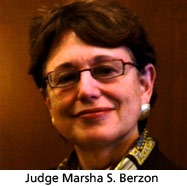
For Further Reading: Though Flyer is great, last week also brought the very disappointing Fourth Amendment / child porn decision in United States v. Krupa, 2011 WL 353212 (9th Cir. Feb. 7, 2011). In Krupa, a single Ninth Circuit judge (we believe) steers the Court far from its previous authority in Battershell. Id. at *2-*3. As dissenting Judge Berzon correctly complains, “The majority seems to imagine ‘probable cause’ as a cloud that follows certain people around, created by their idiosyncratic habits and irresponsible friends, and persisting even though the individuals are not suspected of any particular crime.” Id. at *4 (Berzon, J., dissenting).

Judge Berzon ends her dissent with a thoughtful reflection: “I cannot help but think that had this case involved anything but child pornography, it would come out differently. I fear that understandable abhorrence of this particular crime can infect judicial judgment. We would do well to remember that the protections of the Fourth Amendment do not depend on the nature of the suspected criminal activity, any more than they do on the race or gender of the suspect. And that is particularly so where the issue is the searching of personal computers, on which more and more extremely sensitive information is stored.” Id. at *8.

Judge Berzon is right: Krupa deserves en banc review.


Image of the Honorable Judge Sidney Thomas from http://billingsgazette.com/news/local/article_0ef0a836-53e8-11df-b237-001cc4c002e0.html The New Yorker's view of the World from http://mappery.com/maps/A-View-of-World-from-9th-Avenue-Map.mediumthumb.jpg


Steven Kalar, Senior Litigator N.D. Cal FPD. Website at www.ndcalfpd.org

.

.

Labels: , , , ,

Sunday, November 07, 2010

Case o' The Week: The Ninth Gets it Wright -- Federal Jurisdiction in Child Pornography Cases

Does a statute that makes it a federal crime to transport child pornography across state lines, require that the images actually cross state lines?

Um, yes
. United States v. Wright, 2010 WL 4345670 (9th Cir. Nov. 4, 2010), decision available here.

Players
: Important victory for D. Az. AFPDs Heather Williams and Brian Rademacher. Decision by Judge Milan Smith, concurrence by Judge Hug.

Facts: An FBI agent got onto a mIRC (Internet Relay Chat) and directly hooked into a a computer server later traced to Wright’s address. Id. at *1. The agent downloaded child porn, and Wright was charged with the “advertisement, transportation, and possession of child pornography.” Id. at 2. Because the FBI agent’s computer (in Arizona) linked directly to Wright’s computer (in Arizona), (albeit over the internet) the images did not move across state lines. Id. at *3.

Wright beat seven counts at trial. Id. (!?! - a remarkable victory - seven acquittals in a child porn trial!). One of the counts of conviction was transportation of child porn under 18 USC § 2252A (as it existed in 2003). Id.

Issue(s): “Whether section 2252A(a)(1)’s ‘in interstate . . . commerce’ language requires the government to prove that the images themselves traveled across state lines appears to be a question of first impression in this circuit. Wright’s principal argument is that the statute does so require.” Id. at *3 (emphasis added).

Held: “[O]ur precedent indicates that criminal statutes punishing the transmission of the relevant material ‘in interstate or foreign commerce’ require the material itself to cross state lines. Yet here, as the government concedes, none of the images Wright transported to Andrew’s computer left the state of Arizona. Indeed, none traveled outside the city of Tuscon.” Id. at *6. “[W]e hold that an interstate predicate act - here, Wright’s connection to the IRC network - does not provide a sufficient basis for federal jurisdiction under section 2252A(a)(1).” Id. at *9.

Of Note: Judge Milan Smith pens a terrific analysis of the legislative history of the federal child porn statute, and the jurisdictional requirements of the precise language used. The case is a huge win and should be required reading for anyone mulling a challenge to the “jurisdictional hook” of any statute. Note, however, that this is not a broad invalidation of the federal child porn statutes – Wright presents some pretty unique facts. The agent in Wright accessed the images using “mIRC:”a very specific file-sharing client that “linked” the two machines. That is a very different system than, for example, downloading images off of a web page, or e-mailing porn. Both of these methods would have almost certainly created a jurisdictional hook under the Wright analysis.

How to Use: AFPDs Williams & Rademacher are formidable defense duo, and this lengthy opinion wades through their many additional challenges – with some good language and results. On the jurisdictional front, Judge Smith rejects the government’s argument that any use of the internet is always enough provide the jurisdictional hook for a charge. Id. at *11. Along the way he also scolds the government that the mere use of a computer is also insufficient: “Whether the defendant transported child pornography by mail, by sea, or by computer, the government must still prove it crossed state lines.” Id. at *8.

Moreover, while the defense didn’t win on this argument, Judge Smith provides a very sympathetic and quotable discussion of the defense right to introduce FRE 404(b) evidence – even against absent witnesses. Id. at *20.

Finally, Wright will be the go-to case to reverse those tight-lipped D.J.’s who summarily deny defense motions with contested evidentiary issues, with no factual findings. Id. at *13. Silence may be golden, but it’ll earn a district court a quick remand when it means that the Ninth can’t conduct a meaningful review. Id. at *12-*13.

For Further Reading: The biggest practical impact of Wright is a disappointing discussion at the end of the opinion on the financial and time limitations on computer forensic review. Id. at *24-*25. Anyone undertaking defense computer forensic review – or paying for it – should read this section, and should worry about the costs that it will generate. The defense, it appears, was sandbagged on the eve of the Wright trial, and didn’t get a needed continuance to counter a new forensic theory. Id. Their complaint fell on deaf ears on appeal. How do we avoid this situation in future cases? Empty CJA coffers, pay for scorched-earth forensic analysis, and salt the appellate record when money and time is unfairly restricted. For an interesting article worrying about electronic evidence in criminal cases, see Daniel B. Garrie, & Daniel K. Gelb, E-Discovery in Criminal Cases: A Need for Specific Rules, available here.


Image of mIRC logo from http://www.mirc.com/


Steven Kalar, Senior Litigator N.D. Cal. FPD. Website at www.ndcalfpd.org


.

.

Labels: , , , , , ,

Sunday, September 19, 2010

Case o' The Week: One Shy - Search Guidelines Fall in C.D.T.

"[W]hat ever happened to the Fourth Amendment? Was it . . . repealed somehow?" United States v. Comprehensive Drug Testing, Inc., 2010 WL 352947 (9th Cir. Sept. 13, 2010) (Ord. amend. op. and denying rehearing en banc). at *13, order and amended opinion available here.

The other shoe finally drops on Justice's petition for super en banc, and everyone wins, and loses, a little.

Players:
Judges Graber (below left), Wardlaw (left), and Berzon (right), who concurred in the original en banc decision’s list of restrictions for computer searches, and then pulled back from those guidelines in response to DOJ’s petition for “super” rehearing en banc.

(Had one of these judges remained with the original majority, the guidelines now moved to the concurrence would have remained the majority opinion).

Facts: The government shopped jurisdictions, dodged limitations in search warrants, and searched thousands of drug urine-test records without a warrant under a dubious “plain view” theory. Id. at *1-*3. Three different district judges ordered the return of property (the records), some accused the government of “manipulation and misrepresentation.” Id. at *2; see more details here.

Over Judge Thomas’s vigorous and persuasive dissent, a Ninth three-judge panel reversed the district courts and upheld the searches.

In August of ‘09, an en banc panel lead by C.J. Kozinski issued a remarkable decision reversing the panel and setting forth guidelines for future computer searches. C.D.T., 2009 WL 2605378 (9th Cir. 2009) (en banc). Rome was unamused; then-Solicitor General Kagan sought “super” rehearing en banc (an unprecedented full-court rehearing). See blog describing petition here.

Issue(s): For all practical purposes, the real issue on the petition for super rehearing en banc was whether the Ninth would stand by the “prophylactic” guidelines for computer searches crafted by Chief Judge Kozinski.

Held: The Ninth blinked.

Judge Kozinski’s guidelines were moved from the majority en banc decision to a separate concurrence, and four judges joined the Chief's concurrence. Id. at *14.

As noted above, three judges withdrew from that part of the original en banc majority opinion, making Judge Kozinski’s guidelines one vote short of a majority decision. (A vestige of this switch is in the majority decision, when C.J. Kozinski refers to “updating” the old Tamura decision – but those updates are now relegated to a concurrence). Id. at *13.

Of Note: The C.D.T. computer-search guidelines – whether in a concurrence or not – are the next Fourth Amendment battlefield, and merit a strong defense from the Defense. Note that the tech-savvy judge who sparked this whole brouhaha, Judge Thomas, wasn’t drawn on this en banc panel. Judges Pregerson and Reinhardt also weren’t on this panel. Different times, and a slightly different panel, may vindicate Judge Kozinski’s approach.

Moreover, the Reluctant Trio – Judges Wardlaw, Berzon, and Graber – never say that these guidelines are wrong. If they were presented with these questions as controlling issues instead of prophylactic guidelines in a future case, they well could back the approach as well.

In sum, the principles controlling computer searches articulated by Chief Judge Kozinski still should be litigated as reasonable limitations on computer searches.

How to Use: While it is disappointing to lose the Kozinski guidelines as law, this still remains a great decision. Here are two gems in particular. First, the majority still endorses this wonderful proposition: “When, as here, the government comes into possession of evidence by circumventing or willfully disregarding limitations in a search warrant, is must not be allowed to benefit from its own wrongdoing by retaining the wrongfully obtained evidence or any fruits thereof. When the district court determines that the government has obtained the evidence through intentional wrongdoing – rather than through a technical or good faith mistake – it should order return of the property without the need for balancing that is applicable in the more ordinary case.” Id. at *10 (emphasis added). This is, albeit, in the context of a Rule 41 return of property, but it is a concept ripe for import into a Fourth Amendment analysis.

Second, the majority prospectively orders the government to disclose previous attempts to obtain evidence when it goes to other jurisdictions for search warrants or subpoenas. Id. at *11. That concept will be of particular use in multi-district investigations, such as big fraud, gang, or wiretap cases.

For Further Reading: For a much more-skeptical view of C.D.T. see Orin Kerr’s collection of posts at the Volokh Conspiracy, available here.


Image of the US Department of Justice from http://commons.wikimedia.org/wiki/File:Usdepartmentofjustice.jpg. Image of Judge Kim Wardlaw from http://law.pepperdine.edu/judicial-clerkship-institute/images/faculty/wardlaw.jpg . Image of Judge Berzon from http://www.thenewspaper.com/rlc/pix/mberzon.jpg . Image of Judge Graber from http://www.id.uscourts.gov/DistConf08/Photos/slidesTrudy%20Fouser%20Judge%20Graber%20&%20Judge%20Dale.html


Steven Kalar, Senior Litigator N.D. Cal FPD. Website at www.ndcalfpd.org

.

Labels: , , , ,

Sunday, December 20, 2009

Case o' The Week: "Super" En Banc Petition (or More Accurately, a Petition for Super En Banc)

The gaul of the Ninth Circuit: giving us the first appellate decision to deal with the realities of the Information Age, without first obtaining DOJ approval. United States v. Comprehensive Drug Testing, __ F.3d __, 2009 WL 2605378 (9th Cir. Aug. 31 2009) (en banc), decision available here.

Players: Solicitor General Elena Kagan, on behalf of Rome - er, the Department of Justice - seeking super rehearing en banc in the Ninth Circuit (rehearing by the entire Ninth Circuit Court of Appeals).

Facts: You’ll recall this fall we trumpeted the most technologically-savvy opinion on computer searches ever written: Chief Judge Kozinski’s en banc decision in Comprehensive Drug Testing (“CDT”). See blog here.

To recap, in CDT the ND Cal USAO had snagged a vast amount of private information from third parties, gleaned from computer searches that roamed far beyond the data originally sought.

Three district judges quashed later subpoenas based on this computer data, and peppered their quashals with allegations of government manipulation and misrepresentations. The original three-judge Ninth panel reversed the quashals, but the en banc reversed the panel and sustained the district courts. C.J. Kozinski ended the en banc CDT opinion by setting forth procedures with which the government should (must?) comply for future computer searches.

The government – and specifically, S.G. Kagan – has now sought, for the first time in history, a full rehearing en banc by the entire court of the Ninth Circuit.

Issue(s): Did the en banc panel “step[ ] outside of the proper role of an Article III court when it set forth detailed protocols that purport to bind, and that are being understood as binding, magistrate and district judges in future cases[?]” Brief for the United States in Support of Rehearing En Banc by the Full Court, at 2.

Held: “The court is considering whether it should grant panel or full-court rehearing in this matter and will issue an order granting or denying rehearing in due course.” Ord., Chief Judge Kozinski, Dec. 18, 2009.

Of Note: When Blakely was decided, DOJ cried the sky was falling and warned that sentencing would grind to a halt. Defendants, however, continued to be incarcerated with grim efficiency.

When Booker was decided, DOJ cried the sky was falling and concocted emergency measures to “save” the guidelines. Defendants, however, continued to be shuffled away to serve depressingly long terms, with barely a blip on the sentencing stats.

Given its track record with Blakely and Booker, Justice’s latest cry that the sky is falling after CDT merits a healthy skepticism.

The government’s super en banc petition frets that its investigations are off-track because of the CDT procedures. It does not reveal, however, that filter-teams have long been routinely used in white collar cases with little impact on conviction rates. DOJ neglects to disclose how many computer investigations have in fact gone forward using CDT procedures. The brief omits the CDT-like protocol that enlightened ND Cal magistrates have had in place since 2000, with no negative impact on computer searches or prosecutions. Finally, DOJ ignores new technology which can filter and focus computer searches in ways that were impossible even a decade ago, making the CDT procedures both realistic and workable. Let’s hope the Ninth recognizes that CDT is the wrong case for the very first super en banc.

How to Use: How to best use CDT has been the subject of much discussion in the ND Cal FPD and among the Northern District panel. Given the current procedural posture of the case, best to e-mail or call to discuss CDT issues.

For Further Reading: “The government has moved to further stay the mandate ‘through the disposition of [this court’s] consideration whether to grant en banc review and its en banc consideration of the case or, if [this court] denies en banc review, through the expiration of the time for filing a petition for a writ of certiorari, or, if a petition is filed, the disposition of such a petition for a writ of certiorari.’ Quite a mouthful, and wholly unnecessary. I have already stayed the mandate through the time for filing a timely petition for certiorari. What qualifies as timely is between the government and a higher authority.” Ord., Chief Judge Kozinski, Nov. 12, 2009.

Image of Asterix from http://www.coloriage.tv/dessincolo/Asterix.png

Steven Kalar, Senior Litigator N.D. Cal. FPD. Website at www.ndcalfpd.org

.

Labels: , , ,