Case o' The Week: Crazy Like a (Bipolar, Delusional) Fox - Brugnara, Edwards, and Faretta self-representation
Can one be a schmuck, and be mentally incompetent?
Not, apparently, in the Ninth.
United States v. Luke Brugnara, 2017 WL
1947893 (9th Cir. May 11, 2017), decision available here.
Players:
Decision by Judge Wallace, joined by Judge M. Smith and DJ Erickson.
Hard-fought appeal by ND Cal CJA attorney Dena Young.
 Facts: Brugnara, a San Francisco real estate tycoon, sought
fine art from a dealer. Id. at *1.
The art was delivered and stored in his garage, but payment never happened. (One
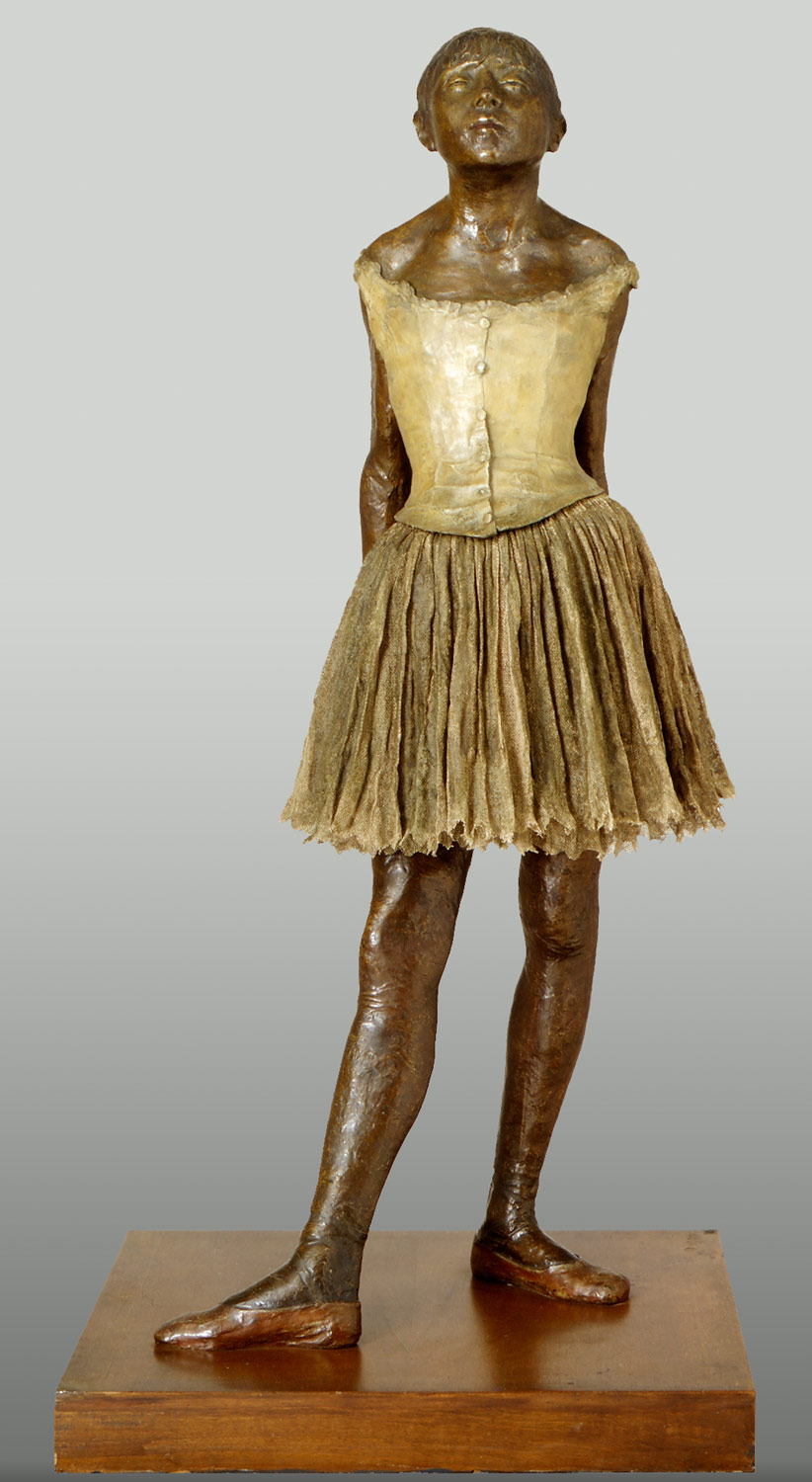
crate reportedly contained a statue of Edgar Degas’s “Little Dancer.” It has never
been found). Id. at *2.
Facts: Brugnara, a San Francisco real estate tycoon, sought
fine art from a dealer. Id. at *1.
The art was delivered and stored in his garage, but payment never happened. (One
crate reportedly contained a statue of Edgar Degas’s “Little Dancer.” It has never
been found). Id. at *2.
Brugnara was charged and incarcerated, but was
placed on “furlough” by the district judge -- permitting him to leave lock-up in
the federal building to review discovery and meet with his attorney.
He escaped. Id.
Later captured, Brugnara successfully moved to
represent himself. Id. “From the moment
the trial began, Brugnara’s behavior could be described as appalling.” Id. at *2.
During the third day of trial, advisory
counsel suggested a competency evaluation. That suggestion was rejected by the
district judge. Id. at *3.
During trial Brugnara earned over a dozen summary
contempt holdings, for a total of 471 custodial days. Id. at *3.
At sentencing new counsel was appointed. This CJA attorney promptly hired a psych. The psych opined, “Brugnara likely suffers from bipolar
disorder, delusional disorder, and narcissistic personality disorder.” Id. at *11.
 |
| Mr. Luke Brugnara |
Now armed with this report from a mental
health expert, defense counsel formally moved for a competency evaluation and a
hearing on Brugnara’s competency. Id.
at *4.
The motion was denied.
Brugnara
was sentenced to eighty-four months in custody. Id. at *4.
Issue(s): “[Brugnara] contends both that the district judge
should have terminated his self-representation when it became clear that he
could not control his behavior, and that the district judge should have held a
competency hearing, either sua sponte during trial or at counsel's request
during sentencing.” Id. at *10.
Held: “Throughout
the trial, [Brugnara] asked coherent questions and made rational arguments—the
only flaw was that his legal theory of the case was wrong. At most, Brugnara’s
afflictions, such as they are, make him rude and impulsive; they do not rise to
the level of a ‘severe mental illness’ precluding competent self-representation.
Edwards, 554 U.S. at 178. The
district court's finding that Brugnara was competent to represent himself was .
. . not clearly erroneous . . . . Accordingly, the district court did not deny
Brugnara a fair trial by allowing him to represent himself for the duration of the
proceeding.” Id. at *11.
“We
hold that a reasonable judge, faced with this record, would not have found it
necessary to doubt Brugnara’s competency. On the contrary, the evidence reveals
that Brugnara’s obstinate and pugnacious behavior was nothing more than a
deliberate attempt to circumvent the court’s rules. This makes him a nuisance,
not incompetent. The district court reached a similar determination, and did not
err in doing so. There was therefore no need to hold a competency hearing sua
sponte during trial.” Id. at *12.
Of Note: In 2010, the Ninth upheld convictions resulting in 20+
year sentences for a pair of Faretta “fools.”
United States v. Johnson, 610 F.3d1138 (9th Cir. 2010), see also blog
entry here.
The Johnson case arose out of the same NorCal district court that
presided over Brugnara. See id.
Seven years later, Judge Wallace expressly
relies on the Johnson decision in Brugnara, to uphold the (same) district court’s
refusal to order a competency evaluation of this mentally-ill Faretta defendant. 2017 WL 1947893, at *11.
Judge
Reinhart predicted this outcome, many years ago. United States v. Farhad, 190 F.3d 1097, 1107 (9th Cir. 1999) (J. Reinhard, concurring). The Ninth should revisit Judge Reinhart's prescient Faretta warnings, and revisit
this deeply troubling Johnson / Brugnara line of Faretta / Edwards authority.
How to Use:
The lesson of Brugnara? When your crazy
client gets that self-representation urge, hurry to file a written § 4241(a) competency motion before you are fired. (NB: In Brugnara, Judge Wallace discounts
advisory counsel’s suggestion for a competency evaluation made during trial,
because “advisory counsel was not conducting [Brugnara’s] defense.” 2017 WL 1947893, at *12).
We CJA attorneys are a dime a dozen: we can
be replaced if this competency motion damages your relationship with your
client. Without this timely motion for a competency eval by defense counsel in the record, however, this Brugnara tragedy is the outcome.
For Further
Reading: What are standby /advisory counsel’s ethical
duties, while watching the self-immolation of an incompetent Faretta client?
For a thoughtful
discussion of this ethical conundrum, see Charles Sevilla ethical discussion here.
Image
of Degas’ “The Little Dancer” from http://www.metmuseum.org/toah/images/hb/hb_29.100.370.jpg
Image
of Mr. Luke Brugnara from http://cdn.abclocal.go.com/content/kgo/images/cms/1043192_1280x720.jpg
Steven
Kalar, Federal Public Defender N.D. Cal. Website at www.ndcalfpd.org
.
Labels: 18 USC 4241, Advisory Counsel, Competency, Edwards and Pro Se, Ethics, Faretta, Mental Health, Standby Counsel, Wallace
posted by Steve Kalar at 5/14/2017 10:57:00 AM
0 comments