Saturday, April 06, 2019

Case o' The Week: Protection sans Objection - Haines and FRE 412 Evidence


  The Federal Rules of Evidence cannot be used as both a sword and a shield.

  (By the defense).
United States v. Haines, 918 F.3d 694 (9th Cir. Mar. 14, 2019), decision available here.

Players: Decision by visiting District Judge Adelman, joined by Judges Wallace and Friedland.  

Left to right, the Honorable Judges Wallace and Friedland, and the Honorable District Judge Adelman
Facts: Haines and his friend King were charged with transporting two minor females from Nevada to California to work as prostitutes. Id. at 696. Over time, the girl alleged to have worked for Haines changed her story to the Feds. By trial, she testified that she did not prostitute for Haines and that her grand jury testimony was false. Id. Instead, she testified that she worked independently. Id.
   At trial, Haines attempted to question the girl about her prior prostitution activities (that did not involve a pimp), arguing that this was relevant to the question of whether he recruited her or encouraged her to engage in prostitution. Id. The district court excluded this testimony under Federal Rule of Evidence 412, the “rape shield” rule. Id.
  Haines was convicted, and appealed.

Issue(s): “Haines argues that evidence of J.C.’s prior prostitution activities should have been admitted under the exception to Rule 412 for 'evidence whose exclusion would violate the defendant's constitutional rights'—here, his due process right to present a complete defense and his Sixth Amendment right to confront witnesses.” Id. at 697.

Held: “[I]n cases involving adult victims forced or coerced into prostitution, courts have rejected such arguments, concluding that evidence of other prostitution activity has little or no relevance. Courts have reasoned that just because a victim agreed to engage in sex for money on other occasions does not mean she consented to, e.g., being beaten or having her earnings confiscated by the defendant.” Id. at 697-89 (citations omitted).
  “Haines cites no case holding that a defense such as the one he sought to present here triggers the exception in Rule 412. And we see no reason to depart from the persuasive authorities set forth above that held to the contrary.” Id. at 698-99.

Of Note: The unusual fact in Haines was that the female victim-witness for this Fed. R. Evid. 412 brouhaha was putatively a defense witness. She had recanted her grand jury testimony by the time of trial (after a jailhouse call from Haines, unfortunately). Atypically, the witness wasn’t objecting to the admission of this prior-prostitution evidence by Haines. The government was therefore using Rule 412 not as a shield, to protect a witness’s privacy, but as a sword, to prevent a defendant from eliciting favorable testimony “from a recalcitrant witness.” Id. at 699.
  No matter, concluded the Ninth, in a disappointing limitation on a defendant’s constitutional right to present a defense. “[A]llowing the victim’s wishes to control opens the door to mischief.” Id.      

How to Use: The narrow window left open on this type of “prior prostitution” evidence is when the government “opens the door” by suggesting that an alleged pimp introduced a minor to prostitution (that she was “an innocent lamb led to the slaughter).” Id. at 700. The Ninth holds this door wasn’t opened in the Haines case, in part because the district court warned the government against this line of evidence and argument.  The Court seems to recognize, however, that this type of evidence could be admissible if made relevant by the government’s approach.
                                               
For Further Reading: On March 26, the Senate confirmed President Trump’s nomination of the Honorable Magistrate Judge Bridget Bade, of Phoenix, to the Ninth Circuit Court of Appeals. See press release here
  Judge Bade will be joining two confirmed Ninth Circuit Trump nominees: the Honorable Judge Mark Bennett of Hawai’i, and the Honorable Judge Ryan Nelson of Idaho. See Ninth Circuit chart here
 Two additional Ninth nominees cleared the Senate Judiciary Committee on April 4, 2019: Mr. Daniel Collins, of L.A.’s Munger, Tolles & Olson, and Mr. Daniel Lee, of L.A.’s Jenner & Block. See article here


Image of (skeptical) United States v. Sha-Ron Haines panel from https://www.youtube.com/watch?v=akIGK_oYmIw


Steven Kalar, Federal Public Defender N.D. Cal. Website at www.ndcalfpd.org


.

Labels: , , , , ,

Sunday, January 20, 2019

Case o' The Week: The Fourth in the Ninth Goes Back to the Future - Lamar Johnson and Search "Incident" to Arrest


A search “incident” to arrest can happen before an arrest, and need not be supported by probable cause for the actual arrest that followed the search that was “incident” to arrest.


(And you thought the space-time quirks of “Back to the Future” were confusing.)
  United States v. Lamar Johnson, 2019 WL 137929 (9th Cir. Jan. 9, 2019), decision available here.

Players: Decision by Judge Wallace, joined by Judge Rawlinson.
 Compelling concurrence by Judge Watford.
  Hard-fought appeal by Oakland AFPD Robin Packel, Northern District of California.  

Hon. Judge J. Clifford Wallace
Facts: Johnson was stopped while driving. Id. at *2. The cop claimed he then smelled marijuana. Id. The officer asked for registration and insurance: Johnson explained he was borrowing the car and rummaged through the glovebox. Id. The officer opined this rummaging was inconsistent with how someone would (sincerely?) dig through a glove box. Id. The officer learned Johnson had been arrested for parole violations. Id. He asked Johnson to step out of the car, searched him, discovered he was wearing a bulletproof vest, and arrested him for being a felon in possession of body armor. Id. A later car search revealed a gun, drugs, scales, and plastic bags. Id.
  The defense motion to suppress was denied.
  This was the Northern District of California, so there was no conditional plea -- the defense and the District Court were forced to go through the rigamarole of a stip facts bench trial to preserve an important Fourth Amendment issue for appeal. Id. at *3.

Issue(s): “Johnson argues that the warrantless search of his person, [and] the warrantless search of his car . . . violated the Fourth Amendment.” Id. at *3. “[A] search, incident to a lawful arrest, does not necessarily need to follow the arrest to comport with the Fourth Amendment.” Id. “[W]hen the officer’s known facts provide probable cause to arrest for an offense, the officer’s subjective reason for making the arrest need not be the criminal offense as to which the known facts provide probable cause.” Id. at *3 (internal quotations and citations omitted).
  “The question presented in this case is whether these two well-established principles may coincide without violating the Fourth Amendment. Johnson contends that to do so would create a ‘search incident to probable cause’ rule, allowing officers to search a person whenever probable cause to arrest exists. Johnson argues that the existence of such a rule will cause widespread fishing expeditions that are pre-textual and discriminatory.” Id. at *4.

Held: “[T]he precise crime for which an officer has probable cause is irrelevant. . . . So long as the search was incident to and preceding a lawful arrest—which is to say that probable cause to arrest existed and the search and arrest are roughly contemporaneous, . . . the arresting officer’s subjective crime of arrest need not have been the crime for which probable cause existed.” Id. at *4.
  “We . . . join our sister circuits in holding that Knowles does not prevent a search incident to a lawful arrest from occurring before the arrest itself, even if the crime of arrest is different from the crime for which probable cause existed.” Id. at *4 (emphases added).

Of Note: Under Lamar Johnson, an officer can now:
  1) search "incident" to arrest before an arrest, and
  2) that search can later be upheld, even if the probable cause wasn’t for the actual arrest that (followed) the search “incident” to arrest!
  Huh?
Hon. Judge Paul Watford
  In a well-reasoned concurrence, Judge Watford politely tears apart this troubling holding. Id. at *7 *(Watford, J., concurring). He explains that he is forced to concur because of the Ninth’s 2004 decision in Smith. Id. Judge Watford persuasively explains, however, that the Smith decision is “doctrinally unsound” and not “consistent” with Supreme Court precedents. Id. at *9.
  The concurrence ends with a trenchant understatement: “it is no secret that people of color are disproportionate victims of this type of scrutiny.” Id. at *10. Judge Watford correctly warns, “So long as Smith remains the law of our circuit, it will only exacerbate this problem.” Id.
  Judge Watford is right - Smith (and Johnson) should go en banc. This dangerous Fourth Amendment decision, and this line of Circuit authority that has strayed far afield from SCOTUS precedent, merits a close second look by the en banc court.

How to Use: Don’t concede a Fourth challenge because of Lamar Johnson: preserve. La Lucha continues.
                                               
For Further Reading: Whither the Judiciary (and FPD) as the shutdown staggers into uncharted territory? For an article that accurately describes the looming crisis, see a helpful NYT piece here


Image of Marty McFly of “Back to the Future” from https://memegenerator.net/instance/68739897/marty-mcfly-i-think-i-got-confused

Image of the Honorable J. Clifford Wallace from https://wallaceinnsd.org/our-founder/

Image of the Honorable Judge Paul Watford from https://livzey.com/corporate/portraiture/attachment/judgewatford_9960/


Steven Kalar, Federal Public Defender N.D. Cal. Website at www.ndcalfpd.org
.


Labels: , , , , ,

Sunday, May 14, 2017

Case o' The Week: Crazy Like a (Bipolar, Delusional) Fox - Brugnara, Edwards, and Faretta self-representation


 Can one be a schmuck, and be mentally incompetent?
 Not, apparently, in the Ninth.
United States v. Luke Brugnara, 2017 WL 1947893 (9th Cir. May 11, 2017), decision available here.

Players: Decision by Judge Wallace, joined by Judge M. Smith and DJ Erickson. 
  Hard-fought appeal by ND Cal CJA attorney Dena Young.

Facts: Brugnara, a San Francisco real estate tycoon, sought fine art from a dealer. Id. at *1. The art was delivered and stored in his garage, but payment never happened. (One crate reportedly contained a statue of Edgar Degas’s “Little Dancer.” It has never been found). Id. at *2.
   Brugnara was charged and incarcerated, but was placed on “furlough” by the district judge -- permitting him to leave lock-up in the federal building to review discovery and meet with his attorney.
 He escaped. Id.
  Later captured, Brugnara successfully moved to represent himself. Id. “From the moment the trial began, Brugnara’s behavior could be described as appalling.” Id. at *2.
  During the third day of trial, advisory counsel suggested a competency evaluation. That suggestion was rejected by the district judge. Id. at *3.
  During trial Brugnara earned over a dozen summary contempt holdings, for a total of 471 custodial days. Id. at *3.
  At sentencing new counsel was appointed. This CJA attorney promptly hired a psych. The psych opined, “Brugnara likely suffers from bipolar disorder, delusional disorder, and narcissistic personality disorder.” Id. at *11.
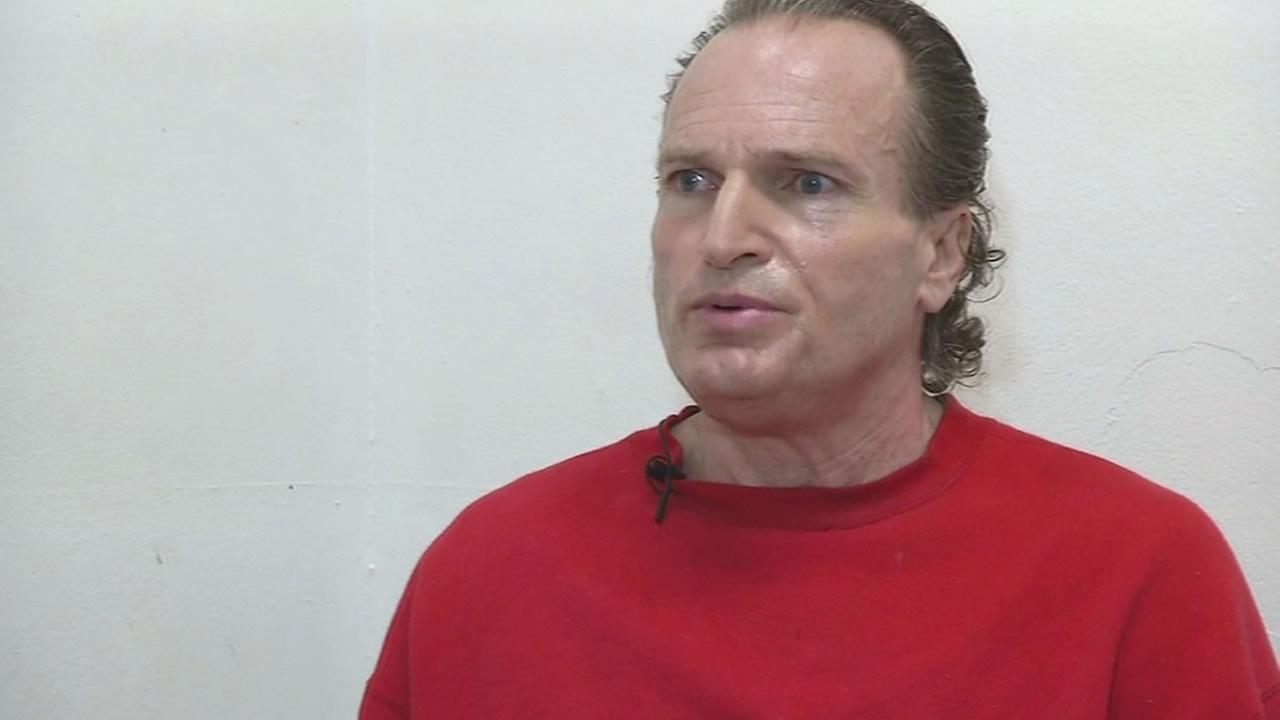
Mr. Luke Brugnara
  Now armed with this report from a mental health expert, defense counsel formally moved for a competency evaluation and a hearing on Brugnara’s competency. Id. at *4.
  The motion was denied.
  Brugnara was sentenced to eighty-four months in custody. Id. at *4.

Issue(s): “[Brugnara] contends both that the district judge should have terminated his self-representation when it became clear that he could not control his behavior, and that the district judge should have held a competency hearing, either sua sponte during trial or at counsel's request during sentencing.” Id. at *10.

Held: “Throughout the trial, [Brugnara] asked coherent questions and made rational arguments—the only flaw was that his legal theory of the case was wrong. At most, Brugnara’s afflictions, such as they are, make him rude and impulsive; they do not rise to the level of a ‘severe mental illness’ precluding competent self-representation. Edwards, 554 U.S. at 178. The district court's finding that Brugnara was competent to represent himself was . . . not clearly erroneous . . . . Accordingly, the district court did not deny Brugnara a fair trial by allowing him to represent himself for the duration of the proceeding.” Id. at *11.
  “We hold that a reasonable judge, faced with this record, would not have found it necessary to doubt Brugnara’s competency. On the contrary, the evidence reveals that Brugnara’s obstinate and pugnacious behavior was nothing more than a deliberate attempt to circumvent the court’s rules. This makes him a nuisance, not incompetent. The district court reached a similar determination, and did not err in doing so. There was therefore no need to hold a competency hearing sua sponte during trial.” Id. at *12.

Of Note: In 2010, the Ninth upheld convictions resulting in 20+ year sentences for a pair of Faretta “fools.” United States v. Johnson, 610 F.3d1138 (9th Cir. 2010), see also blog entry here.
  The Johnson case arose out of the same NorCal district court that presided over Brugnara. See id.
  Seven years later, Judge Wallace expressly relies on the Johnson decision in Brugnara, to uphold the (same) district court’s refusal to order a competency evaluation of this mentally-ill Faretta defendant. 2017 WL 1947893, at *11.
  Judge Reinhart predicted this outcome, many years ago. United States v. Farhad, 190 F.3d 1097, 1107 (9th Cir. 1999) (J. Reinhard, concurring). The Ninth should revisit Judge Reinhart's prescient Faretta warnings, and revisit this deeply troubling Johnson / Brugnara line of Faretta / Edwards authority.

How to Use: The lesson of Brugnara? When your crazy client gets that self-representation urge, hurry to file a written § 4241(a) competency motion before you are fired. (NB: In Brugnara, Judge Wallace discounts advisory counsel’s suggestion for a competency evaluation made during trial, because “advisory counsel was not conducting [Brugnara’s] defense.”   2017 WL 1947893, at *12).
  We CJA attorneys are a dime a dozen: we can be replaced if this competency motion damages your relationship with your client. Without this timely motion for a competency eval by defense counsel in the record, however, this Brugnara tragedy is the outcome.
                                               
For Further Reading: What are standby /advisory counsel’s ethical duties, while watching the self-immolation of an incompetent Faretta client? 
  For a thoughtful discussion of this ethical conundrum, see Charles Sevilla ethical discussion here.


Image of Degas’ “The Little Dancer” from http://www.metmuseum.org/toah/images/hb/hb_29.100.370.jpg


Steven Kalar, Federal Public Defender N.D. Cal. Website at www.ndcalfpd.org

.

Labels: , , , , , , , ,

Saturday, November 26, 2016

Case o' The Week: Time for Land's End - McCandless and Bail Pending Habeas Resolution


Black Friday and Cyber Monday -- a fine time for the Ninth to be mulling Land's end.
United States v. McCandless, 2016 WL 6647768 (9th Cir. Nov. 10, 2016), decision available here.

Players: Per curiam decision with Judges Wallace, Farris, and Watford. Hard-fought appeal by Hawaii Federal Public Defender Peter Wolff and First Assistant Alexander Silvert.

Facts: McCandless, a Career Offender, is serving a 145-month sentence. Id. at *1. He received a § 5K1.1 departure on his original sentence: if the same percentage reduction was applied to his post-Johnson sentence, his term would be an (already-served) 71 months. Id. The district court stayed its decision on McCandless’s Johnson habeas petition pending Beckles. Id. at *2. The court then denied McCandless’s motion for bail.

Issue(s): Is a district court’s order denying bail pending resolution of a habeas decision a final decision subject to review under 28U.S.C. § 1291, or otherwise appealable under the collateral order doctrine?

Held: “Our precedent holds that a district court's order denying bail pending resolution of a habeas petition is not a final decision subject to review under 28 U.S.C. § 1291 and is not otherwise appealable under the collateral order doctrine. Land v. Deeds, 878 F.2d 318, 318 (9th Cir. 1989) (per curiam).” Id. at *2.

Of Note: Having found the bail order was not appealable, the panel construed this case as a petition for a writ of mandamus – then denied it under the high mandamus standard. Id. at *2 (discussing Bauman’s "exceptional circumstances amounting to a judicial usurpation of power” standard). The problem, however, was the fundamental threshold issue -- the appealability of the district court's bail order.
  The Ninth, respectfully, has it wrong.
  The panel itself flagged this problem, conceding that the Ninth is really alone on a “lopsided split”: six other circuits have all held that an order denying bail pending resolution of a habeas petition is appealable. Id. at *2 & n.1. 
  What Ninth decision handcuffed this three-judge panel and forced this outcome? Land, a dusty two-paragraph opinion, where the habeas petitioner does not appear to have been represented. Ironically, the Ninth itself has parted ways with the gist of Land, correctly holding that the denial of bail in connection with probation revocation proceedings is appealable under the collateral order doctrine. See United States v. Loya, 23 F.3d 1529,1530 n.1 (9th Cir. 1994).
  McCandless should go en banc, the Court should overrule Land, and the Ninth should end its lonely outlier status on this important issue.

How to Use: For Johnson warriors watching clients overserve illegal sentences while stays stall for Beckles, McCandless is a discouraging outcome. Even under the tough mandamus standard, however, hope remains.
  McCandless argued that an original § 5K1.1 reduction, applied to his post-Johnson sentence, would have meant that he was overserving his custodial term. Id. at *3. The Ninth rejected that argument as “entirely speculative.” Id. 
   We have no shortage, however, of Johnson petitioners who are currently overserving their vanilla Guideline terms, when the correct post-Johnson calcs are applied. If your client is overserving a post-Johnson guideline term (without departures or variances), don’t let McCandless dissuade you from bringing a mandamus petition on a bail denial. Even if the Ninth doesn’t correct its Land precedent on the appealability of bail orders, there still may be mandamus hope for a subset of petitioners with “clean” Johnson overserving claims.
                                               
For Further Reading: District courts should not punt on habeas decisions, staying cases while SCOTUS lumbers towards its Beckles decision. So says the Tenth Circuit in a string of recent enlightened decisions. See e.g., United States v. Smith, 2016 WL 6609499 (10th Cir. Nov. 9, 2016) (mem.).
  That was, we thought, also the longstanding Ninth rule, based on a thoughtful opinion penned by Judge Thompson: United States v. Yong, 208 F.3d 1116,1121 (9th Cir. 2000) (“The writ of habeas corpus, challenging illegality of detention, is reduced to a sham if ... trial courts do not act within a reasonable time . . . A long stay also threatens to create the perception that courts are more concerned with efficient trial management than with the vindication of constitutional rights.”) (quotations and citations omitted).
  Sadly, and despite Yong, the Ninth has proven far more tolerant of stays than the Tenth.  See, e.g., United States v. Dunlap, No. 16-16271 (Oct. 20, 2016) (Ord.) (“This appeal is dismissed for lack of jurisdiction because the district court’s order staying proceedings pending the Supreme Court’s decision in Beckles v. United States is not appealable as a final judgment or as an order that comes within the collateral order doctrine.”)
   How many petitioners will overserve unlawful terms, as petitions are back-burnered while Beckles is mulled by the Supreme Court? Law students looking for a Note subject should take a close look at the Johnson litigation experience. As Judge Thompson correctly predicted in Yong, it’s tough to vindicate constitutional rights when petitioners can’t pry decisions from the federal courts.


Steven Kalar, Federal Public Defender N.D. Cal. Website at www.ndcalfpd.org


.
.

Labels: , , , , , , ,