Sunday, May 14, 2017

Case o' The Week: Crazy Like a (Bipolar, Delusional) Fox - Brugnara, Edwards, and Faretta self-representation


 Can one be a schmuck, and be mentally incompetent?
 Not, apparently, in the Ninth.
United States v. Luke Brugnara, 2017 WL 1947893 (9th Cir. May 11, 2017), decision available here.

Players: Decision by Judge Wallace, joined by Judge M. Smith and DJ Erickson. 
  Hard-fought appeal by ND Cal CJA attorney Dena Young.

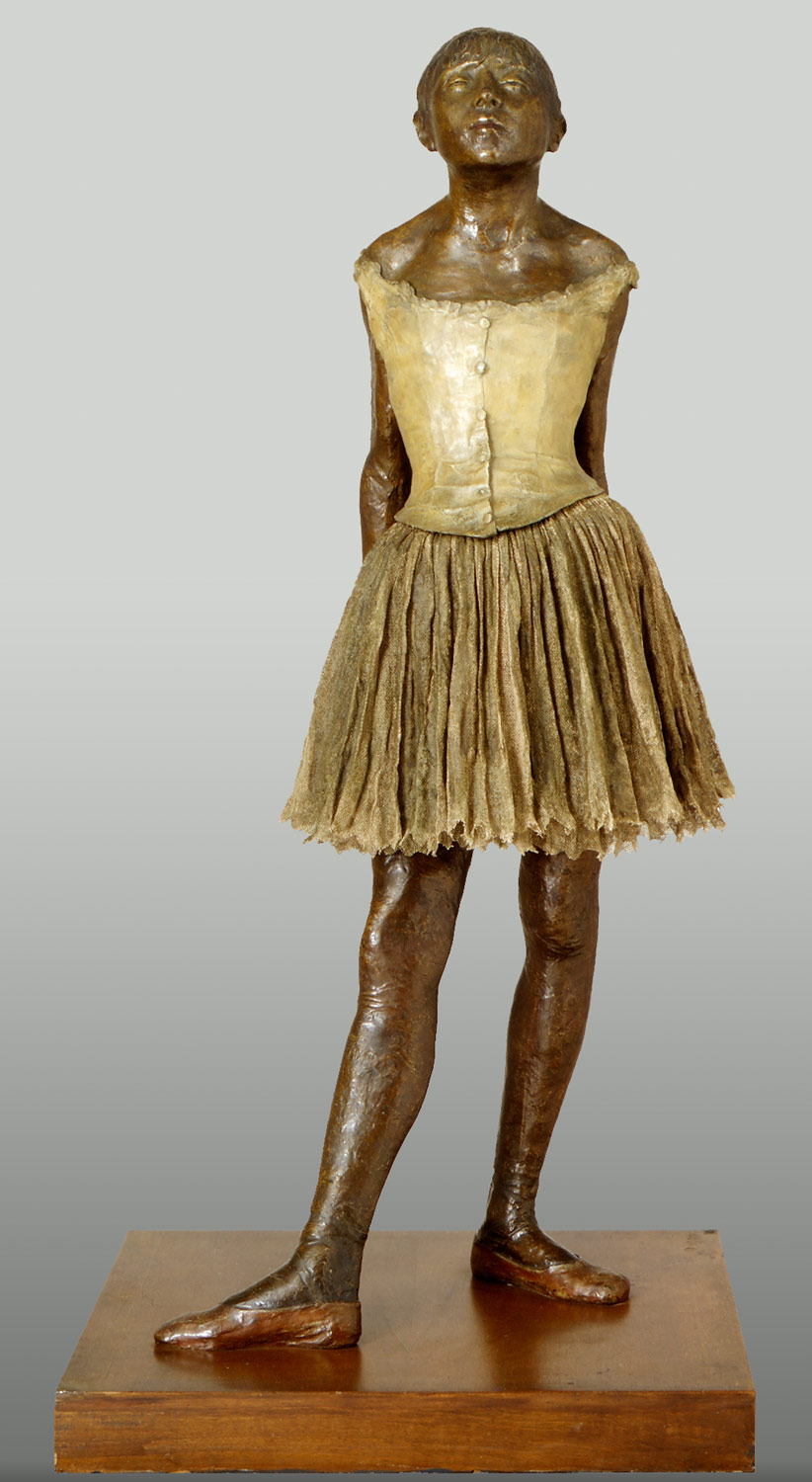
Facts: Brugnara, a San Francisco real estate tycoon, sought fine art from a dealer. Id. at *1. The art was delivered and stored in his garage, but payment never happened. (One crate reportedly contained a statue of Edgar Degas’s “Little Dancer.” It has never been found). Id. at *2.
   Brugnara was charged and incarcerated, but was placed on “furlough” by the district judge -- permitting him to leave lock-up in the federal building to review discovery and meet with his attorney.
 He escaped. Id.
  Later captured, Brugnara successfully moved to represent himself. Id. “From the moment the trial began, Brugnara’s behavior could be described as appalling.” Id. at *2.
  During the third day of trial, advisory counsel suggested a competency evaluation. That suggestion was rejected by the district judge. Id. at *3.
  During trial Brugnara earned over a dozen summary contempt holdings, for a total of 471 custodial days. Id. at *3.
  At sentencing new counsel was appointed. This CJA attorney promptly hired a psych. The psych opined, “Brugnara likely suffers from bipolar disorder, delusional disorder, and narcissistic personality disorder.” Id. at *11.
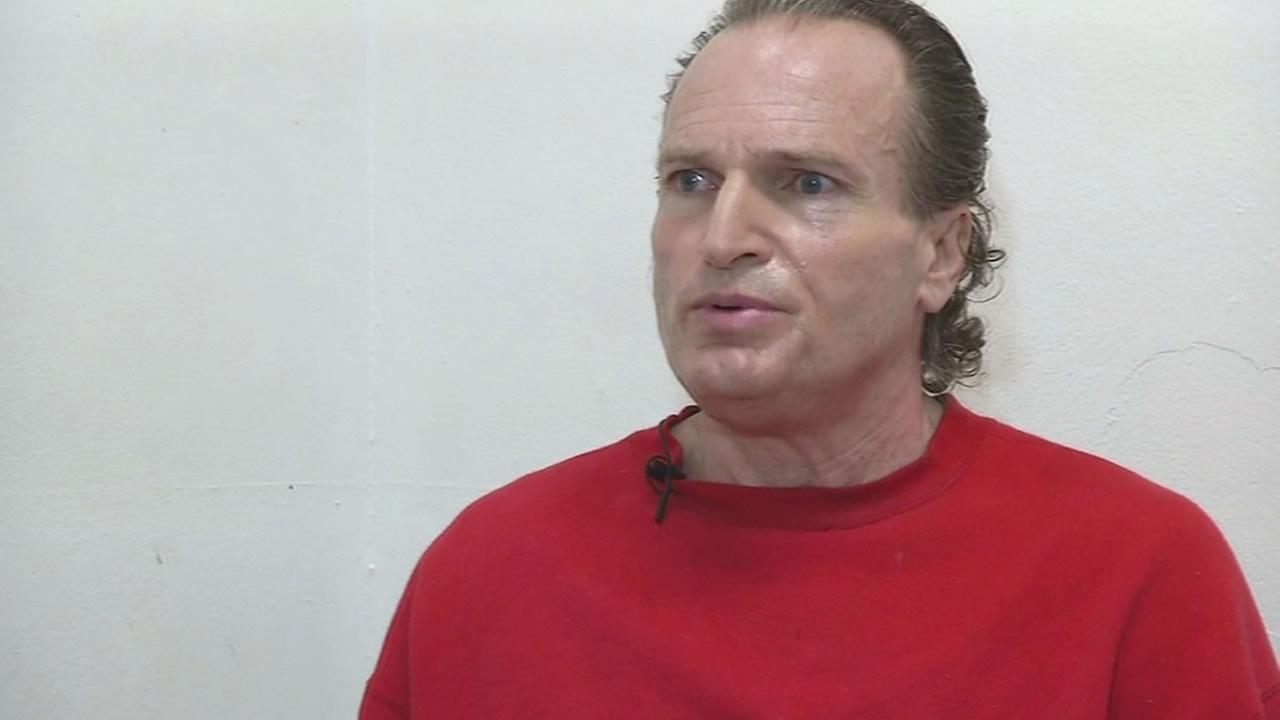
Mr. Luke Brugnara
  Now armed with this report from a mental health expert, defense counsel formally moved for a competency evaluation and a hearing on Brugnara’s competency. Id. at *4.
  The motion was denied.
  Brugnara was sentenced to eighty-four months in custody. Id. at *4.

Issue(s): “[Brugnara] contends both that the district judge should have terminated his self-representation when it became clear that he could not control his behavior, and that the district judge should have held a competency hearing, either sua sponte during trial or at counsel's request during sentencing.” Id. at *10.

Held: “Throughout the trial, [Brugnara] asked coherent questions and made rational arguments—the only flaw was that his legal theory of the case was wrong. At most, Brugnara’s afflictions, such as they are, make him rude and impulsive; they do not rise to the level of a ‘severe mental illness’ precluding competent self-representation. Edwards, 554 U.S. at 178. The district court's finding that Brugnara was competent to represent himself was . . . not clearly erroneous . . . . Accordingly, the district court did not deny Brugnara a fair trial by allowing him to represent himself for the duration of the proceeding.” Id. at *11.
  “We hold that a reasonable judge, faced with this record, would not have found it necessary to doubt Brugnara’s competency. On the contrary, the evidence reveals that Brugnara’s obstinate and pugnacious behavior was nothing more than a deliberate attempt to circumvent the court’s rules. This makes him a nuisance, not incompetent. The district court reached a similar determination, and did not err in doing so. There was therefore no need to hold a competency hearing sua sponte during trial.” Id. at *12.

Of Note: In 2010, the Ninth upheld convictions resulting in 20+ year sentences for a pair of Faretta “fools.” United States v. Johnson, 610 F.3d1138 (9th Cir. 2010), see also blog entry here.
  The Johnson case arose out of the same NorCal district court that presided over Brugnara. See id.
  Seven years later, Judge Wallace expressly relies on the Johnson decision in Brugnara, to uphold the (same) district court’s refusal to order a competency evaluation of this mentally-ill Faretta defendant. 2017 WL 1947893, at *11.
  Judge Reinhart predicted this outcome, many years ago. United States v. Farhad, 190 F.3d 1097, 1107 (9th Cir. 1999) (J. Reinhard, concurring). The Ninth should revisit Judge Reinhart's prescient Faretta warnings, and revisit this deeply troubling Johnson / Brugnara line of Faretta / Edwards authority.

How to Use: The lesson of Brugnara? When your crazy client gets that self-representation urge, hurry to file a written § 4241(a) competency motion before you are fired. (NB: In Brugnara, Judge Wallace discounts advisory counsel’s suggestion for a competency evaluation made during trial, because “advisory counsel was not conducting [Brugnara’s] defense.”   2017 WL 1947893, at *12).
  We CJA attorneys are a dime a dozen: we can be replaced if this competency motion damages your relationship with your client. Without this timely motion for a competency eval by defense counsel in the record, however, this Brugnara tragedy is the outcome.
                                               
For Further Reading: What are standby /advisory counsel’s ethical duties, while watching the self-immolation of an incompetent Faretta client? 
  For a thoughtful discussion of this ethical conundrum, see Charles Sevilla ethical discussion here.


Image of Degas’ “The Little Dancer” from http://www.metmuseum.org/toah/images/hb/hb_29.100.370.jpg


Steven Kalar, Federal Public Defender N.D. Cal. Website at www.ndcalfpd.org

.

Labels: , , , , , , , ,

Monday, July 12, 2010

Case o' The Week: OK to "Go Down in Flames" - Johnson and Pro Se Representation

Turns out there are 300 good reasons not to go pro se (with 15% off for good time). United States v. Johnson, _ F.3d _, 2010 WL 2653221 (9th Cir. July 6, 2010), decision available here.

Players: Decision by Judge Silverman, upholding N.D. Cal. District Judge Alsup (right).

Facts: Johnson and Scott were charged with mail fraud arising from their “debt-elimination” business: a scheme that involved creating trusts, making goofy demands to the mortgage-holding banks, property-recordings purporting to wipe out the debt, and concluding with suing the banks when the homes went into foreclosure. Id. at *1. These civil suits against the banks wound up in front of Judge Alsup. Id. at *2.

He was unimpressed.

Judge Alsup dismissed all the civil suits, sanctioned the defendants’ attorney, and referred the men to the United States Attorney’s office. Id. at *1. After the pair were indicted the criminal case was related back to Judge Alsup. Id. at *1. (In a separate hearing, Judge Illston denied the defendants’ recusal motion). Id. at *2.

The defendants refused appointed counsel and asked to represent themselves. Id. at *2. The court had the two men shrunk; the shrink reported there was no indication of mental disorder. Id. at *3. After several hearings where he “practically begged” the defendants to accept counsel, id. at *1, Judge Alsup found the pair competent to represent themselves. They did so in a month-long trial and were convicted on thirty-five counts. Id. at *4.

Issue(s): “[The defendants] argue that the district court should not have permitted them to represent themselves. First, they argue under Faretta . . . that their self-representation should have been terminated because their own courtroom behavior rendered their trial unfair. Second, they argue that under Indiana v. Edwards, 554 U.S. 164 . . . (2008), regardless of whether their behavior required termination under Faretta, they were in fact not competent to continue representing themselves.” Id. at *4.

Held: 1. “The defendants’ courtroom behavior, although eccentric at times, would not have justified, let alone required, the involuntary deprivation of their constitutional right to represent themselves.” Id. at *5.

2. “[T]he district court conducted three Faretta hearings spanning several days in which he repeatedly and thoroughly advised the defendants of their right to counsel. the pitfalls of self-representation, and their right to change their minds. The defendants unequivocally demonstrated their understanding of the situation and their adamant desire to represent themselves, as was their right. They were examined by a psychiatrist and found to be fine. In the absence of any mental illness or uncontrollable behavior, they had the right to present their unorthodox defenses and argue their theories to the bitter end.” Id. at *8.

Of Note: “The record clearly shows that the defendants are fools, but that is not the same as being incompetent.” Id. at *1. An opinion that starts with that observation is likely to go downhill from there. If you can get past wincing as pro se defendants get hammered, Johnson is actually a instructive case. It is new entry in the tricky spectrum of cases that stretch from competency to go to trial, to competency to represent oneself. After the Supreme Court’s decision in Edwards, those are different and distinct standards of competency. Judge Silverman goes through two post-Edwards Ninth decisions and discusses what those standards mean. Id. at *5.

For the tragic client who is “competent” enough to face a trial, but may be too mentally ill for him or her to go pro se, Johnson is a good place to start.

How to Use: While Johnson is primarily a Faretta / Edwards case, there’s an interesting little discussion on the recusal of a criminal judge who has previously presided over civil proceedings. Id. at *7-*8. Remember the “elephant and elephant gun” aphorism in the context of recusals? Johnson reminds us that a district judge’s history with a case in civil proceedings (even in proceedings that ended badly) isn’t an elephant gun when the criminal charges are filed.

For Further Reading: How much time did these pro se lads get at sentencing? Twenty-one and twenty-five years! (Though these defendants’ courtroom antics are recounted in Johnson, their sentences are conspicuously omitted).

For a compelling criticism of the injustice of the Faretta “right,” see Judge Reinhardt’s attack in United States v. Farhad, 190 F.3d 1097, 1107 (9th Cir. 1999) (Reinhardt, J., concurring specially) (“[T]he right to self-representation has now been extended to the point that it frequently, though not always, conflicts squarely and inherently with the right to a fair trial.”)


Image of the Honorable William A. Alsup fromhttp://www.ce9.uscourts.gov/jc2008/speakers.html

Steven Kalar, Senior Litigator N.D. Cal. FPD. Website at www.ndcalfpd.org

.

Labels: , , ,

Monday, March 30, 2009

Case o' The Week: Fewer "Fools for a Client," Ferguson, Faretta, and Self-Representation

Not crazy enough to be declared incompetent to face criminal charges, but too wacky to defend oneself at trial? The Ninth recites the new Supreme Court standard for this too-frequent situation, in United States v. Ferguson, No. 07-50096, 2009 WL 792485 (9th Cir. Mar. 27, 2009), decision available here.

Players:
Decision by Judge Graber, joined by Judge Clifton.

Facts: Ferguson was indicted on child porn charges for videotaping himself molesting a child. Id. at *1. “Throughout the pretrial proceedings, [he] exhibited bizarre behavior that befuddled everyone involved, including the district court.” Id. Ferguson sought to represent himself. During competency proceedings relied heavily on the Uniform Commercial Code as a defense to the child porn charges. Id. at *2. A shrink found that Ferguson was malingering. Id.

Ferguson fired his first set of lawyers, was speaking “gibberish,” but the district court found that he had an “absolute right” to represent himself. Id. at *3. Ferguson went to trial with advisory counsel. He made no opening statement, crossed no witnesses, presented no evidence, and made no closing argument. Id. at *3. The PSR came out at offense level 49 (Ed. note: !?! Only Probation could recommend OL 49 when the table only goes to 43!). The court sentenced Ferguson to 480 months. Id. He was represented by counsel on appeal.

Issue(s): “We turn now to the dominant issue in this case, which stands at the intersection of two well-known and important constitutional principles: a criminal defendant's right to self-representation, see generally Faretta v. California, 422 U.S. 806 (1975); and the prohibition against trying a criminal defendant who lacks ‘mental competency,’ see generally Dusky v. United States, 362 U.S. 402 (1960) (per curiam). The former principle holds that a defendant who knowingly, voluntarily, and intelligently waives the right to counsel generally must be permitted to represent himself or herself at trial. Faretta, 422 U.S. at 835. And the latter principle holds that a defendant lacks mental ‘competency’ to stand trial unless he or she has ‘a rational as well as factual understanding of the proceedings’ and ‘has sufficient present ability to consult with his [or her] lawyer with a reasonable degree of rational understanding.’ Dusky, 362 U.S. at 402 (internal quotation marks omitted). Those principles intersect where, as here, a defendant meets the Dusky standard for mental competence (despite irrational and nonsensical behavior) and, additionally, insists on representing himself during trial and sentencing. Must the trial court permit Defendant to represent himself?” Id. at *6.

Held: “[In Edwards, the Supreme Court] held that the question of mental competency for self-representation ‘calls for a different standard’ than the question of mental competence for assistance of counsel at trial . . . . The Court there recognized a ‘mental-illness-related limitation on the scope of the self-representation right.” Id. at *7. “In light of [Edwards] . . . the district court (understandably) applied an erroneous legal standard. . . The standard for a defendant’s mental competence to stand trial is now different from the standard for a defendant’s mental competence to represent himself or herself at trial.” Id. at *7. “Defendant’s actions suggest that he might have been ‘unable to carry out the basic tasks needed to present his own defense without the help of counsel.” Id. at *8.

Of Note: What is, exactly, the standard of competency for self-representation? We don’t know – the Supremes “declined to adopt a ‘specific standard’” in Edwards, id. at *7, and the Ninth doesn’t presume to do so here. The core question seems to be whether a defendant is able ‘to carry out the basic tasks needed to present his own defense without the help of counsel.” Id. at *8. The standard is also higher than the (shockingly low) requirements of competency to go to trial or to enter a guilty plea. Ultimately, however, it is up to the “discretion of the trial judge” who will “make more fine-tuned mental capacity decisions.” Id. at *7.

In other words, the Supremes and the Ninth punt on the issue and we'll have to fight out the details in the trenches. One commentator (see below) opines that Edwards is more about efficiency than the fair defense of the mentally-ill: watch for Ferguson abuse with tax-protesters, fraud-trust promoters, the flag-fringe folks, and the other gadflies of the federal courts.

How to Use: Edwards and Ferguson may help avoid some of the miserable “advisory counsel” train wrecks for seriously mentally-ill clients. Bear this pair in mind when “advisory” or “standby” counsel issues arise.

For Further Reading: For a trenchant criticism of Edwards, see Professor Mannheimer’s insights here. The Prof is right: applied with compassion, Edwards gives a district court new tools that may help prevent the 480-month mess that happened with Ferguson. Applied by an impatient trial judge, however, Edwards can be easily abused for the sake of efficiency.

Steven Kalar, Senior Litigator N.D. Cal. FPD. Website at www.ndcalfpd.org


.

Labels: , , , , ,