Saturday, May 18, 2019

Case o' The Week: Ninth Nod to the Nutty - Equivocation When Going Pro Se in Faretta Hearings


 Feeling Lucky?

Charles 'Lucky' Luciano
United States v. Audette, 2019 WL 2096455 (9th Cir. May 14, 2019), decision available here.

Players: Decision by Judge M. Smith, joined by Judges Hawkins and Hurwitz. Hard-fought appeal by District of Arizona AFPD Elizabeth J. Krushchek.

Facts: Steven Audette borrowed millions, explaining that he needed to pay federal agents to protect him from the mafia. Id. at *1. He assured victims that he was a relative of organized crime figure Lucky Luciano, and was destined to inherit millions. Id. He and his family would be killed, he explained, and his victims kidnapped, tortured, and murdered, if he didn’t make the pay-offs. Id. at *2.
  In reality, however, the Mafia wasn’t after Audette, nor was he related to Luciano. Id.
  Audette was charged with 90 counts of wire fraud.
  After a court-ordered eval a shrink concluded Audette was not competent. Id. at *2. Audette was shipped off to the BOP, which quickly reported his competency “restored. Id.
  After a number of Faretta requests, the district court had a hearing. Id. Audette then equivocated about representing himself, and explained that he wanted his attorney. Id. at *3. Ultimately, however, Audette said he wished to go pro se. Id. at *3.
  The court granted his wish, Audette was convicted of all counts, and sentenced to 20 years. Id. at *1.  

Issue(s): “Audette . . . argues that his waiver was equivocal because of what he said at the Faretta hearing before stating that he wished to represent himself. Audette told the court that he ‘want[ed] [appointed counsel] to represent [him] ... I’m scared to death to represent myself, in all honesty, I’m scared to death because I know that I don’t stand a chance against the prosecution.’ A few seconds later, he told the court that ‘when I heard you go over all the things I need to know to adequately defend myself ... it’s daunting. ... I don’t want to go toe to toe with the prosecution. That’s like me going up against Mike Tyson in a boxing match.’” Id. at *5.

Held:Standing alone, such statements might make a waiver of counsel equivocal . . . . But after making those statements, Audette told the district court: ‘Yes, sir, it is’ in response to whether ‘it [is] your wish to represent yourself pro se?’ That statement was not an ‘impulsive response’ to the court’s question—Audette took five minutes to deliberate with Borrelli before responding to the court’s question. . . . Accordingly, Audette ‘appears to have given the issue serious thought,’ which supports our conclusion that Audette’s waiver of counsel was unequivocal.” Id. at *5 (quotations and citations omitted).

Of Note: Hamlet? Decisive, compared to Audette’s equivocation. See id. at *2.
 Judge M. Smith, however, rejects the argument that Audette’s “equivocal statements earlier in the hearing tainted his final, unequivocal waiver of counsel.” Id. at *5. Instead, the Ninth interprets these “expressions of trepidation” as evidence that Audette “grappled with the difficult decision.” Id.
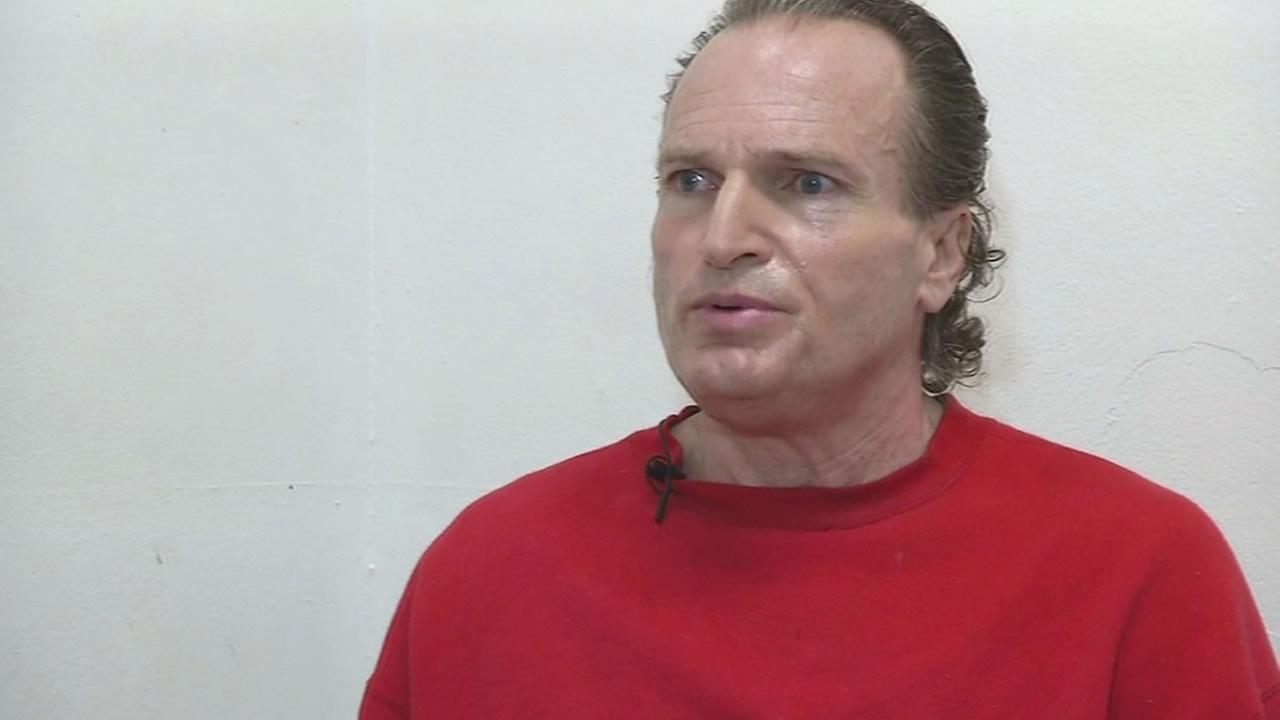
Steven Audette
  (Bear in mind that Audette also wanted to tell the jury that he and “President Clinton [had hidden] guns and badges in a toilet while eating egg rolls). Id. at *8. 
  The Ninth attributes much introspection to a self-described egg-roll-chomping Friend of Bill.

How to Use: Read Judge Reinhardt’s Fahad concurrence. 190 F.3d 1097, 1107 (9th Cir. 1999). Twenty years ago that prescient jurist advocated for some rational limits on the rights of the mentally-ill to represent themselves. (Not an absolute right, he reminded us). Id.
  Judge Reinhardt’s pitch never got traction, and Audette now follows a line of authority – Kurt Johnson, Brugnara, and the recent Read – that honors the autonomy of delusional defendants to self-incarcerate for decades through wince-inducing pro se trials. (Notably, the Audette panel (Judge M. Smith, author) is the same panel as in Read (Judge Hawkins, author)).
   When faced with the mentally-ill client who is flirting with the idea of self-representation, read Read, (March 2019) and Audette together. This brace of recent decisions now lay out the parameters of pro se in the Ninth.
                                               
For Further Reading: Last week Kenneth Lee became the newest Ninth Circuit judge. Mr. Lee was President Trump’s 40th confirmed circuit judge: he was confirmed 52-45. See article here. 


Image of Steven Audette from https://www.timesfreepress.com/news/local/story/2017/jan/22/arizonscammer-maricounty-tie-gets-20-years/408770/


Image of Hamlet and Yorick’s skull from https://www.pinterest.com/pin/688136018040679294/


Steven Kalar, Federal Public Defender N.D. Cal. Website at www.ndcalfpd.org

.

Labels: , , , , ,

Sunday, March 17, 2019

Case o' The Week: "Demons Made Me Do It" - Read, Mentally-Ill Clients and Insanity Defenses

Still crazy, after all these years.


United States v. Read, 2019 U.S. App. LEXIS 7652 (9th Cir. Mar. 18, 2019), decision available here.

Players: Decision by Judge Hawkins, joined by Judges M. Smith and Hurwitz. Reversal for Mr. Read earned by former CD Cal AFPD, now CJA Attorney, Davina Chen.

Facts: While an inmate at FCI-Phoenix, Read stabbed his cellie thirteen times. Id. at *2. When later detained, Read said he had no memory of the attack. Id. at *3.
  He was charged with federal assault.
  A shrink diagnosed Read with schizophrenia and severe cannabis use disorder. Id. Read was found incompetent and sent to the BOP for restoration. Id.
  The BOP shrink noted that Read experienced the sensation of having his stomach cut out with a knife, by virtue of a voodoo doll being used against him. Id. at *4. The BOP doctor also confirmed the schizophrenia and cannabis-use diagnoses. Id. Nonetheless, the BOP psychologist found Read competent to stand trial. Id.
  Defense counsel then hired a neuropsych, who opined that Read was unable to form the criminal intent for the assault. Id. Defense counsel noticed an insanity defense, prompting another gov’t psych eval. Id.
  Read returned from a remote evaluation. After a Faretta hearing he successfully moved to proceed pro se (with the defense attorney as standby counsel). Id. Read flatly rejected an insanity defense, and insisted instead with going forward with a defense theory of “demonic possession.” Id. at *6-*7.
  The court then reappointed standby counsel as Read’s counsel, who “ably, but unsuccessfully, . . . present[ed] an insanity defense at trial.” Id. at *8.

Issue(s): “We address a question of first impression: whether a criminal defendant has the Sixth Amendment right to demand that counsel not present an insanity defense.” Id. at *1.
   “Read claims the district court violated his Sixth Amendment right to present a defense of his own choosing by terminating self-representation and permitting counsel to make an insanity defense.” Id. at *12. 
  “[W]e today face a question of first impression in this circuit.” Id. at *13.

Held: “We hold that McCoy v. Louisiana, 138 S. Ct. 1500 (2018), requires under the facts of this case that the demand be honored. We . . . reverse and remand for a new trial.” Id. at *1.
  “[A] district court commits reversible error by permitting defense counsel to present a defense of insanity over a competent defendant's clear rejection of that defense.” Id. at *12.

Of Note: Read is peppered with the “bizarre.” The D.J. characterized Read’s “demonic possession” defense as “bizarre.” Id. at *8. Judge Hawkins characterizes McCoy’s defense theory in the controlling SCOTUS McCoy case as “every bit as bizarre as Read’s.” Id. at *14. The Supreme Court in McCoy, followed by the Ninth Circuit in Read, place the highest value on the “autonomy” rights of (patently mentally-ill) defendants who want to pursue these “bizarre” defenses and reject insanity defenses over the advice of counsel.

  A decade ago, Judge Reinhardt predicted precisely the – well, bizarre – real world outcomes created by this focus on the "autonomy" of mentally ill defendants in his compelling Farhad concurrence. See 190 F.3d 1097, 1107 (9th Cir. 1999) (Reinhard, J. concurring)  ("The right to self representation must be balanced, like the right to waive conflict free counsel in Wheat, or the right to a public trial in Estes, against the Due Process Clause's fundamental, guarantee that trials will be reliable, just, and fair. Surely if the right to a fair trial is compelling enough to justify the Court's previous limitations on Sixth Amendment rights, it is compelling enough to limit, in appropriate cases, the Sixth Amendment right at issue here. As with most other individual rights, there are competing and countervailing interests, both personal and social. Nothing inherent in the implied right of self representation justifies exalting that right over all others in the constitutional constellation, or requires the courts to permit Farhad and others with similar limitations or incapacities to turn criminal trials into travesties. Rather, courts can develop rules for determining when the exercise of the right to self representation would be consistent with the mandate of the Fifth Amendment, and when it would not. In the latter case, the right to self-representation would give way."); See generally blog entry here.
   However, while wrestling with Read down in the district court trenches, note an interesting hint from the Ninth. Judge Hawkins explains that, at this time, the Ninth refuses to limit the right to refuse an insanity defense in cases where the defendant is actually mentally ill. Id. at *20 & n.5. Judge Hawkins throws in an intriguing “but see” to a case imposing that limit – maybe an invitation for a future argument?   

How to Use: Can our truly nutty clients go pro se?
  Probably not.
  In a very helpful holding, Judge Hawkins gives much guidance on what a D.J. should consider when making this tough call. Id. at *17-*18.
  Read Read for a valuable discussion on Faretta / Edwards / Ferguson pro se issues – Read is a now lead pro se case.   
                                               
For Further Reading: In 1998, Theodore “the Unabomer” Kaczynski pleaded guilty and avoided the death penalty. See NYT article here. 


  In a later dissent from the denial of a habeas petition, Judge Reinhardt described the tensions between the mentally-ill Kaczynski and his very able defense counsel over the question of an insanity defense at trial. United States v. Kaczynski, 239 F.3d 1108, 1119 (9th Cir. 2001) (Reinhardt, J., dissenting).
  Looking back at Kaczynski through the prisms of McCoy and Read, would the Unabomber have gone to trial without an insanity defense (and thus been awaiting execution) today?


Steven Kalar, Federal Public Defender N.D. Cal. Website at www.ndcalfpd.org  


.

Labels: , , , , ,

Sunday, October 15, 2017

Case o' The Week: "Crazy" Clamor, Obstruction Hammer - Obstruction of Justice, Malingering, and Competency Evals

 Ninth naysays "obstruction" bee in our sentencing bonnet. 
United States v. Bonnett, 2017 WL 4509039 (9th Cir. Oct. 10, 2017), decision available here.


Players: Pur curiam decision by Judges Schroeder, Tallman and DJ Whaley.

Facts: Bonnett was charged with one count of receipt and distribution of child porn. Id. at *1. He was made to undergo a court-ordered pysch eval for competency. Id. The shrink concluded that “Bonnett was feigning incompetency.” Id. After his guilty plea, Bonnett received an increase in his guideline sentence for “obstruction of justice,” based on “malingering.” Id.

Issue(s): “[Bonnett] challenges the two-level adjustment for obstruction of justice pursuant to U.S.S.G. § 3C1.1 . . . .” Id. at *1. “The issue of first impression in this Circuit is whether an obstruction of justice enhancement may be founded upon a finding of malingering.” Id. “[ ] Bonnett contends that permitting an obstruction of justice enhancement on the basis of his performance in a competency evaluation chills his exercise of the right to obtain a competency hearing.” Id.

Held:We join other Circuits in holding that malingering may support an obstruction of justice enhancement pursuant to U.S.S.G § 3C1.1.” Id. at *2.

Of Note: While disappointing, this outcome is not terribly surprising. Four other circuits have upheld obstruction enhancements in the context of competency evaluations. Id. at *1. More importantly, the Ninth had already held that refusing to participate in a competency evaluation can support an obstruction enhancement. Id. at *2 (citing United States v. Fontenot,14 F.3d 1364, 1372 (9th Cir. 1994)).
  Nonetheless, despite the Ninth’s brief per curiam resolution of this thoroughly hairy issue, the confluence of competency and obstruction raises thorny problems for both defense counsel and shrinks (see below).

How to Use: First, us. Should defense counsel now balk on competency motions, when the possibility of a malingering finding may trigger an obstruction enhancement? The federal competency statute only suggests that defense counsel may make a motion “to determine the mental competency of the defendant.” 18 U.S.C. § 4241(a).
  Admittedly, there are those awkward questions to defense counsel about a defendant’s competency during a Rule 11 plea competency (not to mention the uncomfortable ethical issues arising from pleading out a potentially crazy client). 
  At minimum, if you worry that your client has a Klinger routine going, have a frank talk about Bonnett and the obstruction enhancement (and consider a private defense mental health eval before Court shrinks build that obstruction foundation for the PSR).
                                               
For Further Reading: Second, shrinks. Psychologists and psychiatrists assure our clients that competency evals are protected, and that their talks and tests are just used to determine their ability to understand the charges and assist counsel.
  That now ain’t true – creating a real ethical quandary for mental health professionals.
  For an interesting fret on this ethical dilemma, see Shaheen Darani, Behavior of the Defendant in a Competency-to-Stand-Trial Evaluation Becomes an Issue in Sentencing, Journal of the American Academy of Psychiatry and the Law Online, January 2006, 34(1), 126-128, available here. (“Based on this ruling, is it necessary to inform the defendant that information gathered as part of the evaluation may be used for purposes outside of the competency evaluation? Would it also follow that the defendant should be advised that uncooperativeness or feigning of symptoms could lead to a finding of obstruction of justice and, therefore, a harsher sentence? The challenge in adopting this warning becomes the determination of the level of uncooperativeness that might rise to the level of obstruction of justice.”)


Image of bee in the bonnet from https://ashleeblucas.files.wordpress.com/2012/11/bee-in-your-bonnet.jpg.


Steven Kalar, Federal Public Defender Northern District of California. Website at www.ndcalfpd.org


.

Labels: , , , , ,

Sunday, May 14, 2017

Case o' The Week: Crazy Like a (Bipolar, Delusional) Fox - Brugnara, Edwards, and Faretta self-representation


 Can one be a schmuck, and be mentally incompetent?
 Not, apparently, in the Ninth.
United States v. Luke Brugnara, 2017 WL 1947893 (9th Cir. May 11, 2017), decision available here.

Players: Decision by Judge Wallace, joined by Judge M. Smith and DJ Erickson. 
  Hard-fought appeal by ND Cal CJA attorney Dena Young.

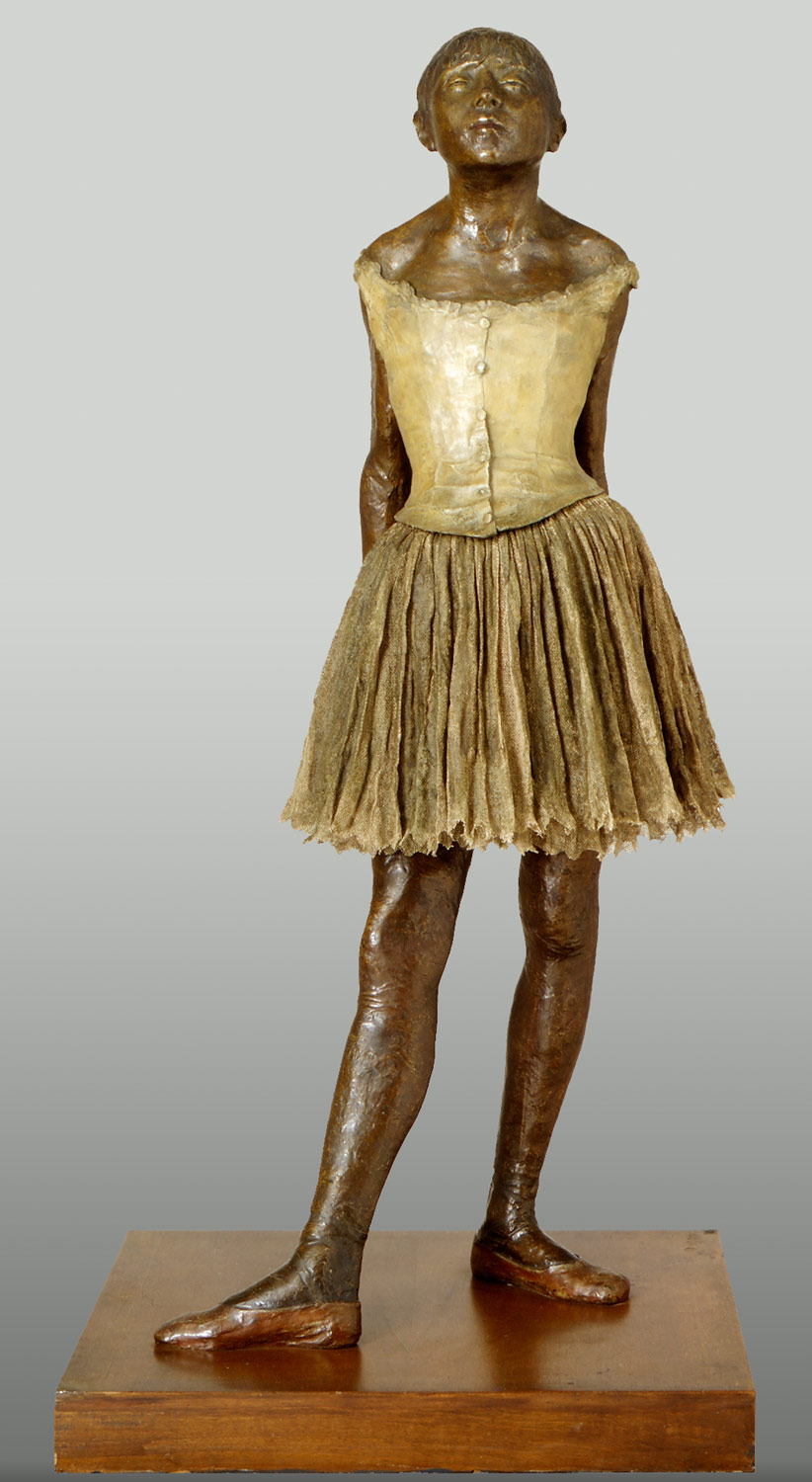
Facts: Brugnara, a San Francisco real estate tycoon, sought fine art from a dealer. Id. at *1. The art was delivered and stored in his garage, but payment never happened. (One crate reportedly contained a statue of Edgar Degas’s “Little Dancer.” It has never been found). Id. at *2.
   Brugnara was charged and incarcerated, but was placed on “furlough” by the district judge -- permitting him to leave lock-up in the federal building to review discovery and meet with his attorney.
 He escaped. Id.
  Later captured, Brugnara successfully moved to represent himself. Id. “From the moment the trial began, Brugnara’s behavior could be described as appalling.” Id. at *2.
  During the third day of trial, advisory counsel suggested a competency evaluation. That suggestion was rejected by the district judge. Id. at *3.
  During trial Brugnara earned over a dozen summary contempt holdings, for a total of 471 custodial days. Id. at *3.
  At sentencing new counsel was appointed. This CJA attorney promptly hired a psych. The psych opined, “Brugnara likely suffers from bipolar disorder, delusional disorder, and narcissistic personality disorder.” Id. at *11.
Mr. Luke Brugnara
  Now armed with this report from a mental health expert, defense counsel formally moved for a competency evaluation and a hearing on Brugnara’s competency. Id. at *4.
  The motion was denied.
  Brugnara was sentenced to eighty-four months in custody. Id. at *4.

Issue(s): “[Brugnara] contends both that the district judge should have terminated his self-representation when it became clear that he could not control his behavior, and that the district judge should have held a competency hearing, either sua sponte during trial or at counsel's request during sentencing.” Id. at *10.

Held: “Throughout the trial, [Brugnara] asked coherent questions and made rational arguments—the only flaw was that his legal theory of the case was wrong. At most, Brugnara’s afflictions, such as they are, make him rude and impulsive; they do not rise to the level of a ‘severe mental illness’ precluding competent self-representation. Edwards, 554 U.S. at 178. The district court's finding that Brugnara was competent to represent himself was . . . not clearly erroneous . . . . Accordingly, the district court did not deny Brugnara a fair trial by allowing him to represent himself for the duration of the proceeding.” Id. at *11.
  “We hold that a reasonable judge, faced with this record, would not have found it necessary to doubt Brugnara’s competency. On the contrary, the evidence reveals that Brugnara’s obstinate and pugnacious behavior was nothing more than a deliberate attempt to circumvent the court’s rules. This makes him a nuisance, not incompetent. The district court reached a similar determination, and did not err in doing so. There was therefore no need to hold a competency hearing sua sponte during trial.” Id. at *12.

Of Note: In 2010, the Ninth upheld convictions resulting in 20+ year sentences for a pair of Faretta “fools.” United States v. Johnson, 610 F.3d1138 (9th Cir. 2010), see also blog entry here.
  The Johnson case arose out of the same NorCal district court that presided over Brugnara. See id.
  Seven years later, Judge Wallace expressly relies on the Johnson decision in Brugnara, to uphold the (same) district court’s refusal to order a competency evaluation of this mentally-ill Faretta defendant. 2017 WL 1947893, at *11.
  Judge Reinhart predicted this outcome, many years ago. United States v. Farhad, 190 F.3d 1097, 1107 (9th Cir. 1999) (J. Reinhard, concurring). The Ninth should revisit Judge Reinhart's prescient Faretta warnings, and revisit this deeply troubling Johnson / Brugnara line of Faretta / Edwards authority.

How to Use: The lesson of Brugnara? When your crazy client gets that self-representation urge, hurry to file a written § 4241(a) competency motion before you are fired. (NB: In Brugnara, Judge Wallace discounts advisory counsel’s suggestion for a competency evaluation made during trial, because “advisory counsel was not conducting [Brugnara’s] defense.”   2017 WL 1947893, at *12).
  We CJA attorneys are a dime a dozen: we can be replaced if this competency motion damages your relationship with your client. Without this timely motion for a competency eval by defense counsel in the record, however, this Brugnara tragedy is the outcome.
                                               
For Further Reading: What are standby /advisory counsel’s ethical duties, while watching the self-immolation of an incompetent Faretta client? 
  For a thoughtful discussion of this ethical conundrum, see Charles Sevilla ethical discussion here.


Image of Degas’ “The Little Dancer” from http://www.metmuseum.org/toah/images/hb/hb_29.100.370.jpg


Steven Kalar, Federal Public Defender N.D. Cal. Website at www.ndcalfpd.org

.

Labels: , , , , , , , ,