Sunday, May 26, 2019

Case o' The Week: The First v. The Sixth in the Ninth - Carpenter and public disclosure of defense duress proffers


  Ninth mulls Seal balancing.
United States v. Carpenter, 2019 WL 2049818 (9th Cir. May 9, 2019), decision available here.


Players: Decision by Judge M. Smith, joined by Judge Hawkins and DJ Vratil.  

Facts: Carpenter and her co-D’s kidnapped Angel Gonzalez. See generally article here.
  Gonzalez was suspected of stealing marijuana from a Mexican cartel: the plan was to give him up in exchange for payment. Id. at *1.
   They hit Gonzalez with a cattle prod, duct-taped his hands and feet, and stashed him in a car trunk. Id. at *2. Carpenter drove Gonzalez across the border, but in Mexico Gonzalez managed to escape. Id. Carpenter ditched the car and was arrested when she tried to reenter the States. Id.
  Before the kidnapping trial, Carpenter submitted an offer of proof on her duress defense (based on her fear of the Mexican cartel). Id. The court refused to seal her duress offer of proof, but allowed the defense at trial. Id. Carpenter was convicted. Id.  

Issue(s): “We consider . . . Carpenter’s claim that the district court
abused its discretion in denying her motion to seal her duress defense proffer . . . .” Id. “Carpenter laments being forced to have ‘preview[ed] all of the evidence and all of her own testimony supporting her duress defense,’ and argues that the public disclosure was unconstitutional.” Id. at *5.

Held: “Even though we have long required that defendants proffer evidence of their duress defense, we have never held—nor indicated—that these proffers are entitled to secrecy or additional confidentiality. Instead, our early cases demonstrate that courts often dealt with the threshold inquiry of the prima facie showing through unsealed motions in limine. . . . Open court offers of proof were also utilized . . . .” Id. at *4.
  The district court considered Carpenter’s concerns that the disclosure of her evidence to the government would be unfair and would conflict with the ethical rules that counsel against revealing information related to the representation of client, and found that she had not stated a compelling reason to seal the proffer. We agree with the district court.” Id. at *5.
  “[O]ur conclusion today does not establish a compulsory rule that defendants must disclose their testimony to present a duress defense. The public’s common law right of access to these offers of proof is a qualified right—one that a defendant can overcome by making the requisite showing. [I] n the balancing test the district court is required to consider the competing rights of the defendant and the public. We hold today only that the common law right of access attaches to pre-trial offers of proof for a duress defense, and that because Carpenter failed to provide a compelling reason to overcome this presumptive right of access, the district court did not abuse its discretion in denying Carpenter’s motion to seal her proffer.Id. (internal citations and quotations omitted).

Of Note: This disappointing duress decision is slightly offset with a good holding on evidence of drug use. Id. at *7. Judge Smith explains that evidence of a co-D’s meth use during the kidnapping was inadmissible “other acts” evidence, that should not have survived FRE 403 balancing. Id. at *7-*8 (although this was ultimately held to be harmless error). Id. at *8.
  A good FRE 404(b) / 403 decision for our clients who use, in the course of their other mischief.

How to Use: Unbelievably, the AUSAs did not bother to read Carpenter’s duress proffer! Id. at *3. That remarkable fact colored the Court’s new rule. Id. at *5. Arguably this new duress-disclosure rule should thus be limited to cases where prosecutors agree not to read the proffer. The Court emphasizes that this disclosure is a balancing test, not a “compulsory rule that defendants must disclose their testimony to present a duress defense.” Id. at *5.
  Invoke the Sixth Amendment and fight to seal duress proffers – read properly, Carpenter’s holding should be a narrow rule indeed.
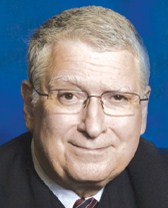
Mr. Daniel Collins
                                               
For Further Reading: Mr. Daniel Collins, President Trump’s sixth confirmed Ninth nominee, joined the Circuit last week. See article here. 


Steven Kalar, Federal Public Defender N.D. Cal. Website at www.ndcalfpd.org


.


Labels: , , , , , ,

Saturday, April 06, 2019

Case o' The Week: Protection sans Objection - Haines and FRE 412 Evidence


  The Federal Rules of Evidence cannot be used as both a sword and a shield.

  (By the defense).
United States v. Haines, 918 F.3d 694 (9th Cir. Mar. 14, 2019), decision available here.

Players: Decision by visiting District Judge Adelman, joined by Judges Wallace and Friedland.  

Left to right, the Honorable Judges Wallace and Friedland, and the Honorable District Judge Adelman
Facts: Haines and his friend King were charged with transporting two minor females from Nevada to California to work as prostitutes. Id. at 696. Over time, the girl alleged to have worked for Haines changed her story to the Feds. By trial, she testified that she did not prostitute for Haines and that her grand jury testimony was false. Id. Instead, she testified that she worked independently. Id.
   At trial, Haines attempted to question the girl about her prior prostitution activities (that did not involve a pimp), arguing that this was relevant to the question of whether he recruited her or encouraged her to engage in prostitution. Id. The district court excluded this testimony under Federal Rule of Evidence 412, the “rape shield” rule. Id.
  Haines was convicted, and appealed.

Issue(s): “Haines argues that evidence of J.C.’s prior prostitution activities should have been admitted under the exception to Rule 412 for 'evidence whose exclusion would violate the defendant's constitutional rights'—here, his due process right to present a complete defense and his Sixth Amendment right to confront witnesses.” Id. at 697.

Held: “[I]n cases involving adult victims forced or coerced into prostitution, courts have rejected such arguments, concluding that evidence of other prostitution activity has little or no relevance. Courts have reasoned that just because a victim agreed to engage in sex for money on other occasions does not mean she consented to, e.g., being beaten or having her earnings confiscated by the defendant.” Id. at 697-89 (citations omitted).
  “Haines cites no case holding that a defense such as the one he sought to present here triggers the exception in Rule 412. And we see no reason to depart from the persuasive authorities set forth above that held to the contrary.” Id. at 698-99.

Of Note: The unusual fact in Haines was that the female victim-witness for this Fed. R. Evid. 412 brouhaha was putatively a defense witness. She had recanted her grand jury testimony by the time of trial (after a jailhouse call from Haines, unfortunately). Atypically, the witness wasn’t objecting to the admission of this prior-prostitution evidence by Haines. The government was therefore using Rule 412 not as a shield, to protect a witness’s privacy, but as a sword, to prevent a defendant from eliciting favorable testimony “from a recalcitrant witness.” Id. at 699.
  No matter, concluded the Ninth, in a disappointing limitation on a defendant’s constitutional right to present a defense. “[A]llowing the victim’s wishes to control opens the door to mischief.” Id.      

How to Use: The narrow window left open on this type of “prior prostitution” evidence is when the government “opens the door” by suggesting that an alleged pimp introduced a minor to prostitution (that she was “an innocent lamb led to the slaughter).” Id. at 700. The Ninth holds this door wasn’t opened in the Haines case, in part because the district court warned the government against this line of evidence and argument.  The Court seems to recognize, however, that this type of evidence could be admissible if made relevant by the government’s approach.
                                               
For Further Reading: On March 26, the Senate confirmed President Trump’s nomination of the Honorable Magistrate Judge Bridget Bade, of Phoenix, to the Ninth Circuit Court of Appeals. See press release here
  Judge Bade will be joining two confirmed Ninth Circuit Trump nominees: the Honorable Judge Mark Bennett of Hawai’i, and the Honorable Judge Ryan Nelson of Idaho. See Ninth Circuit chart here
 Two additional Ninth nominees cleared the Senate Judiciary Committee on April 4, 2019: Mr. Daniel Collins, of L.A.’s Munger, Tolles & Olson, and Mr. Daniel Lee, of L.A.’s Jenner & Block. See article here


Image of (skeptical) United States v. Sha-Ron Haines panel from https://www.youtube.com/watch?v=akIGK_oYmIw


Steven Kalar, Federal Public Defender N.D. Cal. Website at www.ndcalfpd.org


.

Labels: , , , , ,

Saturday, January 05, 2019

Case o' The Week: Hidden Dough a Ninth No-Go - Hernandez-Escobar and Due Process Rights in Forfeiture Proceedings


  Hiding money from a spouse? 


Avoid stashing it with a drug-dealing son.
  United States v. Hernandez-Escobar, 2018 WL 6693487 (9th Cir. Dec. 20, 2019), decision available here.

Players: Decision by Judge Fisher, joined by Judges Berzon and Watford.

Facts: Roberto Hernandez (“Roberto”) pleaded guilty to drug charges. In his plea agreement, he agreed to forfeit $73,000 in cash that was found in his bedroom, alongside thirteen pounds of meth, guns, and pay-owe sheets. Id.
  After the plea, Roberto’s father (“Mr. Hernandez”) filed a claim on that money. Id. Mr. Hernandez claimed it was his cash. Mr. Hernandez explained that he had stored the dough in shoeboxes, and stashed it with his son to protect it from his wife during marital difficulties. Id. at *2.
  Before the forfeiture hearing, the AUSA met with Roberto. When Roberto (generally) confirmed his father’s story, the AUSA reminded Roberto of his plea agreement, said he thought Roberto was lying, and warned of potential false statement charges. Id. Not surprisingly, Roberto then asserted the Fifth at his father's forfeiture hearing. Id.
  The district court found that the cash was drug proceeds, denied Mr. Hernandez’s “bailor” argument, and forfeited the funds. Id.

Issue(s): “[Mr. Hernandez] argues that he is a bailor whose title to the cash is superior to the Government’s, and also that his due process rights were violated because his son did not testify at the hearing.” Id. at *1.

Held: “We affirm.” Id. “In Alcaraz-Garcia, we ruled that for the purpose of calculating the time to appeal, a criminal forfeiture proceeding is civil in nature . . . We need not determine whether this reasoning in Alcaraz-Garcia extends to due process questions, because even if Mr. Hernandez was entitled to due process protections coextensive with those afforded to criminal defendants, he has not shown a violation.” Id. at *6 (internal quotations and citation omitted).

Of Note: The main holding of Hernandez-Escobar is a predictable affirmance of the factual findings of the district court. A far more interesting question is the due process rights of a third party seeking funds slated for forfeiture.
  As noted above, Judge Fisher skirts that question by holding that Mr. Hernandez (the father) suffered no due process violation in any event – the son was not (we are told) coerced into not testifying. This due process question remains an intriguing issue for another day.

How to Use: What happens when a prosecutor bullies a central defense witness into silence, by threatening perjury charges? Judge Fisher delves into that problem, in the context of the – "admonitions" – this prosecutor gave to the defendant (the father’s key witness). Id. at *7.
  Judge Fisher warns that, “In other circumstances, a prosecutor’s stated belief that a potential witness is lying might be an unnecessarily strong admonition, but not on these facts.” Id. at *6 (internal quotations and citation omitted).
  This discussion in Herandez-Escobar is worth a close read when dealing with a “dissuading” AUSA: on slightly different facts, the prosecutor here might have well crossed the line.
                                           
The Hon. United States Attorney David Anderson
For Further Reading: Trump-nominee David Anderson is officially the new United States Attorney for the Northern District of California. On January 2, 2019, Mr. Anderson was confirmed by voice vote in the Senate. See Congressional site here. 
  The Honorable Anderson takes the corner office in the midst of a long government shutdown, as federal investigators work without pay, AUSAs ask for delays of civil cases, and the Judiciary contemplates contingencies just to pay juror fees. See NYT article here. 
  Welcome back to the Federal Building, Dave.


Image of money in shoebox from https://news.dailytoast.com/blogs/after-60-years-of-marriage-a-man-finds-95-000-in-a-shoe-box-in-his-wi.

Image of the Hon. U.S Attorney David Anderson from https://www.sidley.com/en/people/a/anderson-dave.


Steven Kalar, Federal Public Defender N.D. Cal. Website available at www.ndcal.org 


.

Labels: , , , , ,

Sunday, July 22, 2018

Case o' The Week: .22s and the Yakima Blues - Barnes and Necessity / Justification Defenses in 922(g) cases


  Eastern Wha? means new bad law.
United States v. Barnes, 2018 WL 3468136 (9th Cir. July 19, 2018), decision available here.


Players: Decision by Judge Paez, joined by Judges Gould and Christen.

Facts: Yakima cops stopped Barnes, and (mistakingly) told him he was wanted for a felony. Id. at *1. (It was a misdo bench warrant). Barnes ran, was tackled and tazed, and had a .22 on him when searched. Id. at *2.
  Before his § 922(g) trial Barnes made a proffer for a “necessity defense.” Id. at *3. [Ed. Note: Judge Paez explains the distinctions between a “necessity” defense versus “justification” – this case is probably the latter. Id. at *8 & n.4]. 
  Barnes explained that he had been taking care of his meth-addicted adult son. Id. Barnes came across the gun in his house, grabbed it to keep it away from kids in the home, and was on the way to throw it in a dumpster when confronted by the cops. Id. at *3.
  The district court refused to allow a necessity / justification defense: Barnes was convicted at trial. Id.

Issue(s): “[Barnes] argues that the district court erred . . . by precluding him from presenting a necessity defense at trial.” Id. at *1.

Held: “A defendant is entitled to present evidence on a necessity defense and have the jury instructed accordingly once he has adequately established—through an offer of proof—that all four requisite factors are met: 

(1) he was faced with a choice of evils and chose the lesser evil; 

(2) he acted to prevent imminent harm; 

(3) he reasonably anticipated a causal relation between his conduct and the harm to be avoided; and 

(4) there were no other legal alternatives to violating the law.” Id. at *8 (internal quotations, citations, and fn. omitted). Id. at *8. 

“[ ] Barnes’s offers of proof, even when viewed in the light most favorable to him, were insufficient to show that he acted to prevent imminent harm. “[T]he term ‘imminent harm’ connotes a real emergency, a crisis involving immediate danger to oneself or to a third party.” . . . There is no indication that Barnes acted in response to such a crisis. There was no evidence that the children had, for instance, already obtained possession of the gun or were about to do so. There was no evidence that the children were in close proximity to the firearm. At most, Barnes removed a dangerous weapon from a house where children were present . . . [T]he district court correctly denied Barnes’s request to present a necessity defense to the jury.” Id. (internal quotations and citations omitted).

Of Note: Barnes has a second disappointing holding, upholding the denial of a suppression motion. A [conspicuously unnamed] Yakima municipal judge failed to look at an incident report, or an affidavit, before “finding” probable cause for Barnes’ misdemeanor complaint. Id. at *2. Judge Paez finds “judicial abandonment.” Id. at *5. 
  However, in an unfortunate decision of first impression, the Ninth holds that, to overcome Leon good faith, a defendant must show both “judicial abandonment” and that the cops knew – or should have known – of the abandonment. Id. at *7. Barnes stumbled on this second step. 
  One gets the impression the Ninth isn’t keen on this rule, but finds itself “bound to follow the Supreme Court’s directives.” Id. at *7.
  Hopefully, Yakima defense counsel will explore complaints signed by this mystery municipal judge –how many complaints bear rubber stamps, in Eastern Washington?

How to Use: If you’re mulling this defense in a § 922(g) case, footnote four is where to start. Id. at *8 & n.4. Judge Paez explains how the Ninth considers this theory under the “justification” rubric in gun cases, and lays out the elements for the defense. Id. 
  A good blueprint when considering a justification challenge, for the waves of gun cases that await on the horizon.
                                               
For Further Reading: “Necessity,” “duress,” “justification:” this line of federal law is confusing. 
  For an interesting discussion of these theories, along with a thought-provoking recommendation, see Schwartz, Stephen S. (2008) “Is There a Common Law Necessity Defense in Federal Criminal Law?,” University of Chicago Law Review: Vol. 75 : Iss. 3 , Article 8, available here.


Steven Kalar, Federal Public Defender N.D. Cal. Website available at www.ndcalfpd.org

.

Labels: , , , , ,

Sunday, January 28, 2018

Case o' The Week: Ninth Digs "Other Dude" Dirt - Urias Espinoza, FRE 404(b), and Third Party Culpability Evidence

 As you SODDI, so shall you reap.
United States v. Espinoza, 2018 WL 493194 (9th Cir. Jan. 22, 2018), decision available here.


Players: Decision by Judge Paez, joined by Judges Berzon and Christen. Admirable win for AFD Michael Marks, Fed. Defenders of San Diego, Inc.  

Facts: Urias Espinoza, a Mexican national, was stopped as she tried to legally cross the border. Id. A search of her car revealed that the rear seats had been hollowed-out and filled with twelve kilos of meth. Id. 
  At the trial for importation charges, the government introduced messages on her cell about delivery of a “product.” Id. at *2. Urias Espinoza’s “blind mule” theory was that her neighbor in Mexico packed her car with meth without her knowledge. Id. She tried to introduce evidence that her neighbor was an admitted drug dealer, with a prior conviction for drug distribution, and a prior deportation (showing why he couldn’t reenter). Id. 
  Most of this proffered evidence of third-party liability was excluded by the district court. Urias Espinoza was convicted and sentenced to ninety months. Id. at *3.

Issue(s): “We consider whether the district court abused its discretion in excluding evidence of third-party culpability.” Id. at *1. “The case centers on the threshold requirement for the admissibility of third-party culpability evidence under the Federal Rules of Evidence.” Id. at *3 (emphasis added).

Held:We conclude that the district court necessarily abused its discretion by applying an incorrect legal standard to determine whether third-party culpability evidence should be admitted.” Id. at *3.

Of Note: The broad FRE 404(b) sweep in this case is great – for this defendant, trying to introduce bad acts committed by her neighbor. Judge Paez explains that the neighbor’s conviction should have come in, despite the fact that the neighbor’s prior was a decade old, was for pot (not meth), and was for distribution, not importation. Id. at *7. 
  Should we worry a “sauce for the goose, sauce for the gander” flip of this broad FRE 404(b) net against a defendant in future cases? Nope. Judge Paez carefully distinguishes this expansive FRE 404(b) analysis for third-party liability evidence, from the government’s limited use of 404(b) evidence against a defendant. The government faces a higher 404(b) hurdle – defendants deserve more protection than other potential witnesses from “bad acts” evidence. Id. at *7 (“We caution, however, that our ruling that the conviction documents were admissible here is not transferable to a situation in which the government seeks to introduce similar evidence with respect to a defendant's prior crimes under Rule 404(b). . . . This is because the standard of admissibility when a criminal defendant offers similar acts evidence as a shield need not be as restrictive as when a prosecutor uses such evidence as a sword.”)

How to Use: The Court here relies on its 1980 Armstrong decision, which had held that evidence of third-party culpability is relevant and admissible unless barred by another evidentiary rule. Id. Notably, the Court works through – and rejects -- the district court’s interpretation of latter Ninth authority reportedly constraining that broad Armstrong reading. Id. at *4. 
  A great outcome in this case, but beware that Urias Espinoza is deeply grounded in the Federal Rules of Evidence. For habeas folks eyeing state convictions, note that the Court carefully avoids the constitutional “right to present a defense” challenge in this case. Id. at *1 & n.1. (The Ninth also distinguishes – but does not reject – previous Ninth authority finding no constitutional bar to state limits on third-party culpability evidence). Id. at *4.   
                                               
For Further Reading: SODDI – “Some Other Dude Did It:” a time-honored defense. See Imwinkelried article here.
  When the “other dude” is dirty, shouldn’t a defendant be permitted to share that dirt with the jury? The Ninth in Urias Espinoza thinks so, and reverses this conviction despite the high "harmless error" bar. Id. at *10.
  The Ninth is spot on: old-school limitations on third-party liability evidence are outdated and unfair. For an interesting piece discussing this area of law, see Professor David Schwartz and Chelsey Metcalf, Disfavored Treatment of Third-Party Guilt Evidence, available here


Steven Kalar, Federal Public Defender, ND Cal. Website at www.ndcalfpd.org


.

Labels: , , , , , ,

Thursday, November 23, 2017

Case o' The Week: Brown and Blue and Read All Over - Bud Ray Brown and Federal Escape Charges (from State Jails!)

  No good deed goes unpunished (by a federal prosecutor).
United States v. Bud Ray Brown, 2017 WL 5586562 (9th Cir. Nov. 21, 2017), decision available here.


Players: Decision by visiting First Circuit Judge Lipez, joined by Judges Wardlaw and Owens.  

Facts: Brown was serving a federal sentence when Washington dragged him into state custody on a writ ad prosequendum (related to a state murder charge). Id. at *1. While Brown was in a county jail, a rope made out of bedclothes was discovered hanging out of his cell -- the window itself was gone. Id.
  [Ed. note: watch the fascinating video about this attempt at this link. An anorexic octopus couldn’t escape through the five-inch-wide window slits at the Spokane County jail].
  Brown’s cellmate, Henrikson, was facing federal charges. When Henrikson went to federal trial, the AUSA tried to admit this attempted escape as evidence of guilt. Id. Brown exonerated his cellie with a handwritten declaration, where Brown took full blame for the attempted escape. Id.
  The feds then spun around and indicted Brown for attempted escape, from a county jail. Id. Brown entered an unconditional plea of guilt to the charges. Id.

Issue(s): For the first time in this circuit, we address the impact of a writ of habeas corpus ad prosequendum on the question of whether an inmate serving a federal sentence remains under ‘the custody of the Attorney General’ as per 18 U.S.C. § 751(a) when he is held at a state-run institution pursuant to the writ. [ ] Brown appeals the district court’s denial of his pre-plea motion to dismiss, filed, in part, on the ground that he was not in federal custody as a matter of law at the time of the attempted escape.’ Id. at *1.”

Held: “We now hold that Brown remained under the custody of the Attorney General for purposes of § 751(a) despite his incarceration at a state-run jail, and affirm the judgment of the district court in full.” Id.

Of Note: Wait - why did the AUSA bother to charge Brown with federal attempted escape (and from a state jail, to boot?) After all, the federal attempted-escape indictment didn’t come down until five months after the attempt to escape from county jail was thwarted. Id. at *4. (Plus newscasters and jailers couldn't keep a straight face when trying to describe this inane escape attempt). 
  A single, critical fact changed before the AUSA decided indict a federal attempted escape (from a local county jail): Brown’s handwritten confession offered in his cellmate's trial, taking the blame for the attempted escape and exonerating his cellie.
  Despite this troubling history, the Ninth summarily rejects Brown’s prosecutorial vindictiveness claim in five brief paragraphs. Id. at *4. There is not even the solace of dicta, worrying about the impact of this AUSA’s actions on the integrity of federal criminal trials.
  Brown sends a chilling message to witnesses with the temerity to testify for the defense: a federal indictment may be your reward. Use Brown for your Sixth Amendment fight for defense-witness immunity. The Ninth has now documented the very real dangers that await witnesses who dare to speak up for our clients.

How to Use: The silver lining in this opinion is welcome language on the ability to even take up this appeal, despite the fact that Brown did not have a conditional guilty plea. The Ninth helpfully explains that Brown’s core appeal is a jurisdictional claim, “challenging a conviction independently of factual guilt.” Id. at *2. It is therefore not precluded by the Fed. R. Crim. 11(a)(2) bar on appeals after unconditional pleas. Id. Helpfully, the opinion then collects other issues that dodge the appellate bar after unconditional pleas. Id. at *2 & n.2. 
  Most notably, the prosecutorial vindictiveness claim described above is tackled by the Ninth on appeal. Interesting.
  The take-away? With a solid jurisdictional hook to get you in the Ninth’s door, looks like ancillary (but related) arguments can avoid the 11(a)(2) bar – despite an unconditional plea. 
  Very welcome news, in a world where the Feds seem increasingly desperate to shut down all defense appeals.
                                               
For Further Reading: Feeling blue? Senators are, too. 
  The longstanding “blue slip” rule allowed Senators to have a meaningful say in judicial appointments. Last week, Senator Grassley (R-Iowa) announced that confirmation hearings would be going forward for two circuit nominees, despite the absence of blue slips (including one missing from a GOP Senator). See article here.


Image of the Spokane County jail windows and bedclothes-rope from this case, from http://www.krem.com/news/crime/tiny-jail-windows-deny-masterminds-escape/84305621

Steven Kalar, Federal Public Defender Northern District of California. Website at www.ndcalfpd.org


.

Labels: , , , , , ,

Sunday, July 03, 2016

Case o' The Week: Better a Lender than a Borrower Be - Lindsey and Mortgage Fraud Defenses


 “Two wrongs do not make a right.”
Hon. Judge Ronald Gould
(Particularly if you’re the schmoe with the wrong that leads to a federal fraud conviction).
United States v. Lindsey, 2016 WL 3536659, *4. (9th Cir. June 28, 2016), decision available here.

Players: Decision by Judge Gould, joined by Judges Noonan and Friedland.  

Facts: Lindsey was a mortgage officer and real estate broker. Id. at *1. He was part of a complex mortgage fraud scheme. Id. The properties purchased by straw borrowers foreclosed, but Linsey earned commissions, rent payments, and diverted escrow moneys. Id. After trial he was convicted of nine counts of wire fraud, and one count of aggravated theft. Id. To contest the “materiality” of the false representations at trial, Lindsey tried to present evidence of the lenders’ practice and policies – but was thwarted by the district court during openings, and was warned off the issue of lender negligence later in trial. Id. at *1, *2.

Issue(s): “[Lindsey] appeals his convictions on the ground that he was denied his constitutional right to present a defense.” Id. “[He] contends that the district court erred by preventing him from presenting evidence about the ‘stated income/ no doc’ loans, thus barring him ‘from challenging the materiality of false statements on a loan type that invites the applicant to state their income without justification or support.’ According to Lindsey, this prevented him from presenting a complete defense, a right that is constitutionally protected.” Id. at *3.

Held: “[W]e hold that lender negligence in verifying loan application information, or even intentional disregard of the information, is not a defense to fraud, and so evidence of such negligence or intentional disregard is inadmissible as a defense against charges of mortgage fraud. We further hold that, when a lender requests specific information in its loan applications, that information is objectively material as a matter of law, regardless of the lenders' policies or practices with respect to use of that information.” Id. at *1. “We join several of our sister circuits in holding that a victim's negligence is not a defense to wire fraud. Evidence of lender negligence is thus not admissible as a defense to mortgage fraud.” Id. at *4.

Of Note: “But everyone was doing it,” is the first protest of our mortgage fraud clients. The second is, “the lenders knew precisely what was going on, and didn’t care about what was on the application.” For whatever its worth, Judge Gould acknowledges this fairness concern: he understands “the desire to see lenders should responsibility for their role in the mortgage crises of the last decade.” Id. at *3. Unfortunately, that sympathy is not enough to earn a defense on the materiality charge.

How to Use: What if (as we all know), the lenders were intentionally blind to these “liar loans” during the feeding frenzy of greed that produced the mortgage crisis? Surely these loan misstatements aren’t “material,” when made to lenders who were effectively co-conspirators? Not so much, sadly. Judge Gould pens a new Ninth rule: “We adopt the First Circuit's bright-line test, and hold, as a matter of law, that when a lender requests specific information in its loan applications, false responses to those specific requests are objectively material for purposes of proving fraud.” Id. at *5. Take note: this new rule effectively vitiates the materiality requirement for federal mortgage fraud, making these tough cases even more difficult to defend.
                                               
For Further Reading: Over several years, thirty-seven folks in two sweeps were prosecuted by ND Cal USAOP, for low-level drug sales in S.F.’s Tenderloin. They were all African American. This was despite the fact that many Asian, Latino, and White drug dealers also call the ‘Loin home. For over a year, the FPD fought for discovery on these cases based on selective prosecution and selective enforcement. The office commissioned statistical studies, undertook analysis of hundreds of incident reports, interviewed drug addicts --it was an unprecedented collaborative effort, headed by AFPD Galia Amram. 
  On June 30, 2016, the Honorable Judge Edward Chen granted the discovery motion based on selective enforcement, in a lengthy, carefully-reasoned opinion that is one of the first to find the defense had cleared the necessary Armstrong evidentiary hurdles. It is a remarkable opinion, both for its detailed analysis and its sobering account of the SF Police Department’s treatment of African Americans. See decision here. 
  It has been one hundred and thirty years since San Francisco’s treatment of Chinese launderers lead to the Supreme Court’s decision in Yick Wo, 188 U.S. 356 (1886). Sadly ironic that another historic discrimination opinion now comes from the City by the Bay. See article here


Steven Kalar, Federal Public Defender, N.D. Cal. Website at www.ndcalfpd.org

.

Labels: , , , , , , ,