Sunday, October 28, 2012

Case o' The Week: A Good Win, and a Tremendous Loss -- Wolf Child and Conditions of Supervised Release


The Honorable Judge Betty Fletcher

An important win in the Ninth is sadly overshadowed this week, by the loss of one of the Ninth’s (and nation’s) leading jurists: the Honorable Betty Binns Fletcher.

United States v. Wolf Child, 2012 WL 5200347(9th Cir. Oct. 23, 2012), decision available here.

Players: Big win for Dan Donovan, Federal Defenders of Montana alumnus. Decision by Judge Reinhardt, joined by Judges Schroeder and M. Smith.  

Facts: Wolf Child pleaded guilty to attempted sexual abuse of a 16-year old. Id. at *1- *2. At sentencing, the district court imposed a contested special condition of supervised release. Id at *1.. The court prohibited Wolf Child from residing with, or being in the company of, any child under the age of 18 – including his fiancée, and daughters – without prior written approval of his probation officer. Id. The court imposed this condition “on the basis of a record devoid of evidence supporting the need for such a restriction with respect to his intimate family members.” Id.

Issue(s): “Wolf Child . . .  appeals [the] special condition of supervised release . . .” Id. at *1.

Held: “We hold that the fundamental right to familial association, implicated by the parts of the special condition prohibiting Wolf Child from residing with or being in the company of his own daughters and socializing with his fiancée, is a ‘particularly significant liberty interest.’ The district court was therefore required to follow an enhanced procedural requirement to make special findings on the record supported by evidence in the record, that the condition is necessary for deterrence, protection of the public, or rehabilitation, and that it involves no greater deprivation of liberty than reasonably necessary. Because the district court made no such findings regarding the imposition of the special condition, and it conducted no individualized examination of Wolf Child's relationship with the affected family members, it committed procedural error with regard to these specific individuals. Moreover, because of the absence of any evidence in the record that would support the limitations on the fundamental liberty interests at issue, we hold that special condition 9, as applied to restrict Wolf Child's ability to reside or socialize with his own children and with his fiancée is substantively unreasonable. In addition, we conclude that special condition 9 is overbroad both by virtue of prohibiting Wolf Child from being in the company of any child under the age of 18 under any circumstances and by similarly prohibiting him from dating or socializing with anybody who has children under the age of 18, regardless of the circumstances, without prior approval of his probation officer." Id. at *1.

Of Note: Judge Reinhardt writes a beautiful explanation of review of conditions of supervised release – a highly-commended primer. Id. at *3-*4. The broad Carty/Zavala deference familiar at sentencing does not flatly apply in this context: instead, when conditions of supervised release implicate a “particularly significant liberty interests” greater individualized showings are required (and greater appellate scrutiny merited). Id. at *3.

How to Use: Wolf Child immediately reverberated in the district courts. In N.D. Cal., one careful DJ has already put the government on notice of Wolf Child’s requirements for individualized showings. It is a timely decision: Probation now routinely seeks non-individualized and intrusive S.R. conditions, parroting blanket requirements dictated by D.C. (including mandatory polygraphs for putative “treatment”, with no non-pros protections.) Wolf Child is a welcome tool to fight Probation’s “one size fits all” approach to supervised release.   
                                               
For Further Reading: Our country lost a legendary advocate for justice with the recent passing of the Hon. Judge Betty Fletcher. Others have commented on her historical role in the Ninth. See New York Times article here

         We here pay tribute to Judge Fletcher’s extraordinary contributions to the defense of indigent clients. In sentencing, in Fourth Amendment litigation, in criminal discovery, and in capital cases, Judge Fletcher was always a voice for the voiceless, a powerful defender of the powerless, and a fierce protector of constitutional protections. For a small slice of her remarkable legacy in federal criminal justice jurisprudence, see collection of blogs here.


Everyone has their favorite B. Fletcher opinion. For sheer intellectual honesty, beauty in legal writing, dogged independence, and good old-fashioned Liberal instincts, ours is her post-Apprendi dissent on acquitted conduct in sentencing, in United States v. Mercado, 474 F.3d 654, 658 (9th Cir. 2007), summarized here.


     A tremendous loss to the Ninth, and to everyone dedicated to the defense of indigent clients.


Image of the Honorable Judge Betty B. Fletcher from http://sphotos-a.xx.fbcdn.net/hphotos-snc7/c0.0.300.300/p403x403/396173_10151122152380784_2089546632_n.jpg


Steven Kalar, Federal Public Defender N.D. Cal. Website at www.ndcalfpd.org


.

Labels: , , , , , , ,

Saturday, March 10, 2012

Case o' The Week: Broaching the Breach - Whitney and Prosecutorial Breach of Plea Agreements

"The government's argument [on appeal] is disingenuous."

Expect good things to follow, when the analysis of an AUSA's breach of a plea agreement begins with that blunt assessment. United States v. Whitney, 2012 WL 718483, *4 (9th Cir. Mar. 7, 2012), decision available here.

Players: Decision by Judge Reinhardt, joined by Judges B. Fletcher and Tashima.

Facts: While incarcerated for another (similar) offense, Whitney filed false tax returns. Id. at *1. He was charged, then cooperated, and then ultimately pleaded guilty pursuant to a plea agreement. Id. 

  In the plea agreement the government pledged to recommend the low-end of the guideline range, and promised it wouldn’t use information from Whitney’s debrief. Id. The agreement permitted both parties to contest a role adjustment. Id. The PSR identified three inmates in the scheme, but failed to identify how Whitney "managed" others. Id. Nonetheless, Probation recommended the two-level upward adjustment, and a whopping upward departure to 87 months (double the guideline range). Id. at *2. 

   Whitney's defense counsel contested the role adjustment at sentencing. Id. The AUSA then recommended “the low end of the guidelines as we have obligated ourselves to do.” Id. She then argued for the +2 OL role adjustment, explaining that Whitney “supplied information to me during his debriefing session that put himself in a supervisory role, a two-level increase.” Id. 

 Defense counsel didn’t object to this argument. 

The district court found the role adjustment applied, and departed upwards to 87 months. Id.

Issue(s): “[Whitney] contends that the U.S. Attorney breached the parties’ plea agreement by disclosing admissions made by Whitney while cooperating with the government, and by urging imposition of a sentence above the low end of the Sentencing Guidelines.” Id. at *1.

Held: “Although the prosecutor uttered the requisite words by recommending a sentence at the low-end of the guidelines, her additional statements constituted an argument for a higher sentence, breached the government’s obligation to recommend a low-end Guideline sentence, and likely had an impact on the far-above-guideline sentence imposed  . . .  The prosecutor’s reference to inculpatory statements made by Whitney during the course of his cooperation bore on the applicability of the two-level sentencing enhancement as well and similarly constituted an obvious breach.” Id. at *4. “We hold that the breach of the plea agreement by the U.S. Attorney resulted in plain error that affected Whitney’s substantial rights.” Id. at *1.

Of Note: This would be a great breach decision in any context, but is a particularly potent case because Judge Reinhardt grants relief despite undertaking plain error review. Id. at *3. Olano plain error is that bane of the defense on appeal: a  four-part test that usually results in a government win. Id. at *3. Judge Reinhardt not only finds “plain” error in the breach -- he also explains that the breach affected Whitney’s substantial rights, id. at *5, and affected the fairness and integrity of the judiciary, id. at *6.  

Whitney make breaches even more dangerous for the government, because even if trial counsel fails to object the defendant can prevail -- on plain error – on appeal. The remedy? Specific performance and a different district judge on remand! Id. at *9.

How to Use: Whitney also reverses the sentence because insufficient facts supported the leadership role enhancement. Id. at *1. It is an equally valuable decision on that issue; Judge Reinhardt carefully explains the necessary "level of control" to support this adjustment – facts not found in Whitney. Id. at *7-*8. 

Footnote six is of special interest – the Court there eviscerates the government’s argument that 1993 amendments to the guidelines altered the showing necessary for a leadership role. Id. at 7 & n.6. Read and rely on Whitney when fighting leadership adjustments.
                                               
 For Further Reading: President Carter appointed the three judges on this panel: Judges Reinhardt, B. Fletcher, and Tashima. It is, sadly, increasingly rare to see a three-judge panel of Carter appointees – even this Whitney panel features two senior Ninth Circuit judges (Judges B. Fletcher and Tashima).

For a very interesting discussion of the unusually large Carter “cohort” of Ninth judges and their tremendous impact on this Circuit, see Susan B. Haire, Judicial Selection and Decisionmaking in the Ninth Circuit, 48 AZLR 267 (2006). 

 Ed. Note: An astute reader clarified that Judge Tashima was indeed appointed by President Carter -- but to the district court, not to the Ninth Circuit. Judge Tashima was appointed to the Ninth Circuit by President Clinton.

Trailer still of "Breach" from http://www.annyas.com/screenshots/images/2007/breach-trailer-title-still.jpg
Portrait of President Jimmy Carter from http://en.wikipedia.org/wiki/File:James_E._Carter_-_portrait.gif


Steven Kalar, Senior Litigator N.D. Cal. FPD. Website at www.ndcalfpd.org

.

Labels: , , , , , ,

Sunday, January 08, 2012

Case o' The Week: Corporations are people too -- sometimes. Havelock and federal mail-threats statute

Is a corporation a "person?" That question has sparked a potent political debate, between the Occupy Folks and presidential candidate Mitt Romney. See article here.

Sitting en banc, the Ninth has also recently wrestled with that question -- and answered (in a different context), "no." As used in a federal threats statute, a "person" means a "natural person" -- a human being. See United States v. Havelock, 2012 WL 29347 (9th Cir. Jan. 6, 2012) (en banc), opinion
available here).


Players: Decision by Judge B. Fletcher. Big win by D. Az. AFPD Dan Kaplan.

Facts: Kurt Havelock (above left) bought an assault rifle. He then sent a batch of mail less than an hour before the ‘08 Superbowl. Id. at *1. This mail bore addresses of media outlets and music-related websites. Id. Inside each item was a “media packet” with a rambling “manifesto.” Id. The manifesto had allusions to violence; some in the past tense, and some prospective – like, “I will sacrifice your children upon the alter of your excess . . . . I will slay your children.” Id. at *2.

After visiting the Post Office, Havelock drove to a parking lot near the stadium where the Superbowl was to be played, to “wait for an opportunity to shoot people.” Id. He then had a change of heart, self-surrendered, confessed, and was ultimately charged with six counts of mailing threatening communications, in violation of 18 USC § 876(c). Id. Havelock’s motions to dismiss the indictment and for a judgment of acquittal were denied by the district court. Id. at *3.

Issue(s): 1. Issue One: “Person?” Havelock argues “that the phrase ‘any other person’ in § 876(c) refers exclusively to natural persons and, because the media packets were addressed to corporations, the indictment failed to allege facts sufficient to constitute an offense.” Id. at *3.

2. Issue Two: “Contents?” Havelock argues “that the district court erred in interpreting § 876(c) to allow a trier of fact to consult the content of a mailed communication to determine whether it was addressed to a natural person.” Id. at *3 (emphasis added).

Held:The term ‘person’ as used in § 876(c) refers exclusively to natural persons. To determine whether a threatening communication is ‘addressed to any other person,’ § 876(c), a court may consult the directions on the outside of the envelope, the salutation line, and the contents of the communication. Havelock’s writings were not addressed to natural persons. Accordingly, we reverse Havelock’s convictions and remand to the district court for the entry of a judgment of acquittal.” Id. at *10 (emphases added).

Of Note: Five judges join Judge B. Fletcher in full. We need six to win. So what is the “holding” of Havelock?

The individual holdings – that “persons” means a natural person, and that you can look inside an envelope to determine to whom it is “addressed” – are found within subsections of the opinion. See, e.g., Section II A at *5 (“person” means a “natural” person). Each of those sub-holdings garnered at least six votes, but, different judges cast the sixth vote for different subsections and holdings. (For example, Section II.A won Judges Schroeder and Reinhardt over, II.B convinced Judges Wardlaw, Fisher, and N.R. Smith). Because every subsection in the opinion earned a six-judge majority (albeit shifting majorities), all the holdings are controlling law. See generally United States v. Rodriguez-Preciado, 399 F.3d 1118, 1138 (9th Cir. 2005) (Berzon, J., dissenting) (providing good primer on plurality decisions); cf. Bradley v. Henry, 518 F.3d 657 (2008) (ord.) (adding note describing limits of five-judge plurality).

How to Use: In a pointed concurrence and dissent, Judge Reinhardt takes issue with the holding that permits a court to rummage within a mailing to locate to whom it is “addressed.” Id. at *18. Judge Reinhardt explains this holding is unnecessary, because Havelock’s “manifesto” didn’t contain a true “threat.” Id.

It is a thoughtful discussion of “threats” and free speech, building on last year’s great Bagdasarian decision. Id. at *19. (Notably, several judges join this “threats” analysis). The encroachment of “threat” laws on the First Amendment is a hot new issue: last month, Maryland District Judge Roger Titus issued a terrific decision finding 18 USC § 2261A(2)(A) – the interstate stalking statute – unconstitutional in a case involving Twitter posts. United States v. Cassidy, 2011 WL 6260872 (D. Md. Dec. 15, 2011). Judge Reinhardt’s opinion in Havelock deserves a close read as we begin new “threat” battles.

For Further Reading: In 1997 Mel Gibson portrayed an angry, paranoid, crazy loner in Conspiracy Theory. (A prescient role for the actor). The movie posits that secret assassins are conditioned by the CIA to obsess on Catcher in the Rye, to permit the agency to track them. See article here.
LinkIt turns out that several notorious real-life shooters liked the book. See article here.
So did Kurt Havelock. Havelock, 2012 WL 29347, *2.


Image of Mr. Kurt Havelock from http://www.miamiherald.com/2012/01/07/2578200/court-tosses-conviction-in-super.html
Image of "The Catcher in the Rye" from http://jonathanmendelsohn.blogspot.com/2011_07_01_archive.html


Steven Kalar, Senior Litigator N.D. Cal. FPD. Website at www.ndcalfpd.org


.

Labels: , , , , ,

Sunday, January 01, 2012

Case o' The Week: Gimme Shetler -- Post illegal-search statements


LinkThe Ninth ended 2011 with a bang, with a pair of great suppression cases relating to statements. We'll turn primarily to Shetler and post illegal-search statements, but Valenzuela-Espinoza (discussed below) deserves a close read as well. United States v. Shetler, 2011 WL 6794021 (9th Cir. Dec. 28, 2011), decision available here.
Link
Players: Decision by Judge Reinhardt (below left), joined by Judge Berzon and visiting District Judge Kennelly. Big win for Central District Ass’t Federal Defenders Victor Cannon, Liliana Coronado, and Ashwini Mate.

Facts: After Scott Shetler’s daughter snitched him out, cops searched his garage and found chemicals and gear related to cooking meth. Id. at *1. That search was legal.

The cops then seized Shetler, got his girlfriend to “consent” to a search of the house, searched his house and re-searched the garage. Id. at *1-*2. This second round of searches produced many more things used to make meth, including chemicals and flasks. Id. at *2. The detained Shetler watched this search from outside. Id. About five hours after being seized Shetler was Mirandized and confessed to making meth. Id. at *2.

The next day Shetler was Mirandized and interrogated twice more (in custody), expanding his confession each round. Id. The district court upheld the search of the garage, suppressed all evidence seized in the subsequent illegal searches, but permitted Shetler’s multiple confessions to come in at trial. Id. Shetler was convicted.

Issue(s): “Shetler argues . . . that the district court erred in denying his motion to suppress the statements regarding his drug activities that he made to a DEA agent on the night of his arrest outside his home and those he made during his interview at the DEA office 36 hours after his arrest.” Id. at *4. “The question . . . is whether the district court erred in finding that the statements made by Shetler at the DEA office were not sufficiently connected to the preceding illegal searches to constitute ‘fruit of the poisonous tree.’” Id.

Held: “The government did not bear its burden of showing that Shetler’s statements were not the product of illegal searches. Contrary to the district court’s determination, there is no evidence in the record to support the conclusion that the statements were ‘the product of the initial legal search of the garage . . . and were not tainted by the illegal searches of the garage.’” Id. at *5.

Of Note: The Shetler suppression holding gets the big defense buzz. The opinion, however, also gives us some first-impression interpretations of a federal drug statute here in the Ninth Circuit. Section 856(a)(1) of Title 21 criminalizes the “use” of a place with the purpose of manufacturing, distributing, or using drugs. Id. at *8. Shetler’s home drug lab was to make meth for his own use (he claimed): a crime outside of the “commercial” drug acts targeted by this crack-house law (he argued). Id.

Judge Reinhardt rejects this interpretation, but adds limitations to the statute to dodge Shetler’s constitutional challenge. Id. at *9 (restricting application of this statute in the context of residences, to offenses where drug manufacture, distribution, or use is a primary purpose).

It is an important decision – for us in NorCal, it is hard to read Shetler’s interpretation of the crack house statute without an uncomfortable thought for all those little private, home-use marijuana grows out amongst the redwoods.

How to Use: Regardless of any evidence from the illegal searches, agents probably had probable cause to (arrest) and question Shetler about his drug activities. If that’s true, what’s his beef with the use of his confessions?

Answering that question, Judge Reinhardt carefully explains the different analyses for confessions arising from illegal detentions, versus illegal searches. Id. at *5. One additional problem with statements after illegal searches is that interrogated suspects can be confronted with evidence that was illegally obtained. Id. Another unique problem with post-search interrogation (versus post-seizure), is that a suspect who knows that evidence has been seized will view silence as futile, and will confess. Id. at *6. It is a compelling, and common sense explanation of why post-search confessions deserve their own unique analysis.

Turn to Shetler when faced with a post-search confession, and bear in mind that post illegal-search confessions may be much more vulnerable than post illegal-seizure statements.

For Further Reading: An equally good case on the suppression of statements was delivered on the same day as Shetler: United States v. Valenzuela-Espinoza, 2011 WL Link6794013 (9th Cir. Dec. 28, 2011), decision available here.

In Valenzuela-Espinoza, Judge Betty Fletcher refuses to let agents off the presentment hook when they elicit a confession eight hours after arrest, and don’t bring the suspect before a magistrate until the next day. Id. at *1-*2. It is an excellent decision on the McNabb-Mallory rule, and is a case that may prompt a shake-up for court arraignment policies in a Ninth Circuit district or two . . . .


Image of the Honorable Stephen Reinhardt from http://abovethelaw.com/stephen-reinhardt/ Image of the "Gimme Shelter" cover from http://www.steady130.com/wp-content/uploads/2011/05/gimmeshelter.jpg


Steven Kalar, Senior Litigator N.D. Cal FPD. Website at www.ndcalfpd.org


.
.

Labels: , , , ,

Sunday, November 13, 2011

Case o' The Week: Paez, Ikuta and the Chism Chasm - Fourth Amendment and Child Porn

Proposition: Intellectual honesty and vigorous application of Fourth Amendment principles is particularly important in child pornography cases. Because of the great stigma of these charges, illegal arrests and searches of innocent folks can wreak unique havoc on careers and lives.

Proposition Exhibit A: Todd Chism (left). Chism v. Washington State, 2011 WL 5304125 (9th Cir. Nov. 7, 2011) (Amend. & Ord. Denying Rehearing en banc), decision available here.

Link

Players: Thoughtful decision by Judge Paez, joined by Judge B. Fletcher. Dissent by Judge Ikuta.

Facts: [Ed. Note: Legally irrelevant to this decision, but important in equity: these plaintiffs, Todd and Nicole Chism, were actually innocent of any of the child porn offenses discussed below. See article here.]

The Chisms, a married couple, appeal from an adverse summary judgment in a federal civil rights suit. The case started with tips to Washington cops reporting that child porn was uploaded onto two Yahoo! websites. Id. at *1. When cops traced the user information for the sites they found the first site was billed to “Mr. Nicole Chism,” with the registration address and billing information matched that of the Chisms. Id. The second site was billed to Mr. Nicole Chism, with no physical location but a credit card that traced back to the Chisms.

When the cops traced the IP addresses used to create the websites, they lead to other people not associated with the Chisms. Id. at *3. [It later turned out that the Chisms’ identities and credit cards had likely been hacked]. Id. at *9 fn. 13.

The cops got a search warrant, and in the affidavit (falsely) represented that Todd Chism had downloaded images: he hadn’t. Id. at *5. The affidavit also (falsely) represented that the Chisms’ credit card had been used to purchase child porn from the websites: it hadn’t. Id.

The affidavit omitted the fact that the IP addresses used to open the Yahoo! accounts were traced to people and residences other than the Chisms. Id. The searches (including a search of Todd Chism’s workplace) revealed nothing and the Chisms were never charged. Id. at *4.

Issue(s): “The Chisms argue that the officers violated their Fourth Amendment rights through judicial deception.” Id. at *5.

Held: “We are mindful that a letter-perfect affidavit is not essential. In this case, however, we do not believe that a reasonable magistrate judge would have issued the search warrant if she had been apprised of an accurate version of the evidence. We therefore hold that the affidavit’s false statements and omissions were material to the probable cause determination for the search warrants.” Id. at *9 (quotations and citation omitted). “[W]e reverse the district court's grant of summary judgment to the officers.” Id. at *11.

Of Note: Judge Ikuta’s pointed dissent helpfully points us to the valuable lessons of Judge Paez’s great decision. Id. at *11 (Ikuta, J., dissenting). As her dissent highlights, Chism is an important decision for Fourth Amendment in the context of child porn because it works through and distinguishes Gourde (that most-regrettable 2006 en banc decision). Id. at *8. See blog discussion of Gourde here. Fourth challenges in child porn cases will now be battles between Gourde and Chism – with Chism the defense touchstone.

How to Use: There are many important Chism principles for future Fourth fights. One of the most important is this: it is a material omission undermining a search warrant application if cops do not disclose that an IP address associated with child porn images is not associated with the physical address to be searched. Id. at *9. Put differently, if an IP address is associated with a physical address different than the physical address to be searched, that fact undermines probable cause and must be disclosed. Id. at *8.

Judge Ikuta bemoans this new “reverse proposition”: that a “
lack of a match between an IP address associated with such images and the IP address of the defendant’s computer reduces probable cause of the defendant’s involvement.” Id. at *15 (Ikuta, J., dissenting) (emphases in original).

Happily, Judge Ikuta is in the minority and the case has now survived an en banc call: thanks to Chism, we now have another arrow in our Fourth Amendment quiver.

For Further Reading: Todd Chism, a Spokane Firefighter, also had his work computer searched because of this unlawful warrant and was arrested while the searchesLink took place. For a video of Todd Chism discussing the case, see link here .

For a thoughtful discussion of the Chism decision, laying out the affidavit's misrepresentations and omissions in more detail, see blog entry here.


Image of Todd Chism from http://khq.images.worldnow.com/images/8243545_BG1.jpg Image of the Honorable Judge Sandra Ikuta from http://www.bmi.com/images/photoblog/2011/cache/photo_3_cordozamootcourt_bmi10-570x0.jpg

Steven Kalar, Senior Litigator N.D. Cal. FPD. Website at www.ndcalfpd.org


.
.

Labels: , , , , ,

Sunday, September 11, 2011

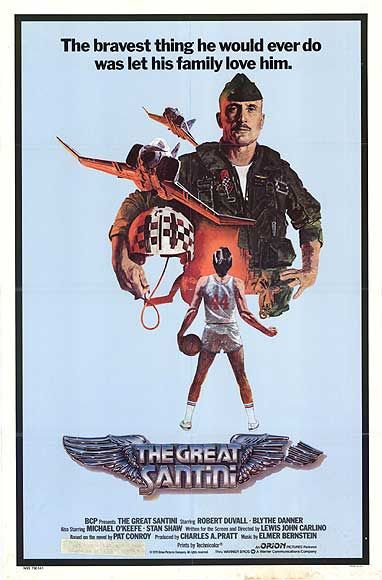
Case o' The Week: The Great Santini - Evidentiary Limitations on Gov't Experts

There's many reasons to hate government experts in criminal trials. Close to the top of the list is the old trick of smuggling radically-inadmissible evidence into trial, disguised as a "basis" for the government expert's opinion. Federal defense attorneys hate this gambit.

Turns out the Great Santini
is no fan, either. United States v. Santini, 2011 WL 3930078 (9th Cir. Sept. 8, 2011), decision available here.

Players: Big win by San Diego Ass’t Fed. Defender Zandra Lopez. Per curiam decision by Judges B. Fletcher, N. Smith, and District Judge James Gwin.

Facts: Santini was caught crossing the Mexican border with 28 kilos of marijuana hidden in his car. Id. at *1. At trial Santini argued that he’d been tricked: someone else had hidden the drug in his car without his knowledge. Id. The defense argued that Santini was easy to manipulate because he had suffered a traumatic brain injury in ‘05 – a defense shrink explained that this type of injury can cause difficulty with “social perception of other people.” Id. at *1.

The government’s shrink, Dr. Mark Kalish, disagreed, asserting that Santini’s rap sheet showed “extensive prior contacts with law enforcement” before 2005. Id. Dr. Kalish opined that if the current charges were related to the ‘05 brain injury, one wouldn’t expect to see this “similar behavior” before the accident. Id. “The defense objected to the admission of Dr. Kalish’s testimony regarding the rap sheet” and challenged “that testimony on appeal.” Id.

Issue(s): “The government argues that Santini’s criminal history was either admissible as evidence of his ‘state of mind’ under [FRE] 404(b) or could be introduced as the basis for Dr. Kalish’s opinion under [FRE] 703.” Id.

Held: 1. FRE 404(b): We conclude that the testimony of a psychiatrist relating disputed information contained in a rap sheet, which was neither admitted into the record nor examined by the district court, was not evidence that could support a finding by the jury that Santini had ‘extensive’ law enforcement contacts. Dr. Kalish’s testimony on this matter was, thus, not admissible under Rule 404(b).” Id. at *2.

2. FRE 702 and 703: “[The government’s] argument fails for two reasons. First, expert testimony must satisfy the requirements of Rule 702, which provides that an expert’s opinion must be ‘based upon sufficient facts or data.’ Fed.R.Evid. 702. For the reasons outlines above, the rap sheet was not sufficient to form the basis of Dr. Kalish’s opinion that Santini had engaged in ‘similar’ criminal behavior prior to his brain injury . . . . Second, the statement that Santini had ‘extensive’ prior law enforcement contact was far more prejudicial than it was probative in assisting the jury to evaluate Dr. Kalish’s opinion . . . . It was an abuse of discretion for the district court to allow this testimony.” Id. at *3.

Of Note: This brief opinion is rich and dense, and deserves a close read whenever an expert appears on the government’s witness list. Of particular note is its FRE 404(b) analysis. Id. at *1-*2.

Too often, government experts are backdoor conduits to the wholesale admission of otherwise inadmissible testimony. “I relied on the information for my expert opinion,” has become the miracle sanitizer that redeems cruddy evidence and means evidentiary anarchy when a government expert takes the stand. In the great Santini, the panel rejects this trend of blind deference and scrutinizes the bases for Dr. Kalish’s expert opinion with the same vigorous FRE 404(b) analysis leveled against other, mere mortal witnesses.

“Abuse of discretion” reversals in government-expert cases are rare birds indeed:
Santini should feature prominently our in limine filings and trial objections to government experts.

How to Use: Santini teaches that a government expert can’t be used to smuggle in inadmissible FRE 404(b) evidence. Another valuable lesson bears on FRE 702 and 703. Santini takes seriously the requirement that “otherwise inadmissible evidence” relied upon by a government expert must have a “probative value in assisting the jury to assess the expert’s opinion” that “substantially outweighs” the “prejudicial effect.” Id. at *2 (quoting FRE 703) (emphasis added).

This is a different, and more rigorous test than the vanilla FRE 401 and 403 requirements: remember to level this additional challenge when confronted by a government expert.

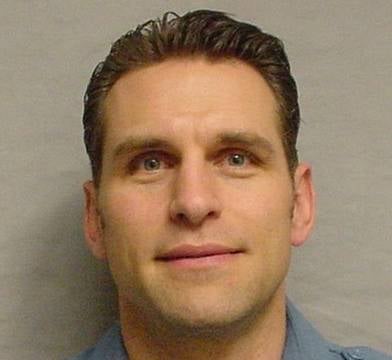
For Further Reading: There’s a big brouhaha brewing between Crawford and gang “experts.” For an interesting, practical, and recent article on this hot new issue, see Hon. Jack Nevin (left), Conviction, Confrontation, and Crawford: Gang Expert Testimony as Testimonial Hearsay, 34 SEATTLE U. L. REV. 857 (2011), available here.

Image of "The Great Santini" picture from http://www.impawards.com/1979/posters/great_santini.jpg

Image of the Honorable District Judge Jack Nevin from http://advocacytraining.blogspot.com/2011/04/confrontation-clause-and-gang-expert.html


Steven Kalar, Senior Litigator N.D. Cal. FPD. Website at www.ndcalfpd.org

.

Labels: , , , , , ,